League top-lane freeze guide for patch 26.15
A top-lane freeze is controlled wave imbalance, not simply refusing to attack. Patch 26.15 is the reference version. Keep a small enemy minion advantage.

Updated for League of Legends patch 26.15. A top-lane freeze is controlled wave imbalance, not simply refusing to attack. Patch 26.15 is the reference version. Keep a small enemy minion advantage outside your turret, match the opponent’s damage and break the setup when an objective, recall or dive becomes more valuable than denial.
top-lane freeze: the core plan
Begin by identifying where the next two waves will meet, both Teleport states and the likely jungle route. A freeze near your turret is useful only if the turret does not begin killing the wave. As a practical starting point, leave several extra enemy ranged minions alive, then adjust for champion area damage, reinforcements and minion focus rather than treating one number as permanent.
This is a repeatable decision framework, not a promise that every opponent or server will react identically. Test it in a low-stakes environment, record where it breaks and change one variable at a time.
Step-by-step execution
- Step 1: Thin the incoming wave before it reaches turret range. Pull surviving enemy minions sideways only when it is safe, then let your wave meet them outside the turret’s attack circle.
- Step 2: Last-hit at the final possible moment. Watch whether your abilities damage multiple minions; one convenient area spell can remove the imbalance that holds the freeze.
- Step 3: Count the next reinforcement wave on the minimap. If your minions are winning, stop hitting and allow the opponent’s side to rebuild numbers before the line drifts forward.
- Step 4: Stand between the opponent and experience only when jungle information and the matchup permit it. Denial is not worth giving a shutdown to an unseen gank.
- Step 5: When the opponent recalls or roams, decide deliberately: maintain the freeze to deny minions, or clear rapidly and crash a large wave to earn a recall, plate pressure or objective timing.
- Step 6: Break the freeze before your team needs you. Push the first wave cleanly, use abilities on the next and confirm that the accumulated minions reach the enemy turret instead of stalling in lane.
Assign one player or one clear cue to every transition. Plans often fail because two correct actions happen at different times. Short, specific communication keeps information useful without filling the channel with narration.
Common mistakes
Players often call any wave near their turret a freeze even when the enemy minions are already dying to the structure. Another error is preserving too many minions, taking unnecessary damage and becoming vulnerable to a dive. Freezing while the opponent influences Void Grubs, Rift Herald or a team fight can turn local denial into a losing trade.
Do not repair every failure by adding complexity. First decide whether the cause was information, timing, spacing, resources or execution. The smallest correction is easiest to remember and test on the next attempt.
Practice routine
In Practice Tool, create a freeze from a neutral wave without an opponent. Track how many enemy ranged minions remain and how the meeting point changes over three reinforcements. Repeat with one area-damage ability and with a cannon wave. In live review, pause whenever the wave crosses the river and label whether your last action accelerated, slowed or reversed it.
- Record the first moment the plan became uncertain.
- Check whether the required resource was available.
- Review spacing before blaming mechanics.
- Keep successful parts when changing the failed step.
A replay or saved clip is more reliable than memory after a tense attempt. Review the decision before the outcome: a poor choice can succeed, and a sound one can still lose. Repeat the same setup until timing is stable before adding a harder variation.
Communication and role ownership
Ping that the wave is frozen and state whether the enemy top laner is missing. Tell the jungler if the opponent must walk far forward, but do not demand a gank when the route is unsafe. Before breaking the freeze, communicate the crash timer and your intended recall, Teleport or objective rotation so teammates know when top pressure disappears.
Adaptation checklist
Against champions with strong ranged wave clear, position outside the minions so one ability cannot hit both you and the wave. When behind, use the freeze primarily for safe experience instead of aggressive zoning. When ahead, ward the route that protects the denial. If the enemy proxies behind your turret, the problem is no longer a normal freeze and requires a coordinated response.
If an update changes geometry, economy, cooldowns or damage, retest the affected step rather than assuming the whole guide is obsolete. The version label above defines the boundary of this advice.
Final routine
Judge the freeze by its purpose: safe farm, denial, gank setup or recall timing. Count what the opponent actually lost and whether your team sacrificed something larger. If the wave broke unexpectedly, identify the exact spell, reinforcement or minion pull that changed the balance, then reproduce the setup in practice.
Keep one learning goal per session. A narrow objective makes improvement visible and prevents a long checklist from competing with the match itself. Stop the drill once concentration falls, then return with the same measurable goal.
Sources: primary release notes or official records. Factual claims were checked against these records; interpretation is our own.
Continue with the Kaizensclan archive, our practical guides and the latest game reviews.
Editorial note
Facts and mechanics were checked against the linked primary sources before publication.
This article was reviewed on August 11, 2026.

Related stories
Thresh support guide for League patch 26.15
This Thresh support guide treats the champion as a decision maker, not a hook lottery. Patch 26.15 is the reference version. Your lane plan should combine.
League patch 26.15 jungle objective trading guide
Objective trading means accepting that the enemy will finish one play and converting the time somewhere else. In patch 26.15, the principle is unchanged by.
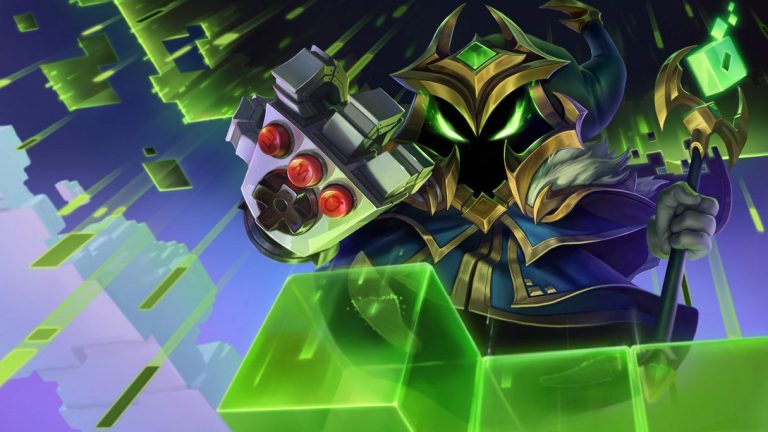
Final Boss Veigar: an arcade villain with readable spells
Final Boss Veigar is a Legendary League of Legends skin built around the fantasy of a video-game end boss. Arcade colors, pixel motifs and a more theatrical.
Community channel
Join the discussion
Start a thoughtful, specific conversation about this story.
Verified readers only
Continue with Google to comment.
Your Google account creates a reader-only Kaizensclan profile. Your first comment is reviewed before publication.