Caravan SandWitch review: a gentle road across Cigalo
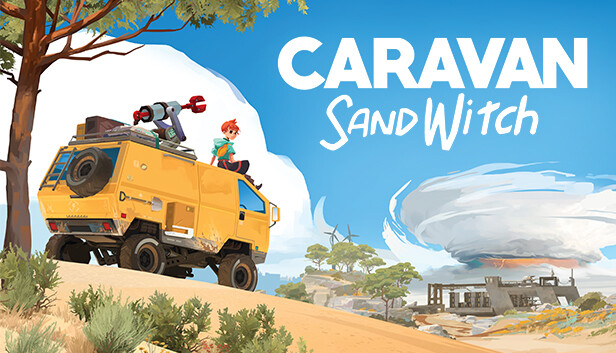
This Caravan SandWitch review returns to Cigalo in a yellow van and finds a game more interested in attention than danger. Sauge follows a distress signal.

 7.5
7.5 Kaizensclan verdict
This Caravan SandWitch review returns to Cigalo in a yellow van and finds a game more interested in attention than danger. Sauge follows a distress signal.
Review basis: 6 hours on PC. The stated time covers several sessions with the release build and is not a claim of full completion.
This Caravan SandWitch review returns to Cigalo in a yellow van and finds a game more interested in attention than danger. Sauge follows a distress signal connected to her missing sister, but the road repeatedly pulls toward neighbours, abandoned machines and the environmental history of a planet left behind by industry.
Caravan SandWitch review: the opening hours
Sauge arrives from off-world after receiving a signal that may belong to Garance, her sister who vanished years earlier. The local Reinetos community welcomes her without pretending the disappearance is simple. Early errands introduce the settlement, the van and the towers that block communications, allowing the personal mystery to grow inside an ordinary network of favours.
Drive to a marked region, leave the van, climb through ruins, gather components and activate equipment that opens another route or story. Van upgrades add tools such as a scanner and grappling device. Conversations send Sauge back across familiar roads, but newly available interactions make the return journey more purposeful than a checklist of untouched icons.
Systems and meaningful decisions
Progression is physical and legible. The scanner locates components and signals; later tools connect the van to otherwise unreachable mechanisms. Resources are not an economy to grind, and there is no combat build. The limitation is that many puzzles resolve by locating the single usable point rather than combining tools in surprising ways.
We judged progression by whether it changed the next decision rather than merely increasing a number. A useful unlock opens a route, answers a recurring problem or creates a new risk. Busy menus received no extra credit when the underlying choice remained obvious.
Controls, combat and feedback
Driving feels deliberately forgiving, with enough weight to make dirt roads readable without punishing small collisions. On foot, climbing points and ledges are clear. The camera occasionally crowds Sauge in narrow wreckage, while context prompts can require a small reposition. Neither issue seriously obstructed exploration during the six-hour test.
Failure is productive when the game supplies enough information for a better attempt. We separated setbacks caused by a readable rule or poor plan from repetition that only consumed time. Challenge can create tension without hiding responsibility for the outcome.
World and visual direction
Cigalo combines dry Provençal colours, wind turbines, brutalist ruins and hand-painted vegetation. The art direction communicates a damaged ecosystem without reducing the planet to grey debris. Roads curve around memorable landmarks, so navigation becomes intuitive even before every map marker is understood.
Presentation was assessed during ordinary play, not only in composed screenshots. Strong direction guides attention through colour, movement and contrast while preserving mood. A beautiful effect becomes a liability when it hides an objective, hazard or rival.
Music and sound design
A restrained acoustic and electronic score leaves room for wind, insects and the van’s engine. Different surfaces subtly change the road noise. Conversations are not fully voiced, which keeps the small production coherent but asks the player to accept reading as the main dramatic rhythm.
Audio was treated as atmosphere and information. Distinct warnings, impacts and movement cues matter more over several hours than one loud set piece, although a memorable score can give repeated actions identity.
Performance and interface
The PC build remained stable for six hours and loaded regional transitions quickly. Controller support suited driving and climbing. Text presentation was clear at a desktop distance, though players who need full voice acting or extensive visual-accessibility filters should check the current settings list before purchase.
One platform cannot represent every configuration, and later patches may change performance. We report the observed experience without promising results on untested hardware. Players with strict accessibility or frame-rate requirements should check current platform documentation.
We also compared the advertised fantasy with the action repeated between major set pieces. A score rises when ordinary minutes express the same strengths as the trailer, and falls when progress regularly depends on friction the game does not acknowledge or explain.
Learning curve and pacing
The opening explains one van function at a time and rarely threatens failure. Complexity comes from recognising how a new device changes an old location, not from timing or execution. This makes the game welcoming, but experienced puzzle players may solve an area before its route has created much resistance.
The opening session was separated from later play. A system that initially feels obscure may become expressive after its vocabulary settles, while a polished tutorial can hide a loop that never develops. Essential status and resource information should remain available during play.
Replay value and practical fit
Six hours covered the central mystery, a wide selection of side conversations and most upgrade types without rushing every collectible. Short drives create breathing space between dialogue scenes. Repeated trips can feel slow when a task points to the opposite side of the map, especially before the fastest routes are familiar.
Replay value can come from alternate routes, builds, conversations or mastery of a fixed sequence. Those forms are not interchangeable. We credit only the structure visible in the stated hours and do not award points for an assumed endgame or promised roadmap.
Value and accessibility
The value rests in a complete authored journey rather than mechanical replay. Cigalo rewards players who stop for optional conversations and environmental details. Someone seeking combat, survival meters or difficult platforming will find the game slight regardless of length.
Value was judged from the quality and repeatability of the available experience, not from a temporary discount. A compact game can justify its scope when every hour develops the idea; a larger game can still waste time through repetition.
The buying question extends beyond technical compatibility. Consider whether a normal twenty-minute stretch contains the decisions, reading, repetition and downtime you enjoy. Unedited footage of ordinary play is often a better final check than a trailer assembled from peak moments.
Limits of the 6-hour review
The six-hour review window did not exhaust every optional component or conversation branch. It covered enough upgrades to judge the exploration loop and reached late story territory without treating unvisited collectibles as completed content. Later platform patches may alter technical performance.
The test window was long enough to revisit the core loop across separate sessions, but it did not cover every ending, late encounter or future update. Price, discounts and online population are not treated as permanent facts.
Who should play it?
Choose Caravan SandWitch when a quiet road trip, community-focused science fiction and forgiving exploration sound restorative. Play in short sessions if repeated crossings become too soft. Skip it when progression needs danger, complex puzzles or a demanding vehicle model to stay engaging.
Caravan SandWitch review verdict
Caravan SandWitch makes kindness part of exploration instead of a reward after it. Its puzzles rarely bite, but Cigalo’s visual identity and the steady usefulness of the van make the journey worth taking.
Pros: Cigalo has a strong and coherent visual identity; van upgrades make revisiting spaces meaningful; community stories avoid melodramatic shortcuts.
Cons: puzzles offer little resistance; long return drives can lose momentum; limited voice acting reduces dramatic immediacy.
Final score: 7.5/10. A warm, beautifully paced exploration game whose van upgrades and community stories matter more than its light traversal puzzles.
Sources: primary release notes or official records. Factual claims were checked against these records; interpretation is our own.
Continue with the Kaizensclan archive, our practical guides and the latest game reviews.
Editorial note
Hands-on review window recorded in the article metadata, supported by official documentation and public technical coverage.
This article was reviewed on August 13, 2026.

Related stories
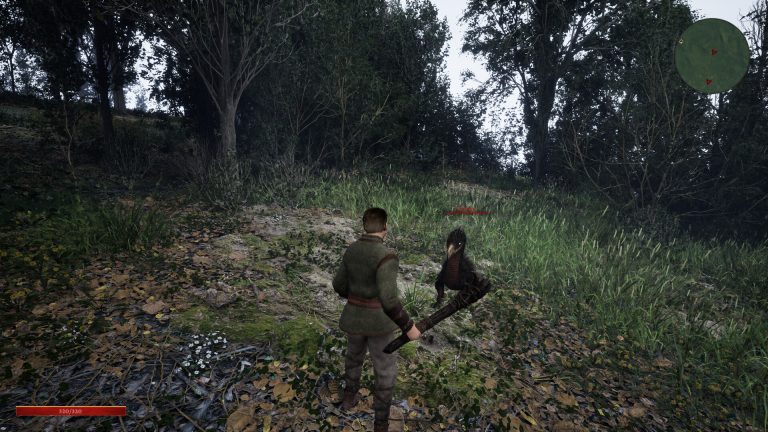
Ashes of Kardoria launches a 16-hour faction RPG
Ashes of Kardoria launches a 16-hour faction RPG. The choice-driven campaign pits Guards against Hunters amid plague and hunger, with multiple endings and…
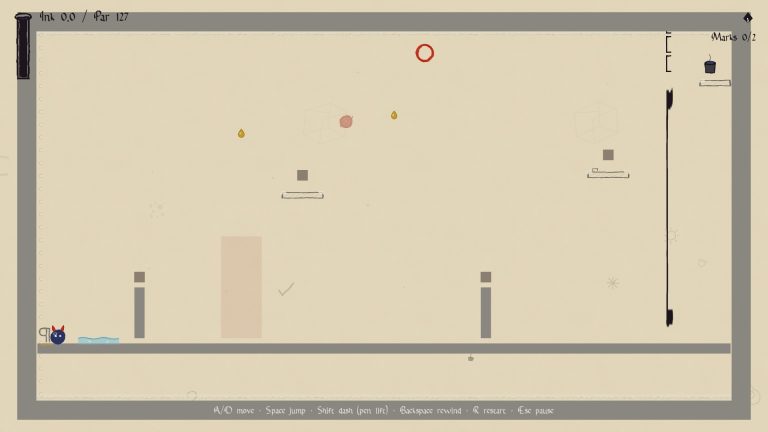
Deadline makes every movement a permanent wall
Deadline makes every movement a permanent wall. Orikazi’s precision platformer scores clean routes across more than 50 pages and includes a one-use gap in…
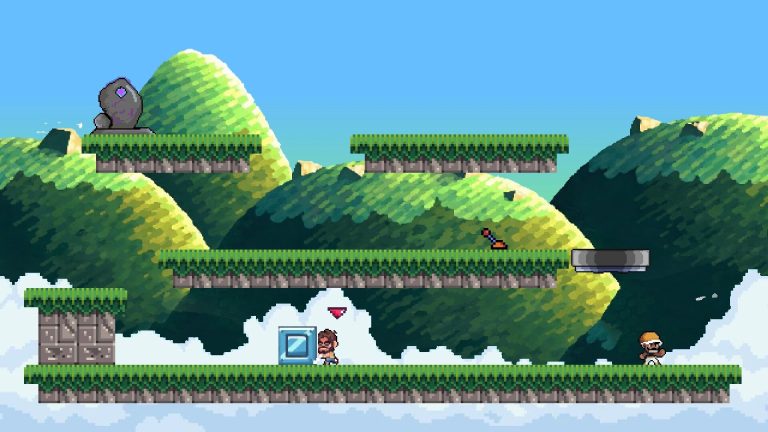
Seleto’s in Puzzle Land pairs two heroes’ abilities
Seleto’s in Puzzle Land pairs two heroes’ abilities. Seleto Ronister Productions combines character switching, 2D platforming, imaginary worlds and bilingual…
Community channel
Join the discussion
Start a thoughtful, specific conversation about this story.
Verified readers only
Continue with Google to comment.
Your Google account creates a reader-only Kaizensclan profile. Your first comment is reviewed before publication.