The Rise of the Golden Idol review: deduction across decades
This The Rise of the Golden Idol review finds a sequel willing to abandon its predecessor’s century while preserving the discipline of deduction. Across the.

 9.0
9.0 Kaizensclan verdict
This The Rise of the Golden Idol review finds a sequel willing to abandon its predecessor’s century while preserving the discipline of deduction. Across the.
Review basis: 7 hours on PC. The stated time covers several sessions with the release build and is not a claim of full completion.
This The Rise of the Golden Idol review finds a sequel willing to abandon its predecessor’s century while preserving the discipline of deduction. Across the 1970s, investigators, executives, cultists and criminals collide with a strange technology. The player receives frozen scenes, scattered words and no detective avatar to absorb responsibility for the answer.
The Rise of the Golden Idol review: the opening hours
The first case begins with an apparent death and a room full of relationships that are not labelled for convenience. Clicking people, objects and written evidence adds words to a vocabulary bank. Those words fill statements about identities and events. A correct solution must explain the whole scene, not merely identify the person who looks most suspicious.
Inspect every hotspot, sort nouns and verbs, test names against faces, then fill a scenario panel until its grammar describes what happened. Multi-scene chapters ask the player to retain earlier roles and motives. Validation happens at useful intervals, revealing how many entries are wrong without highlighting the exact mistake.
Systems and meaningful decisions
The word-bank structure turns observation into constrained reasoning. A term discovered in one scene may clarify a machine, relationship or lie elsewhere. Because many words fit grammatically, brute force remains possible but tedious; the better route is to build a timeline and ask what each participant could know at that moment.
We judged progression by whether it changed the next decision rather than merely increasing a number. A useful unlock opens a route, answers a recurring problem or creates a new risk. Busy menus received no extra credit when the underlying choice remained obvious.
Controls, combat and feedback
Mouse controls make zooming, highlighting and filling slots immediate. The interface separates collected clues from the current scenario and allows completed scenes to be revisited. On a smaller display, dense handwriting and crowded hotspots may require frequent zoom changes, but the game rarely hides a critical clue behind pixel-perfect clicking.
Failure is productive when the game supplies enough information for a better attempt. We separated setbacks caused by a readable rule or poor plan from repetition that only consumed time. Challenge can create tension without hiding responsibility for the outcome.
World and visual direction
Color Gray Games uses deliberately awkward, animated portraiture that makes every face memorable. Offices, motels and laboratories feel specific to a grimy retro-modern decade. Visual exaggeration is not merely comic: posture, clothing and room arrangement carry evidence, so the style supports identification rather than decorating it.
Presentation was assessed during ordinary play, not only in composed screenshots. Strong direction guides attention through colour, movement and contrast while preserving mood. A beautiful effect becomes a liability when it hides an objective, hazard or rival.
Music and sound design
Sparse music leaves concentration intact, while short stings give discoveries and validations weight. Ambient loops distinguish scenes without insisting on urgency. There is little spoken dialogue, placing tone in written language and facial animation. The restraint suits a game where one repeated sound could become exhausting during a long deduction.
Audio was treated as atmosphere and information. Distinct warnings, impacts and movement cues matter more over several hours than one loud set piece, although a memorable score can give repeated actions identity.
Performance and interface
Seven hours on PC were stable, with instant movement between scenes and no lost notes. The interface supports keyboard shortcuts alongside the mouse. Players sensitive to animated faces should sample footage first; the art intentionally uses twitching expressions and uneven motion that can feel uncanny.
One platform cannot represent every configuration, and later patches may change performance. We report the observed experience without promising results on untested hardware. Players with strict accessibility or frame-rate requirements should check current platform documentation.
We also compared the advertised fantasy with the action repeated between major set pieces. A score rises when ordinary minutes express the same strengths as the trailer, and falls when progress regularly depends on friction the game does not acknowledge or explain.
Learning curve and pacing
Early cases establish identities and simple chronology before chapters demand institutional roles, technical procedures and information passed between scenes. The game explains its interface but not its conclusions. Difficulty rises through relationships rather than obscure controls, and a wrong answer usually points back to an assumption that the evidence never proved.
The opening session was separated from later play. A system that initially feels obscure may become expressive after its vocabulary settles, while a polished tutorial can hide a loop that never develops. Essential status and resource information should remain available during play.
Replay value and practical fit
Seven hours covered multiple chapters at an unhurried note-taking pace. Cases are compact enough for one sitting, but connected mysteries reward remembering earlier details. There is limited conventional replay after every solution is known, although returning to a solved scene reveals how openly the answer was staged.
Replay value can come from alternate routes, builds, conversations or mastery of a fixed sequence. Those forms are not interchangeable. We credit only the structure visible in the stated hours and do not award points for an assumed endgame or promised roadmap.
Value and accessibility
The campaign offers a substantial chain of authored deductions and avoids filler combat or traversal. Its value depends on resisting walkthroughs and enjoying uncertainty. Players who want an embodied detective, dialogue choices or procedural cases should understand that this is closer to solving a dossier than role-playing an investigator.
Value was judged from the quality and repeatability of the available experience, not from a temporary discount. A compact game can justify its scope when every hour develops the idea; a larger game can still waste time through repetition.
The buying question extends beyond technical compatibility. Consider whether a normal twenty-minute stretch contains the decisions, reading, repetition and downtime you enjoy. Unedited footage of ordinary play is often a better final check than a trailer assembled from peak moments.
Limits of the 7-hour review
The test did not complete every final chapter or downloadable case. It covered the full vocabulary loop, several multi-scene investigations and enough of the wider conspiracy to judge escalation. The score reflects the released PC campaign structure visible in those seven hours.
The test window was long enough to revisit the core loop across separate sessions, but it did not cover every ending, late encounter or future update. Price, discounts and online population are not treated as permanent facts.
Who should play it?
Play it if Return of the Obra Dinn, Case of the Golden Idol or logic-grid puzzles make a notebook feel like a weapon. Work with another person only if you enjoy discussing evidence without racing to the answer. Skip it if static scenes and text-heavy inference feel like homework.
The Rise of the Golden Idol review verdict
The Rise of the Golden Idol respects the difference between spotting a clue and proving a story. Its best solutions arrive when several ordinary facts suddenly describe one extraordinary event, and the game has the confidence to let that realisation belong to the player.
Pros: deductions depend on connected evidence; distinct art makes identities memorable; multi-scene chapters escalate logically.
Cons: limited replay after solutions are known; uncanny animation may repel some players; dense text asks for sustained attention.
Final score: 9/10. A superb deduction game that trusts players to connect names, motives and impossible technology without disguising guesses as investigation.
Sources: primary release notes or official records. Factual claims were checked against these records; interpretation is our own.
Continue with the Kaizensclan archive, our practical guides and the latest game reviews.
Editorial note
Hands-on review window recorded in the article metadata, supported by official documentation and public technical coverage.
This article was reviewed on August 13, 2026.

Related stories
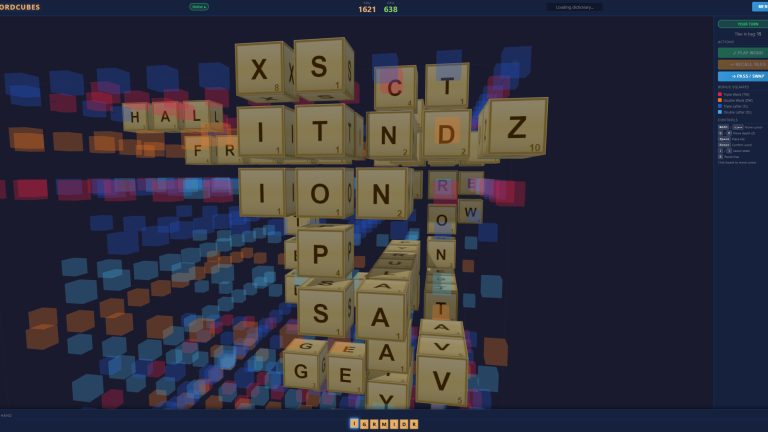
Word Cubes moves tile placement across three axes
Word Cubes moves tile placement across three axes. BTA Electronics adds three-dimensional intersections, familiar letter values, score multipliers and…
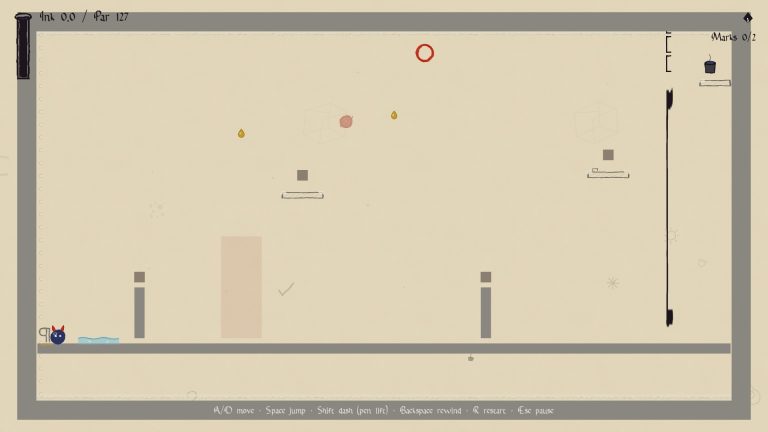
Deadline makes every movement a permanent wall
Deadline makes every movement a permanent wall. Orikazi’s precision platformer scores clean routes across more than 50 pages and includes a one-use gap in…
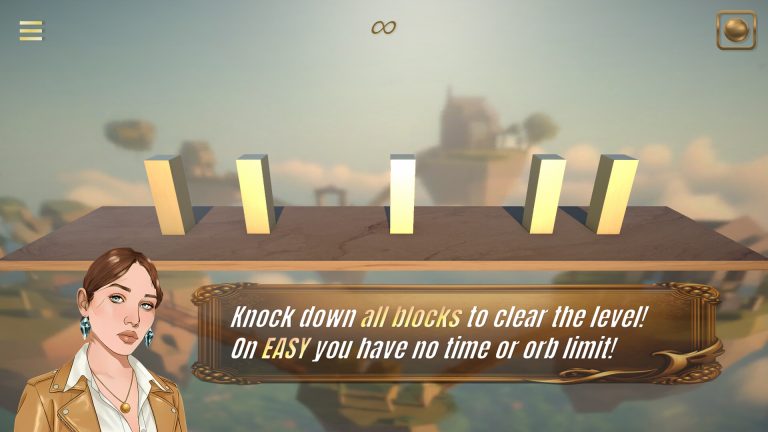
Oro Cade launches 70 golden physics puzzles
Oro Cade launches 70 golden physics puzzles. Crylic Games combines chain-based block clearing with five orb types, three difficulty modes and a reactive…
Community channel
Join the discussion
Start a thoughtful, specific conversation about this story.
Verified readers only
Continue with Google to comment.
Your Google account creates a reader-only Kaizensclan profile. Your first comment is reviewed before publication.