The Roottrees Are Dead review: a brilliant browser mystery
Our The Roottrees Are Dead review examines its 1998 browser investigation, family-tree deductions, clue design and the limits of a seven-hour test. Read the.

 8.5
8.5 Kaizensclan verdict
Our The Roottrees Are Dead review examines its 1998 browser investigation, family-tree deductions, clue design and the limits of a seven-hour test. Read the.
Review basis: 7 hours on PC (Steam). The score covers the systems and release build observed within that window, not a completionist playthrough.
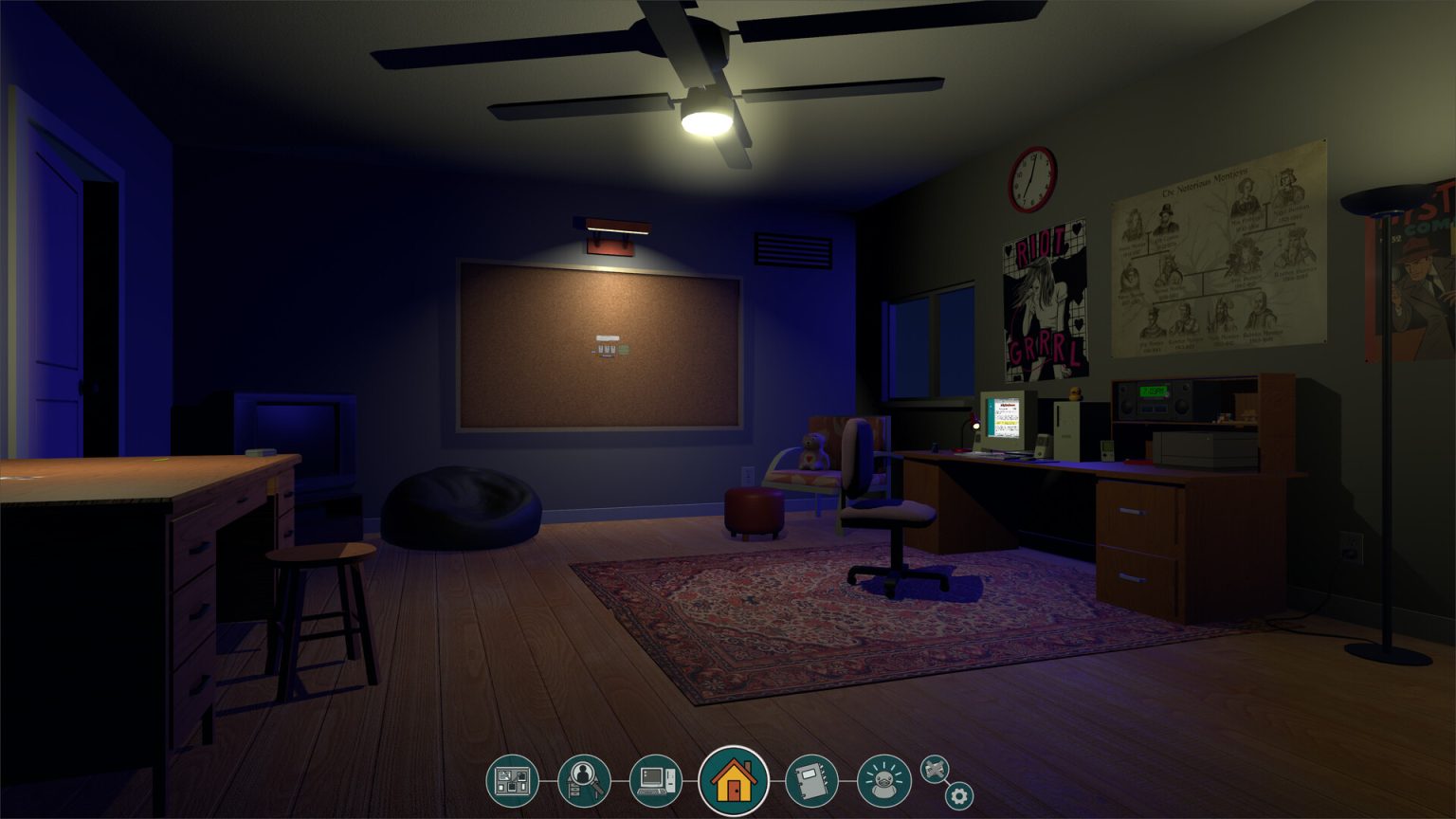
The Roottrees are Dead turns a fake 1998 internet into a serious investigation tool. Its mystery begins after a private jet crash kills members of the wealthy Roottree family, leaving the player to identify legitimate relatives and reconstruct a dynasty that preferred its secrets buried.
The Roottrees Are Dead review: the opening hours
The opening teaches almost nothing through conventional tutorial panels. A browser, notes and a partially empty family tree sit on the desktop, and the first useful discovery comes from typing a sensible name into the search field. That small act establishes the contract: progress comes from reading sources, noticing relationships and testing a claim.
Most sessions alternate between searching the fictional web, opening books or articles and entering people into the tree. A correct connection unlocks more search terms, but the game rarely points directly at the next page. The pleasure lies in turning a stray employer, school or maiden name into a bridge between two branches.
Systems and meaningful decisions
Evidence has hierarchy. A photograph can prove that people met, but a caption, date and independent article may be needed to establish identity. The tree rejects unsupported guesses, yet it does not reveal which part of a complicated submission failed. That restraint keeps deduction meaningful without allowing random completion through endless clicking.
Progression matters when it changes the next decision instead of merely raising a number. During this review window, tools and upgrades were judged by whether they opened a route, solved a recurring problem or encouraged a different risk. Busy interfaces received no extra credit when the underlying choice stayed obvious.
Controls, challenge and feedback
The desktop metaphor is responsive and familiar, with windows that can be rearranged and references revisited. Friction comes from the work itself: repeated typing, spelling checks and moving between documents. The best challenge is logical, while the least interesting moments occur when the right idea waits behind one exact search term.
Failure is most useful when the game explains enough to support another attempt. We tracked whether setbacks revealed a readable rule, exposed a poor plan or simply demanded repetition. That distinction matters because difficulty can create tension without wasting the player’s time.
World, art and sound
The fake websites, corporate histories and scanned material create a believable late-1990s information ecosystem. Different sources carry their own tone and bias, so worldbuilding also functions as evidence. The restrained presentation keeps attention on language without making the mystery visually sterile.
Dial-up texture, interface sounds and subdued music support concentration. Audio avoids announcing every correct inference with excessive celebration. That makes a completed branch feel like the result of reasoning rather than a slot machine reward.
Presentation was judged during ordinary play, not only in composed screenshots. Strong art direction guides attention through colour, motion and sound while preserving mood. A beautiful scene is less successful if objectives, hazards or interactive objects disappear inside it.
Performance and interface
Across the test window, the interface remained stable and readable at a normal desktop resolution. Window management is central, so smaller displays may require more shuffling. Search history and stored evidence reduce the need to recreate every path after a break.
One PC cannot represent every configuration, and later patches may change performance. This review reports the observed build and avoids promising results on untested hardware. Players with a specific accessibility or performance requirement should check the current platform documentation before buying.
Onboarding and learning curve
Players familiar with Obra Dinn-style deduction will understand the expectation quickly, but the game uses text retrieval rather than spatial reconstruction. Its hints preserve agency by narrowing attention instead of printing a solution. Keeping independent notes helps when several generations introduce similar names.
The first session was separated from later sessions when judging clarity. A system that feels obscure for ten minutes may become expressive once its vocabulary settles, while an exciting tutorial can conceal a loop that never develops. Important status, objective and resource information should remain available to a new player during normal play.
Pacing and replay value
Progress arrives in uneven waves. Twenty minutes of uncertain reading can produce three connected identities once one surname clicks. That rhythm is honest to investigation but unsuitable for anyone who needs constant forward motion. The additional Roottreemania mystery expands the value after the central case.
Replay value can come from alternate routes, different builds, procedural incidents or the pleasure of mastering a fixed sequence. Those forms are not interchangeable. We credit only the replay structure visible during the stated hours and do not award points for an assumed endgame or future roadmap.
Accessibility and practical fit
The experience depends heavily on reading, name recognition and navigating multiple documents. Players who need large text should inspect the current display options before purchasing. There is no mechanical penalty for taking notes outside the game or stopping between discoveries.
The practical buying question is broader than technical compatibility. Consider whether a normal twenty-minute stretch contains the decisions, reading, repetition and downtime you enjoy. A trailer can accurately show the world while still hiding the cadence that occupies most of a session.
Limits of the 7-hour review
Seven hours covered the main investigative rhythm and a substantial portion of the family tree, but not every conclusion or the full additional mystery. The review avoids judging the final reveal and does not spoil the decisive relationships.
The window is long enough to test the repeated loop across several sessions, but it cannot certify every ending, late encounter or future update. Price, discounts and online population are not treated as permanent facts because each can change after publication.
Who should play it?
Play it if you want deduction that requires a notebook and treats evidence as a system. Skip it if searching documents feels like administration or if a mystery is enjoyable only when performed through voiced scenes and physical exploration.
A score is useful only beside that audience description. Genre experience, preferred difficulty and tolerance for repetition can change the result. Watching unedited footage of normal play is a better final check than relying on a trailer built entirely from peak moments.
How the score was decided
The score combines the repeated quality of decisions, clarity of feedback, presentation, technical state and the fit between the game’s stated idea and its actual loop. One spectacular scene cannot erase recurring friction, and one awkward first hour does not outweigh a system that becomes consistently rewarding after it is understood.
Notes were compared across separate sessions to reduce the effect of novelty and fatigue. Strengths and limitations had to appear more than once before shaping the verdict.
The Roottrees Are Dead review verdict
The Roottrees are Dead succeeds because its fiction and its mechanics are the same thing. The web is not background decoration; it is the crime scene. Occasional search-term friction cannot erase the satisfaction of proving a relationship from several imperfect records.
Pros: Excellent deduction structure; Convincing 1998 computer interface; Clues reward careful cross-referencing; Strong hint discipline.
Cons: Dense reading will not suit every player; Some name searches feel mechanically repetitive; Long sessions can blur family relationships.
Final score: 8.5/10. A demanding, unusually fair detective game that trusts written evidence more than spectacle.
Source: official information and published records.
Continue with our practical guides and browse more reporting in the Kaizensclan archive.
A final comparison separated the quality of the repeated play from the novelty of its first appearance. Features that remained useful across several sessions carried more weight than isolated surprises, while recurring friction counted even when each individual interruption looked minor.
Editorial note
Hands-on review window recorded in the article metadata, supported by official documentation and public technical coverage.
This article was reviewed on August 7, 2026.

Related stories

Lorelei and the Laser Eyes review: a puzzle hotel remembers
This Lorelei and the Laser Eyes review finds Simogo treating an abandoned hotel as a living index. Dates, symbols, films and architectural details recur until.

Minishoot’ Adventures review: exploration under fire
This Minishoot Adventures review finds a small ship leaving its village to free captured friends and confront corrupted machines. SoulGame Studio combines an.

Mouthwashing review: horror after the crash
This Mouthwashing review enters the Tulpar after a crash leaves five crew members with dwindling supplies and no credible rescue. Wrong Organ shifts between.
Community channel
Join the discussion
Start a thoughtful, specific conversation about this story.
Verified readers only
Continue with Google to comment.
Your Google account creates a reader-only Kaizensclan profile. Your first comment is reviewed before publication.