Lorelei and the Laser Eyes review: a puzzle hotel remembers
This Lorelei and the Laser Eyes review finds Simogo treating an abandoned hotel as a living index. Dates, symbols, films and architectural details recur until.

 9.0
9.0 Kaizensclan verdict
This Lorelei and the Laser Eyes review finds Simogo treating an abandoned hotel as a living index. Dates, symbols, films and architectural details recur until.
Review basis: 7 hours on PC. The stated time covers several sessions with the release build and is not a claim of full completion.
This Lorelei and the Laser Eyes review finds Simogo treating an abandoned hotel as a living index. Dates, symbols, films and architectural details recur until a clue that looked decorative becomes a precise instruction. Progress depends on reading rather than collecting stronger tools.
Lorelei and the Laser Eyes review: the opening hours
A woman arrives at Hotel Letztes Jahr after receiving an invitation from an artist. The courtyard offers several locked paths, and the interior quickly becomes a network of documents, number puzzles and staged memories. The game supplies a photographic memory menu, but a real notebook remains useful.
Explore a room, record its information, test one interpretation and return when another clue changes the question. Keys open physical doors while solved codes open conceptual ones. Because answers can be entered in many places, the player often chooses which uncertainty to carry rather than following one prescribed corridor.
Systems and meaningful decisions
The memory interface stores read material and important objects without automatically explaining relationships. Maps, yearbooks, scripts and puzzle boxes overlap through repeated visual grammar. Randomized elements make copying a complete solution less reliable and keep the act of extracting the rule central.
We judged progression by whether it changed the next decision rather than merely increasing a number. A useful unlock opens a route, answers a recurring problem or creates a new risk. Busy menus received no extra credit when the underlying choice remained obvious.
Controls, combat and feedback
Most actions use movement and one context button, allowing the game to work on controller despite its dense interfaces. Selecting tiny keypad elements can be slower than using a mouse. The deliberate movement fits the setting, although repeated trips across known rooms sometimes outlast the new idea waiting at the destination.
Failure is productive when the game supplies enough information for a better attempt. We separated setbacks caused by a readable rule or poor plan from repetition that only consumed time. Challenge can create tension without hiding responsibility for the outcome.
World and visual direction
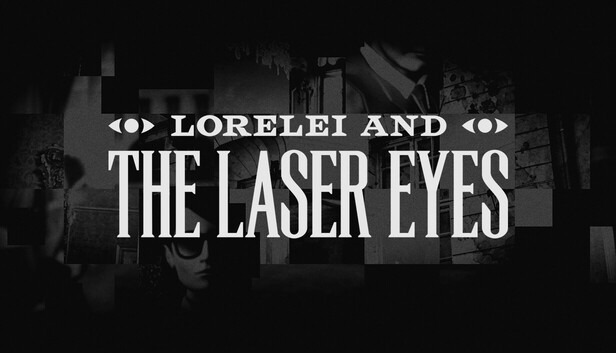
Black, white and grey dominate the hotel while the protagonist’s red clothing controls attention. Low-resolution models, sharp typography and live-action fragments collide without losing coherence. Camera angles frame rooms as diagrams, but occasional foreground occlusion makes navigation less clean than the puzzle composition.
Presentation was assessed during ordinary play, not only in composed screenshots. Strong direction guides attention through colour, movement and contrast while preserving mood. A beautiful effect becomes a liability when it hides an objective, hazard or rival.
Music and sound design
Sparse music leaves room for doors, telephones and the hum of projectors. Silence creates suspicion without relying on constant horror stingers. Important interactions have distinct confirmation sounds, helping separate a correctly entered answer from a theory that must be reconsidered.
Audio was treated as atmosphere and information. Distinct warnings, impacts and movement cues matter more over several hours than one loud set piece, although a memorable score can give repeated actions identity.
Performance and interface
The PC build remained stable during seven hours and moved between rooms without disruptive loading. Text is central, so screen size and contrast needs deserve attention. Controller support is complete, though players who dislike virtual keypads may prefer mouse input for long code sequences.
One platform cannot represent every configuration, and later patches may change performance. We report the observed experience without promising results on untested hardware. Players with strict accessibility or frame-rate requirements should check current platform documentation.
We also compared the advertised fantasy with the action repeated between major set pieces. A score rises when ordinary minutes express the same strengths as the trailer, and falls when progress regularly depends on friction the game does not acknowledge or explain.
Learning curve and pacing
The hotel teaches through recurrence: a format introduced as fiction later becomes a tool. That creates satisfying recognition but also severe stalls when one premise is missed. The memory archive softens the problem, yet the game intentionally avoids a conventional hint ladder that points to the next room.
The opening session was separated from later play. A system that initially feels obscure may become expressive after its vocabulary settles, while a polished tutorial can hide a loop that never develops. Essential status and resource information should remain available during play.
Replay value and practical fit
Seven hours opened a substantial part of the hotel but did not complete the full mystery. The structure supports revisiting old evidence with new context, and randomized answers give a second run some resistance to rote memory. Its strongest replay value is interpretive rather than mechanical.
Replay value can come from alternate routes, builds, conversations or mastery of a fixed sequence. Those forms are not interchangeable. We credit only the structure visible in the stated hours and do not award points for an assumed endgame or promised roadmap.
Value and accessibility
The game offers a dense authored mystery rather than a long stream of interchangeable riddles. Players who enjoy note-taking receive unusual depth for the price; anyone seeking relaxed environmental storytelling may find the frequency of locks exhausting. Accessibility needs tied to numbers or visual patterns should be checked carefully.
Value was judged from the quality and repeatability of the available experience, not from a temporary discount. A compact game can justify its scope when every hour develops the idea; a larger game can still waste time through repetition.
The buying question extends beyond technical compatibility. Consider whether a normal twenty-minute stretch contains the decisions, reading, repetition and downtime you enjoy. Unedited footage of ordinary play is often a better final check than a trailer assembled from peak moments.
Limits of the 7-hour review
This review does not claim the final sequence or every optional document. It judges the hotel’s puzzle language, navigation and narrative construction across seven hours. The absence of a completed ending limits conclusions about the ultimate explanation.
The test window was long enough to revisit the core loop across separate sessions, but it did not cover every ending, late encounter or future update. Price, discounts and online population are not treated as permanent facts.
Who should play it?
Choose it if The Witness, escape rooms and archival mysteries are appealing, especially when a notebook feels like part of play. Avoid it if external notes, number transformations or long periods without an obvious objective turn curiosity into irritation.
Lorelei and the Laser Eyes review verdict
Lorelei and the Laser Eyes makes attention feel like an instrument. Its hotel is beautiful because every frame might be evidence, and intimidating for the same reason. Minor navigation friction cannot dilute the confidence of its connected puzzle design.
Pros: exceptionally connected puzzle language; bold and readable art direction; mystery rewards careful notes.
Cons: stalls can be severe without hints; repeated traversal slows some discoveries; number-heavy interfaces will not suit everyone.
Final score: 9/10. A demanding, stylish puzzle box that trusts observation and turns every solved page into part of a larger mystery.
Sources: primary release notes or official records. Factual claims were checked against these records; interpretation is our own.
Continue with the Kaizensclan archive, our practical guides and the latest game reviews.
How the review time was used
The stated hours included ordinary progression, optional exploration and repeat sessions rather than only the opening spectacle. Notes separated a durable system from a single memorable scene. No score includes unseen endings, promised updates or an assumed endgame.
Editorial note
Hands-on review window recorded in the article metadata, supported by official documentation and public technical coverage.
This article was reviewed on August 11, 2026.

Related stories
Minishoot’ Adventures review: exploration under fire
This Minishoot Adventures review finds a small ship leaving its village to free captured friends and confront corrupted machines. SoulGame Studio combines an.
Mouthwashing review: horror after the crash
This Mouthwashing review enters the Tulpar after a crash leaves five crew members with dwindling supplies and no credible rescue. Wrong Organ shifts between.
Thank Goodness You’re Here review: slapstick with purpose
This Thank Goodness You’re Here review follows a traveling salesman who arrives early for a mayoral appointment and becomes free labor for Barnsworth. Coal.
Community channel
Join the discussion
Start a thoughtful, specific conversation about this story.
Verified readers only
Continue with Google to comment.
Your Google account creates a reader-only Kaizensclan profile. Your first comment is reviewed before publication.