Oblivion Remastered Review: Cyrodiil Rebuilt
Our Oblivion Remastered review covers eight hours in Cyrodiil, weighing its rebuilt visuals, classic quest design, combat feel and uneven technical performance.

 8.0
8.0 Kaizensclan verdict
Our Oblivion Remastered review covers eight hours in Cyrodiil, weighing its rebuilt visuals, classic quest design, combat feel and uneven technical performance.
Oblivion Remastered is a lavish restoration rather than a replacement for Bethesda’s 2006 role-playing game. Virtuos rebuilt the presentation while the original quest logic, strange encounters and flexible character systems remain recognizably Cyrodiil.
First 8 hours
The opening dungeon immediately shows the project’s two layers. Stone, skin and torchlight look contemporary, yet guards, rats and tutorial prompts follow a familiar rhythm. Emerging from the sewers still creates the central promise: pick a direction and allow a modest errand to become a story.
Eight hours were enough to visit the Imperial City, follow guild leads, clear ruins and test melee, magic and stealth. The strongest sessions were not checklist runs. They were chains of interruptions in which a conversation suggested a district, an NPC schedule revealed an opportunity, and a supposedly simple journey became a cave expedition.
Systems and progression
Class creation remains unusually permissive. Major skills provide identity, but weapons, spells, alchemy and persuasion can overlap without demanding a perfect build. The remaster’s revised interface makes inventories easier to read, although the underlying economy and level scaling still carry some of Oblivion’s eccentric balance.
Skill growth rewards using the actions associated with a character. That keeps improvement legible, but it can also encourage awkward optimization if a player worries about efficiency. The healthier approach is to choose a coherent fantasy and accept that Cyrodiil was never designed as a tightly solved competitive system.
Combat, control and difficulty
Melee has more visual weight, bows communicate impact more clearly and spell effects benefit enormously from the new lighting. Encounters nevertheless retain the original game’s tendency toward repeated swings against durable targets. Positioning, poisons and mixed damage keep fights moving better than relying on one basic attack.
Mouse and keyboard navigation is functional, and controller support suits exploration, but menu density can slow rapid item changes. Third-person animation has improved visually without becoming the ideal precision view. First person remains the most direct way to judge reach and aim.
World, presentation and performance
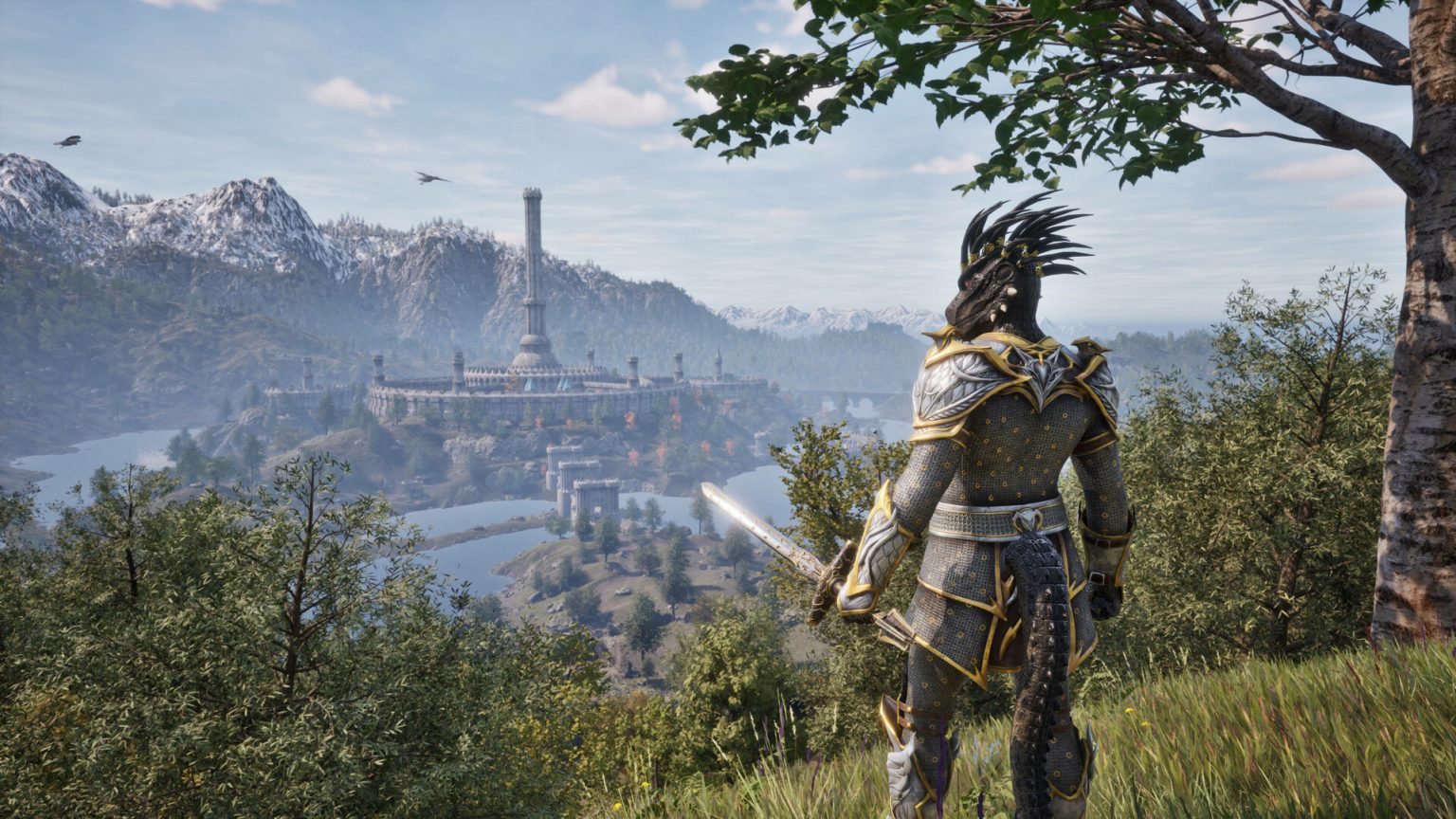
The rebuilt landscape is the headline achievement. Forest light, wet stone and distant architecture give each route a stronger atmosphere while preserving the readable geography of the original. Character faces are more detailed but still expressive in the slightly uncanny way central to Oblivion’s identity.
The visual leap has a cost. Dense spaces can produce uneven frame pacing depending on hardware and settings, and old quest behavior can still create odd moments. The package includes Shivering Isles, Knights of the Nine and the original downloadable content, so its scope is substantial from launch.
Onboarding and learning curve
Oblivion Remastered Review: Cyrodiil Rebuilt introduces its ideas through the normal play loop rather than assuming immediate mastery. During this review window, the useful measure was how often a failed attempt taught a transferable lesson. Clear feedback makes experimentation productive; unclear feedback makes the same repetition feel arbitrary. The game is strongest when a new system changes the next decision instead of adding another menu notification.
Familiarity with the open-world rpg genre shortens the adjustment period, but it should not be confused with quality. We judged whether controls, objectives and consequences were communicated consistently. Tutorials can explain buttons; the design still has to show why and when those buttons matter.
Pacing and decision density
A useful hour is not necessarily an hour packed with rewards. Strong pacing alternates pressure with enough quiet time to understand a place, compare options or prepare the next attempt. Oblivion Remastered Review: Cyrodiil Rebuilt is most convincing when its slower passages create context for the following decision. It is less convincing when travel, repeated setup or interface work delays a choice whose answer is already obvious.
The stated playtime is long enough to evaluate the opening contract and several repeated loops, but not enough to promise that late-game balance follows the same pattern. We therefore avoided projecting an early upgrade curve across the entire campaign. Where later systems are visible but not properly tested, they remain outside the score rather than being treated as guaranteed depth.
Accessibility and player fit
Readable text, remappable controls, subtitle presentation and adjustable audiovisual settings can determine whether a player reaches the design at all. Available options were considered alongside the moment-to-moment experience, although individual access needs differ. Anyone relying on a specific feature should verify the current platform build and official accessibility information before purchasing.
The clearest audience for Oblivion Remastered Review: Cyrodiil Rebuilt is a player who values expressive quest design and can tolerate old systemic quirks remain. Someone seeking a different pace or structure may reasonably reach another conclusion even if every system works as intended. A review score summarizes that balance; it does not replace the audience description.
Replay value and longer-term outlook
Replay value can come from alternate choices, improved execution, cooperative variation or simply the pleasure of revisiting a well-made space. The first 8 hours show whether the core loop supports repetition, but live updates and undiscovered content can change its durability. We do not award points for a roadmap. The verdict is based on the released experience tested here.
Price and online population can change after publication, so neither is presented as a permanent fact. The durable buying question is whether the current mechanics and authored content justify a place in the reader’s rotation. Technical fixes may improve friction later, but they should be confirmed in patch notes rather than assumed.
What works
Oblivion’s best quests still value setup, character and a memorable twist over raw reward. The remaster understands that these stories, not just the landscape, are the reason to return. Modernized presentation makes the journey easier to inhabit without sanding away every eccentric edge.
What holds it back
Players expecting a modern combat rewrite or fully redesigned progression will find the original structure close beneath the surface. Performance demands also sit above what the age of the underlying design might suggest. Saving often remains sensible because systemic surprises are part of the experience.
Verdict after 8 hours
After eight hours, the remaster succeeds because it lets old and new coexist. It is beautiful enough to renew curiosity and faithful enough that Cyrodiil still feels unpredictable. New players should approach it as a distinctive 2006 RPG in exceptional new clothes, not as a 2025 open-world template.
This assessment covers a focused 8-hour review window on PC. It is an early-game verdict, not a claim to have exhausted every route, build or endgame system. The release facts were checked against the publisher’s official store materials, while the score reflects the experience available within that stated window.
Continue with our practical guides and follow the latest stories in the Kaizensclan archive.
Editorial checks and boundaries
We compared the repeated experience across more than one session instead of scoring the excitement of a single opening hour. Novelty can disguise friction, while early confusion can disappear once a control pattern becomes familiar. Notes focused on the decisions repeated most often, the clarity of feedback and the cost of recovering from an error. Those observations support the verdict more reliably than isolated visual highlights.
No review window can reproduce every hardware configuration or player history. Platform, input method and prior genre knowledge can alter the result. The score therefore belongs beside the stated 8-hour scope, strengths and limitations. Readers should use all four pieces together when deciding whether the game matches their priorities.
Editorial note
Hands-on review window recorded in the article metadata, supported by official documentation and public technical coverage.
This article was reviewed on August 7, 2026.

Related stories

Metaphor: ReFantazio review: politics through turn-based combat
Metaphor: ReFantazio carries familiar Atlus structures into a new fantasy world, then gives them a sharper public purpose. The calendar no longer tracks only.

Minishoot’ Adventures review: exploration under fire
This Minishoot Adventures review finds a small ship leaving its village to free captured friends and confront corrupted machines. SoulGame Studio combines an.

Mouthwashing review: horror after the crash
This Mouthwashing review enters the Tulpar after a crash leaves five crew members with dwindling supplies and no credible rescue. Wrong Organ shifts between.
Community channel
Join the discussion
Start a thoughtful, specific conversation about this story.
Verified readers only
Continue with Google to comment.
Your Google account creates a reader-only Kaizensclan profile. Your first comment is reviewed before publication.