Metaphor: ReFantazio review: politics through turn-based combat
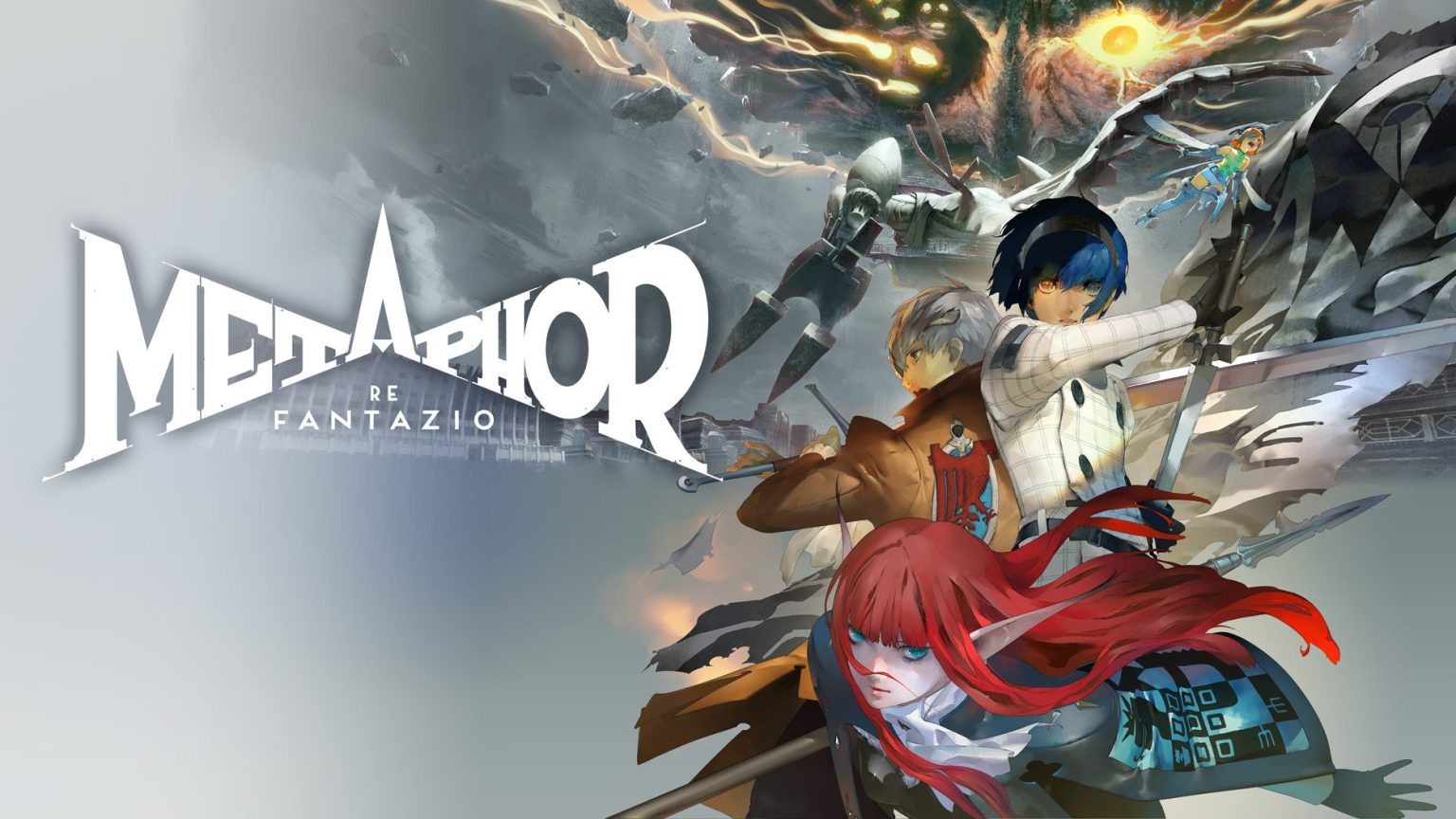
Metaphor: ReFantazio carries familiar Atlus structures into a new fantasy world, then gives them a sharper public purpose. The calendar no longer tracks only.

 9.0
9.0 Kaizensclan verdict
Metaphor: ReFantazio carries familiar Atlus structures into a new fantasy world, then gives them a sharper public purpose. The calendar no longer tracks only.
Review basis: 10 hours on PlayStation 5. The stated time covers several sessions with the release build and is not a claim of full completion.
Metaphor: ReFantazio carries familiar Atlus structures into a new fantasy world, then gives them a sharper public purpose. The calendar no longer tracks only school life and private relationships; it measures a royal election, travel time and the limited opportunities to persuade a frightened kingdom.
Metaphor ReFantazio review: the opening hours
The king’s death triggers magical conditions for an election while the protagonist works to save a cursed prince. The opening moves quickly through persecution, military power and the formation of a small party. Once the gauntlet runner opens the map, every journey requires choosing between deadlines, followers and optional danger.
Days alternate among story travel, relationship episodes, town activities and dungeons. Real-time attacks can defeat weak enemies or create an advantage before Squad combat begins. Stronger encounters switch to a press-turn system where weakness, resistance and action economy decide whether a formation holds.
Systems and meaningful decisions
Archetypes function as learnable roles shared across party members. A character can train as a Seeker, Warrior, Mage or another lineage, inherit selected skills and later unlock advanced forms. The freedom is balanced by cost: changing a team for one dungeon may consume experience, currency and preparation time.
We judged progression by whether it changed the next decision rather than merely increasing a number. A useful unlock opens a route, answers a recurring problem or creates a new risk. Busy menus received no extra credit when the underlying choice remained obvious.
Controls, combat and feedback
Menus are fast and clear, and the option to restart a turn encourages experimentation with weakness data. Field combat adds urgency but its camera and lock-on are less exact than the turn-based layer. In Squad battles, readable icons and immediate animation make an expensive mistake feel attributable rather than arbitrary.
Failure is productive when the game supplies enough information for a better attempt. We separated setbacks caused by a readable rule or poor plan from repetition that only consumed time. Challenge can create tension without hiding responsibility for the outcome.
World and visual direction
Euchronia mixes elaborate uniforms, impossible vehicles and deliberately unsettling monsters. Menus use animated typography and paint-like frames without losing hierarchy. The strongest locations show how tribal prejudice and economic fear alter ordinary streets, so political ideas have visual consequences beyond speeches.
Presentation was assessed during ordinary play, not only in composed screenshots. Strong direction guides attention through colour, movement and contrast while preserving mood. A beautiful effect becomes a liability when it hides an objective, hazard or rival.
Music and sound design
Shoji Meguro’s score combines orchestral drive with forceful choral passages, including Esperanto vocals. Battle music turns routine encounters into public ceremony. Voice performances give followers distinct rhythms, and the travelling vehicle has a calmer acoustic identity that protects downtime from dungeon fatigue.
Audio was treated as atmosphere and information. Distinct warnings, impacts and movement cues matter more over several hours than one loud set piece, although a memorable score can give repeated actions identity.
Performance and interface
The PS5 version was responsive and stable during the tested window, although some environmental textures and distant crowds look modest beside the lavish interface art. Loading is brief and save access is generous. The interface offers useful reminders, but the volume of unlocked terms can briefly overwhelm new players.
One platform cannot represent every configuration, and later patches may change performance. We report the observed experience without promising results on untested hardware. Players with strict accessibility or frame-rate requirements should check current platform documentation.
We also compared the advertised fantasy with the action repeated between major set pieces. A score rises when ordinary minutes express the same strengths as the trailer, and falls when progress regularly depends on friction the game does not acknowledge or explain.
Learning curve and pacing
Early tutorials arrive in clusters because combat, Archetypes, royal virtues and the calendar develop at once. By the second major destination the systems reinforce one another: a follower unlocks a combat option, a virtue opens a conversation, and a deadline determines whether the detour is affordable.
The opening session was separated from later play. A system that initially feels obscure may become expressive after its vocabulary settles, while a polished tutorial can hide a loop that never develops. Essential status and resource information should remain available during play.
Replay value and practical fit
Ten hours covered the opening arc and enough travel to see the calendar become a real constraint. Reconfiguring Archetypes invites repeat fights and alternate parties, while dialogue choices and follower priorities create long-form replay potential. The large projected runtime remains outside this review window.
Replay value can come from alternate routes, builds, conversations or mastery of a fixed sequence. Those forms are not interchangeable. We credit only the structure visible in the stated hours and do not award points for an assumed endgame or promised roadmap.
Value and accessibility
This is a substantial single-player RPG with no need to chase rotating events. Difficulty options and turn restarts lower the cost of learning, while text volume and frequent menu decisions demand attention. Players who dislike calendars may still feel pressured even though deadlines are clearly displayed.
Value was judged from the quality and repeatability of the available experience, not from a temporary discount. A compact game can justify its scope when every hour develops the idea; a larger game can still waste time through repetition.
The buying question extends beyond technical compatibility. Consider whether a normal twenty-minute stretch contains the decisions, reading, repetition and downtime you enjoy. Unedited footage of ordinary play is often a better final check than a trailer assembled from peak moments.
Limits of the 10-hour review
The test did not reach the full election, late Archetypes or ending. The score reflects the opening campaign’s systems, writing and technical state, not an assumed conclusion. Later difficulty spikes could change the balance between flexibility and grinding.
The test window was long enough to revisit the core loop across separate sessions, but it did not cover every ending, late encounter or future update. Price, discounts and online population are not treated as permanent facts.
Who should play it?
Choose it for strategic turn-based battles, long character arcs and a fantasy story willing to discuss institutions directly. Avoid it if dense dialogue, scheduled days or extensive build management feel like chores.
Metaphor ReFantazio review verdict
Metaphor’s best achievement is coherence. Combat roles, travel and political relationships all ask who the party can become before time runs out. Some field action is rough and the first hours are crowded, but the turn-based core and visual conviction are exceptional.
Pros: flexible Archetype system; purposeful calendar and travel structure; bold art direction and score.
Cons: busy opening tutorials; imprecise real-time field combat; calendar pressure will not suit everyone.
Final score: 9/10. An ambitious fantasy RPG that joins flexible class combat to a purposeful calendar and unusually direct political stakes.
Sources: primary release notes or official records. Factual claims were checked against these records; interpretation is our own.
Continue with the Kaizensclan archive, our practical guides and the latest game reviews.
Session notes were compared after play to separate lasting patterns from a single memorable encounter.
Editorial note
Hands-on review window recorded in the article metadata, supported by official documentation and public technical coverage.
This article was reviewed on August 10, 2026.

Related stories
Minishoot’ Adventures review: exploration under fire
This Minishoot Adventures review finds a small ship leaving its village to free captured friends and confront corrupted machines. SoulGame Studio combines an.
Mouthwashing review: horror after the crash
This Mouthwashing review enters the Tulpar after a crash leaves five crew members with dwindling supplies and no credible rescue. Wrong Organ shifts between.
Thank Goodness You’re Here review: slapstick with purpose
This Thank Goodness You’re Here review follows a traveling salesman who arrives early for a mayoral appointment and becomes free labor for Barnsworth. Coal.
Community channel
Join the discussion
Start a thoughtful, specific conversation about this story.
Verified readers only
Continue with Google to comment.
Your Google account creates a reader-only Kaizensclan profile. Your first comment is reviewed before publication.