Death Stranding 2 review: a richer road through isolation
Our Death Stranding 2 review explores delivery systems, combat, social infrastructure, presentation and the expanded PC release of On the Beach. Analysis.

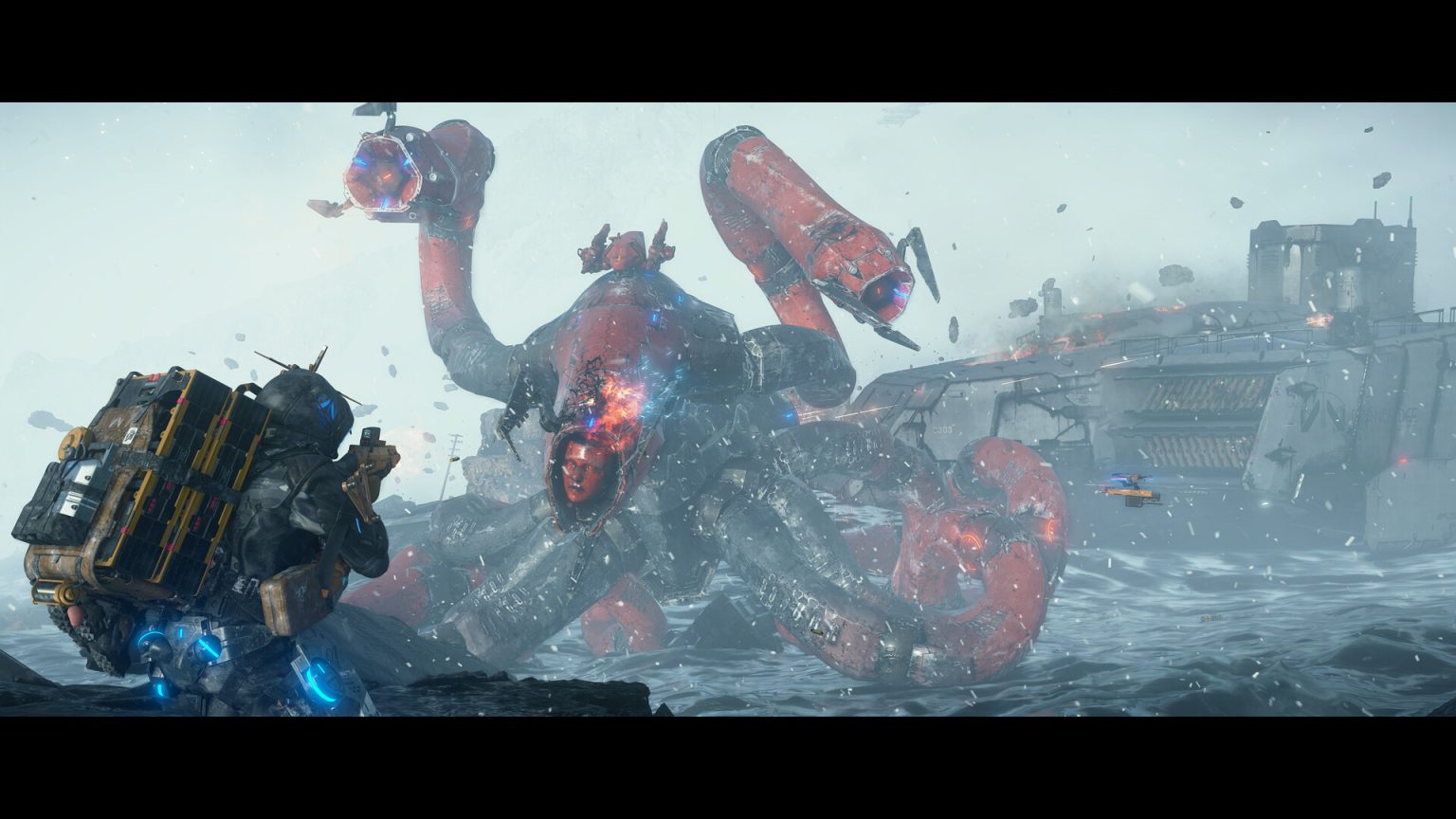 9.0
9.0 Kaizensclan verdict
Our Death Stranding 2 review explores delivery systems, combat, social infrastructure, presentation and the expanded PC release of On the Beach. Analysis.
Review basis: five hours of play supported by official documentation and public technical coverage. Hours played: 5. The score reflects the systems, presentation and release state observed within that review window rather than a completionist playthrough.
This Death Stranding 2 review finds a sequel that broadens almost every tool without abandoning the unusual delivery game at its centre. On the Beach gives Sam more ways to cross dangerous terrain, build shared infrastructure and survive combat, yet the most satisfying achievement remains arriving with the cargo intact.
The game launched on PlayStation 5 on June 26, 2025 and reached PC on March 19, 2026. Platform dates matter here: this assessment references the expanded PC release while recognizing the earlier PS5 debut.
Delivery remains the central design language
Every order begins with weight, route and risk. Cargo placement affects balance; terrain determines whether a direct line is sensible; weather and enemies can turn a short journey into a repair problem. The player is not simply moving between mission markers but constructing a plan.
The sequel offers more vehicles, support tools and traversal options. That greater freedom reduces some of the original game’s friction without making geography irrelevant. A vehicle is powerful until rock, slope or flood interrupts it. A bridge solves one crossing but costs materials and may lead the player into another hazard.
Infrastructure turns individual planning into asynchronous cooperation. Structures and contributions from other players can appear in the world, making an anonymous ladder or road feel like practical communication. The system avoids direct co-op while still creating evidence that other porters faced the same landscape.
More tools also mean more interface and explanation. Early hours must introduce cargo rules, equipment, construction and narrative terminology. Players who want immediate action may find the onboarding dense, while those who enjoy logistical mastery receive a deeper sandbox.
Combat supports the journey instead of replacing it
On the Beach expands stealth and direct combat, including a broader set of weapons and support options. Encounters can be approached quietly or forcefully, and improved controls make emergency action less awkward than in the first game.
The important constraint is that a fight affects the delivery. Time, ammunition, damaged cargo and a poor route continue to matter after the last enemy falls. Combat is therefore one category of logistical cost rather than a detached arena.
That relationship keeps the game distinctive. The player may enjoy a mechanically strong firefight, but the system still asks whether avoiding it would have produced a better delivery. Boss encounters lean further into spectacle and can temporarily shift the balance toward conventional action.
Dynamic terrain adds uncertainty
Environmental events can change a route after the player has committed to it. Flooding, seismic activity and weather make the landscape feel less like a solved map. The goal is not random punishment; it is maintaining enough flexibility to recover when the efficient path disappears.
Day and night, visibility and surface conditions contribute to the same tension. A known path can become threatening under different circumstances. Persistent infrastructure gives the player long-term leverage, while changing conditions prevent every journey from becoming automatic.
The system’s success depends on frequency and readability. Too much disruption would invalidate preparation; too little would turn construction into permanent victory. The opening five hours establish the intended pressure, though a complete journey is needed to judge the final balance.
Story and performance remain deliberately maximalist
Hideo Kojima’s direction combines intimate grief, broad political metaphor, visual comedy and dense supernatural exposition. Characters frequently explain concepts at length, then a cinematic image communicates an emotion more effectively than the explanation.
That excess is part of the work’s identity. Players receptive to its tone may find the mixture sincere and singular. Others will see dialogue that interrupts the more elegant storytelling created by a difficult delivery and an unexpected piece of shared infrastructure.
The cast and performance capture give even extravagant scenes conviction. The sequel builds on existing relationships, so playing or thoroughly understanding the first Death Stranding is strongly recommended despite any recap material.
Visual and audio direction are exceptional
Wide landscapes make small human figures and constructed objects immediately legible. Weather, deformation and distant landmarks communicate both mood and route information. Character models and cinematic framing support the story’s close emotional focus.
Music is used selectively during traversal, allowing a song to transform a long approach into a authored sequence without removing control. Mechanical sounds—scanner pulses, cargo impacts, rain and vehicle strain—carry essential information beneath the score.
The contrast between quiet travel and overwhelming set pieces is central. On the Beach does not pursue one consistent register; it uses restraint so that spectacle has somewhere to rise from.
PC performance, features and accessibility
The PC edition lists modern hardware requirements and platform-specific features on its storefront. Actual frame pacing depends on resolution, settings, drivers and patches. Five hours can expose early issues but cannot validate every region, system state or late-game sequence.
Prospective buyers should use the official Steam page for current requirements and features. Accessibility and difficulty options are especially important in a game that combines balance, navigation, combat and long cinematics.
Monetization and value
Death Stranding 2 is a premium single-player release with asynchronous online systems. Edition contents and regional pricing may change, so current storefront information should control any purchase decision.
Its value is tied to affinity for slow, deliberate travel. Players who skip deliveries to reach cinematics may experience the campaign as overlong. Players who enjoy optimizing a route, helping strangers and watching infrastructure grow can find meaning in the repeated work.
Death Stranding 2 review verdict
On the Beach is a confident expansion of a rare design idea. Better action and more traversal tools widen its appeal, but logistics, connection and fragile movement remain the heart. Exposition and system density will repel some players; the audiovisual craft and interlocking mechanics justify the ambition.
Score: 9.0/10. This is a strong recommendation for players willing to treat travel as play rather than downtime. For another evaluation of an unusual adventure structure, read our South of Midnight review once published in this batch.
How to approach the sequel without burning out
Accepting every available order can turn a deliberate journey into routine inventory work. A healthier approach is to combine deliveries that share a route, build infrastructure that solves a repeated problem and advance the story before an area feels exhausted. Optional optimization remains available later.
The online construction layer also rewards contribution over perfection. Finishing one useful road segment or placing a tool at a genuine obstacle can matter more than covering the landscape with structures. The design’s social message is clearest when assistance is specific.
Practical buying checklist
Play or study the first game’s story, confirm the current PC requirements and check how the online features behave on the chosen platform. Watch uninterrupted delivery footage as well as cinematics. If balancing cargo and crossing difficult ground looks like downtime rather than the main activity, the sequel’s improved combat will not fundamentally change that relationship.
The game’s route planning can also be read as an economy of risk: materials, time and cargo condition are spent to create future safety. That makes our ultimate economy framework an unexpected parallel—resources have value only when attached to a concrete outcome.
Editorial note: The Death Stranding 2 review score uses a half-point scale and accounts for the five-hour review window. A complete campaign test could change the late-game assessment, but it would not erase the design strengths and limitations observed above.
Editorial note
Five-hour review window, supported by official documentation and public technical coverage.
This article was reviewed on August 6, 2026.

Related stories
Minishoot’ Adventures review: exploration under fire
This Minishoot Adventures review finds a small ship leaving its village to free captured friends and confront corrupted machines. SoulGame Studio combines an.
Mouthwashing review: horror after the crash
This Mouthwashing review enters the Tulpar after a crash leaves five crew members with dwindling supplies and no credible rescue. Wrong Organ shifts between.
Thank Goodness You’re Here review: slapstick with purpose
This Thank Goodness You’re Here review follows a traveling salesman who arrives early for a mayoral appointment and becomes free labor for Barnsworth. Coal.
Community channel
Join the discussion
Start a thoughtful, specific conversation about this story.
Verified readers only
Continue with Google to comment.
Your Google account creates a reader-only Kaizensclan profile. Your first comment is reviewed before publication.