CS2 Mirage A execute guide for Premier Season 5
This CS2 Mirage A execute guide covers spawn roles, stairs and jungle smokes, connector pressure, entry spacing and post-plant positions for Premier Season 5.

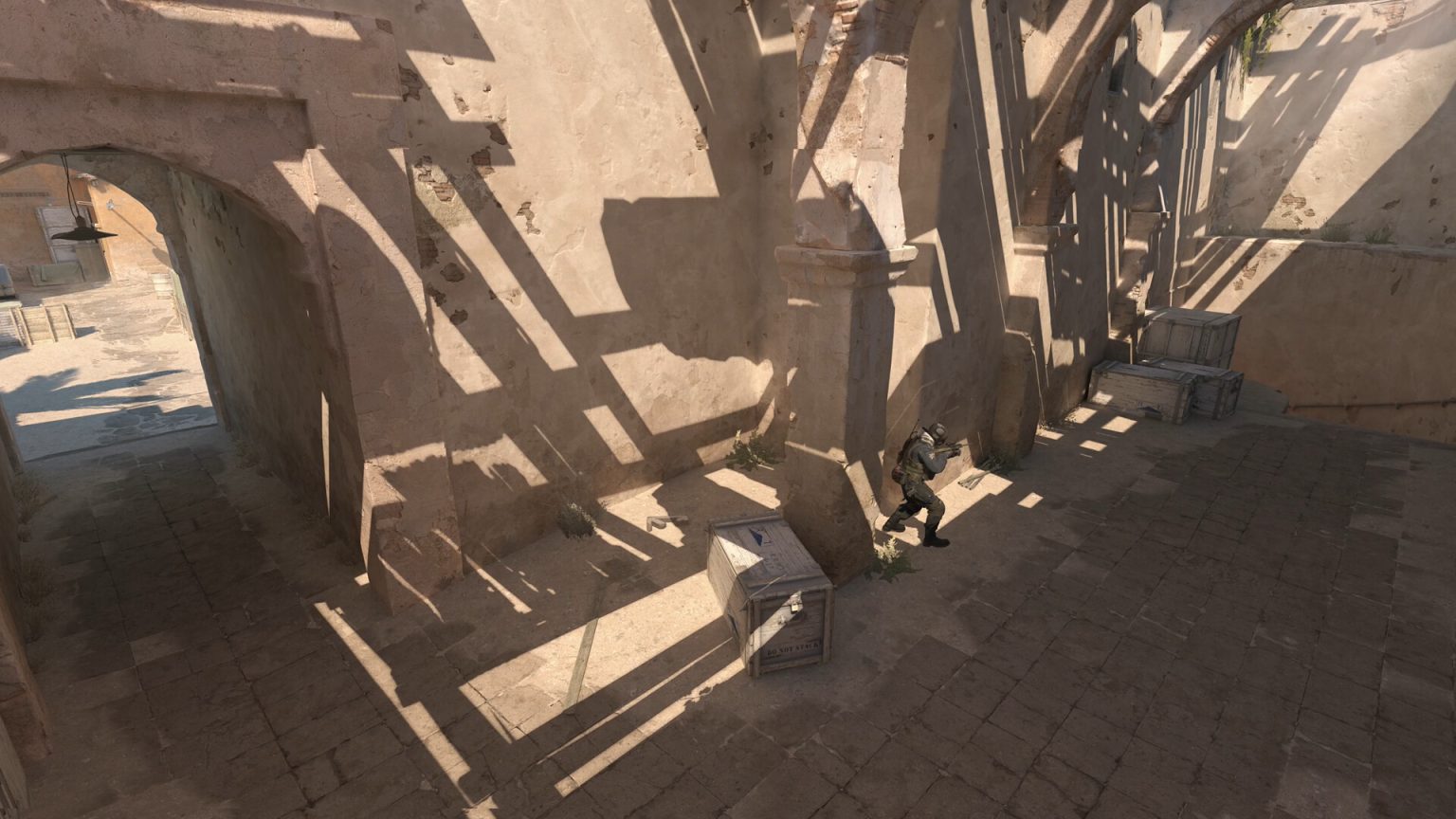
Updated for CS2 Premier Season 5, August 2026 build.
This CS2 Mirage A execute guide gives a Premier team one repeatable full-buy hit. The result is synchronized stairs, jungle and CT pressure, clear entry roles and a post-plant that does not collapse because every terrorist chased the same defender.
Step 1: assign utility by spawn
Before freeze time ends, name the stairs smoke, jungle smoke, CT smoke or molotov, two flashes and the first entry. Use the best ramp spawn for early space without separating that player from support.
A missing grenade must be called before the hit. Discovering it while three players hold utility at ramp creates delay and telegraphs the execute.
Step 2: protect the setup
Hold palace, ramp and underpass pressure while grenades are prepared. The execute fails early if a defender pushes into five players staring at the sky.
The lurk should preserve map control, not begin an unrelated duel. State whether that player joins late or holds the rotation.
Step 3: land smokes from tested positions
Use lineups the complete team has verified on the current build. Stairs and jungle smokes divide common rifle and AWP sightlines; CT cover prevents a free cross from spawn.
Throw on a shared cue so gaps do not open in sequence. A perfect smoke arriving four seconds early may be worse than a simple smoke synchronized with the flash.
Step 4: flash for the entry path
The first flash should blind default, stairs or site angles without catching the entry. The second punishes defenders turning back or supports the palace contact.
Call “flashing” with the target area. A generic flash call does not tell the entry when to swing or where the blind opponent should appear.
Step 5: enter in trade distance
The first player clears close ramp, default and under balcony according to the plan. The second watches the immediate trade, while the third prevents jungle or connector from reappearing.
Do not let every player chase a kill toward CT. Planting the bomb and owning jungle are often stronger than converting a five-versus-four into scattered duels.
Step 6: plant for owned space
Choose the plant by control, not by habit. A default plant is fast and protected; an open plant offers stronger late sightlines only when CT and jungle pressure are contained.
The planter states the final location so teammates select positions that can actually defend it.
Step 7: build a crossfire before hunting
Keep one player ramp or palace, one around site and one responsible for jungle or connector. Preserve a flash or molotov for the retake when possible.
If defenders save, hunt only with players and economy the team can afford to lose. The round is won by the explosion, not by emptying the server.
Communication protocol
Reduce the complete plan to three calls the team can use during a real CS2 match: the immediate objective, the first timing and the abort condition. Long explanations belong before the queue or during review. In play, every sentence should change positioning, resource use or target priority.
When information changes, name the fact before the response. “Two players seen,” “key cooldown used,” or “route blocked” gives teammates evidence; “this feels bad” does not. The caller can then keep the plan, delay it or switch without forcing five private guesses.
Common failure patterns
The most frequent error is correct individual execution at different times. One player begins while support is moving, another spends the final resource after contact and a third follows the original call after the abort. Review synchronization before replacing mechanics.
The second error is treating one success as proof that every condition was correct. Opponents may miss a punish or choose another side of the map. Save the replay and ask which information made the plan safe enough, not only whether the scoreboard awarded the result.
Quick checklist
- State the objective and first timing.
- Confirm required players and resources.
- Name the opponent’s most likely interruption.
- Keep one clear abort condition.
- Assign the next action after success.
Practice and review
Run the plan in a custom lobby or low-stakes match before using it in competition. Record one successful attempt and one failure, then change only the step supported by evidence. A repeatable guide is useful because the team can identify where execution broke instead of inventing a new system after every loss.
Confirm the live client against the official update source before relying on exact mechanics. Patches can change timings, costs and map geometry without changing the decision process described here.
Build a reliable baseline
Keep the review specific: note the clock, the unavailable resource and the teammate who could not participate. Repeat the same setup three times before judging it. Consistency exposes whether the problem comes from the plan itself or from execution, and gives the team a stable baseline for the next practical team adjustment.
Compare this execute with our Ancient T-side utility plan and Dust II CT guide.
Editorial note
Facts and mechanics were checked against the linked primary sources before publication.
This article was reviewed on August 7, 2026.

Related stories
Path of Exile 2 Sorceress leveling guide for 0.5.4e
Path of Exile 2 Sorceress leveling is smoother when the character solves one damage loop before collecting every elemental skill. Patch 0.5.4e is the referenc.

Minecraft mace combat guide for Java 1.21.9
Minecraft mace combat turns vertical movement into damage. Java Edition 1.21.9 is the reference version. A smash attack requires striking while falling far.
Dota 2 Watcher control guide for patch 7.41e
Dota 2 Watcher control is useful when it protects the next movement, not when a support activates every structure on cooldown. Patch 7.41e is the reference.
Community channel
Join the discussion
Start a thoughtful, specific conversation about this story.
Verified readers only
Continue with Google to comment.
Your Google account creates a reader-only Kaizensclan profile. Your first comment is reviewed before publication.