Sumerian Six review: stealth built around strange science
This Sumerian Six review finds a real-time stealth tactics game that understands the pleasure of an impossible-looking patrol. Artificer’s alternate-history.

 8.0
8.0 Kaizensclan verdict
This Sumerian Six review finds a real-time stealth tactics game that understands the pleasure of an impossible-looking patrol. Artificer’s alternate-history.
Review basis: 7 hours on PC. The stated time covers several sessions with the release build and is not a claim of full completion.
This Sumerian Six review finds a real-time stealth tactics game that understands the pleasure of an impossible-looking patrol. Artificer’s alternate-history campaign sends a team of scientists behind enemy lines, then lets each specialist bend position, sight and biology until a guarded courtyard becomes a sequence of solvable problems.
Sumerian Six review: the opening hours
The opening missions introduce Sid, a chemist who can dissolve bodies and dominate minds, before expanding the group with increasingly unusual researchers. Their enemy, Hans Kammler’s Nazi occult division, is pursuing a substance called Geiststoff. The premise is deliberately pulpy, but mission briefings keep objectives clear and avoid turning every scientific joke into a tutorial.
Observe patrol cones, pause to coordinate positions, use a character ability to isolate a guard and hide the evidence before the next route crosses it. Missions alternate compact compounds with larger bases containing optional objectives. Frequent quick-saves encourage experimentation, while a tactical pause allows several actions to be prepared without converting the game into turns.
Systems and meaningful decisions
The strongest abilities change relationships rather than simply dealing damage. One operative can lure or possess a target; another transforms into a bear; later tools manipulate bodies, cover and groups. Cooldowns and limited resources prevent constant use of the safest answer. Skill upgrades widen options, although several nodes improve efficiency more than they change a plan.
We judged progression by whether it changed the next decision rather than merely increasing a number. A useful unlock opens a route, answers a recurring problem or creates a new risk. Busy menus received no extra credit when the underlying choice remained obvious.
Controls, combat and feedback
Selecting characters, queuing movement and reading vision cones works cleanly with mouse and keyboard. The pause makes simultaneous takedowns manageable without demanding perfect real-time clicks. Narrow stairs and crowded doorways occasionally confuse pathfinding, and a character can choose a more exposed route than the preview suggested. Manual saves are essential before a complex sequence.
Failure is productive when the game supplies enough information for a better attempt. We separated setbacks caused by a readable rule or poor plan from repetition that only consumed time. Challenge can create tension without hiding responsibility for the outcome.
World and visual direction
Industrial facilities, Alpine ruins and occult laboratories use strong lighting to separate safe space from watched ground. Character silhouettes remain readable from the high camera. Environmental detail supports the strange-war atmosphere without hiding interactable objects, though interior corridors can look similar during long missions.
Presentation was assessed during ordinary play, not only in composed screenshots. Strong direction guides attention through colour, movement and contrast while preserving mood. A beautiful effect becomes a liability when it hides an objective, hazard or rival.
Music and sound design
Guard barks communicate alert states reliably, while ability cues confirm when a target is controlled, distracted or removed. The score stays restrained during observation and rises once a plan breaks. Voice performances sell the team’s comic-book personalities, but repeated guard lines become familiar after several reloads.
Audio was treated as atmosphere and information. Distinct warnings, impacts and movement cues matter more over several hours than one loud set piece, although a memorable score can give repeated actions identity.
Performance and interface
Seven hours on PC were largely stable, with fast reloads and no loss of campaign progress. Pathfinding produced the most consistent friction, especially around ladders, doors and tightly grouped operatives. The interface exposes key bindings and gameplay settings, but players with specific accessibility needs should inspect the current options before buying.
One platform cannot represent every configuration, and later patches may change performance. We report the observed experience without promising results on untested hardware. Players with strict accessibility or frame-rate requirements should check current platform documentation.
We also compared the advertised fantasy with the action repeated between major set pieces. A score rises when ordinary minutes express the same strengths as the trailer, and falls when progress regularly depends on friction the game does not acknowledge or explain.
Learning curve and pacing
New characters arrive slowly enough that each one receives a mission built around a clear strength. Enemy types then add armour, supernatural perception and patrol relationships that invalidate an easy favourite. The curve is fair when a new rule is demonstrated in isolation; difficulty rises sharply when large late areas combine several detection systems.
The opening session was separated from later play. A system that initially feels obscure may become expressive after its vocabulary settles, while a polished tutorial can hide a loop that never develops. Essential status and resource information should remain available during play.
Replay value and practical fit
Seven hours covered the early and middle campaign rather than every mission. Objectives are hand-authored and reward revisiting a compound with a cleaner route, but enemy disposal can become procedural once a reliable lure-and-takedown pattern is established. Optional challenges give perfectionists a reason to avoid the safest solution.
Replay value can come from alternate routes, builds, conversations or mastery of a fixed sequence. Those forms are not interchangeable. We credit only the structure visible in the stated hours and do not award points for an assumed endgame or promised roadmap.
Value and accessibility
The campaign offers substantial authored missions and a broad squad without relying on random maps. Players who enjoy Shadow Tactics or Desperados will recognise the grammar immediately. Those who dislike observing patrols or reloading after one broken link will not be converted by the setting alone.
Value was judged from the quality and repeatability of the available experience, not from a temporary discount. A compact game can justify its scope when every hour develops the idea; a larger game can still waste time through repetition.
The buying question extends beyond technical compatibility. Consider whether a normal twenty-minute stretch contains the decisions, reading, repetition and downtime you enjoy. Unedited footage of ordinary play is often a better final check than a trailer assembled from peak moments.
Limits of the 7-hour review
The test reached the middle portion of the campaign and sampled each system introduced in that window. It did not cover every late operative, final mission or optional challenge. Performance conclusions apply to the tested PC build and may change with later patches.
The test window was long enough to revisit the core loop across separate sessions, but it did not cover every ending, late encounter or future update. Price, discounts and online population are not treated as permanent facts.
Who should play it?
Play it for coordinated stealth, flexible quick-saving and abilities that produce small tactical stories. Lower the difficulty if recovery after detection becomes busywork. Skip it if you need systemic sandbox maps or want mistakes to evolve into sustained combat rather than a reset.
Sumerian Six review verdict
Sumerian Six succeeds because its eccentric cast creates readable tactical verbs. A few awkward routes cannot erase the satisfaction of turning six patrols, two sightlines and one dangerous doorway into a silent chain reaction.
Pros: distinct abilities create expressive stealth plans; tactical pause supports precise coordination; clear visual language across dense maps.
Cons: pathfinding can undermine careful orders; some upgrades are merely incremental; repeated guard routines encourage familiar solutions.
Final score: 8/10. A confident stealth tactics campaign whose eccentric abilities create elegant solutions, even when pathfinding and repetition roughen the edges.
Sources: primary release notes or official records. Factual claims were checked against these records; interpretation is our own.
Continue with the Kaizensclan archive, our practical guides and the latest game reviews.
Editorial note
Hands-on review window recorded in the article metadata, supported by official documentation and public technical coverage.
This article was reviewed on August 13, 2026.

Related stories
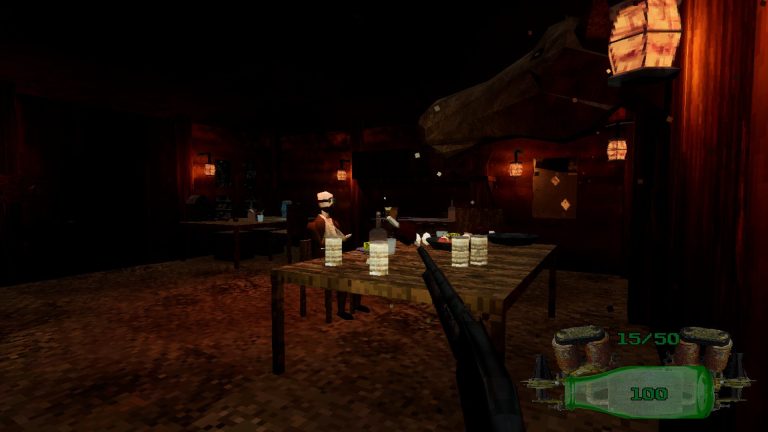
The Down Below opens four underground horror levels
The Down Below opens four underground horror levels. lowpolyenjoyer combines a lever-action shotgun, nine enemy types, 30 interactive items, physics props…
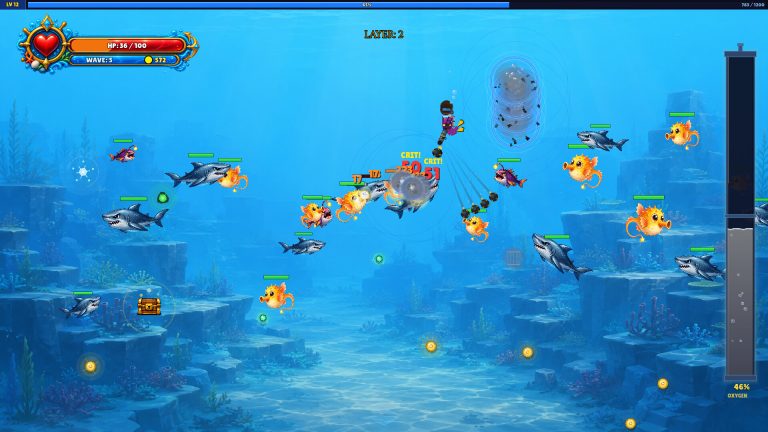
Deep Diver makes every breath increase the danger
Deep Diver makes every breath increase the danger. PEGAX Studios connects oxygen management to escalating enemies across eight weapons, 30 abilities and…
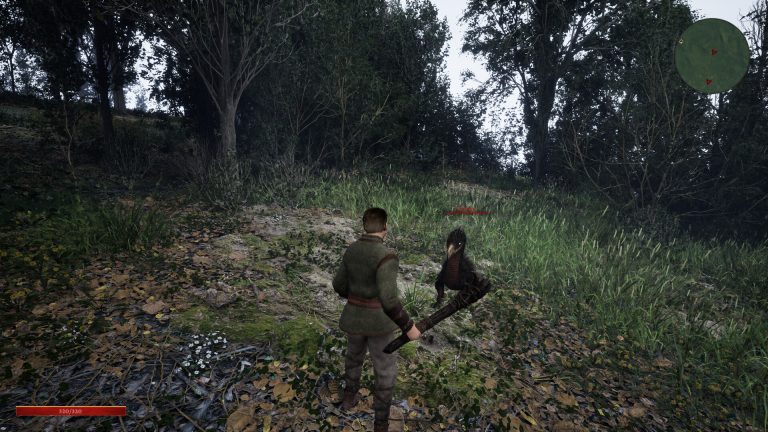
Ashes of Kardoria launches a 16-hour faction RPG
Ashes of Kardoria launches a 16-hour faction RPG. The choice-driven campaign pits Guards against Hunters amid plague and hunger, with multiple endings and…
Community channel
Join the discussion
Start a thoughtful, specific conversation about this story.
Verified readers only
Continue with Google to comment.
Your Google account creates a reader-only Kaizensclan profile. Your first comment is reviewed before publication.