Minecraft Locator Bar guide for Java 1.21.6
This Minecraft Locator Bar guide explains player markers, vertical indicators, hiding rules, server settings and multiplayer uses in Java 1.21.6. Read the.

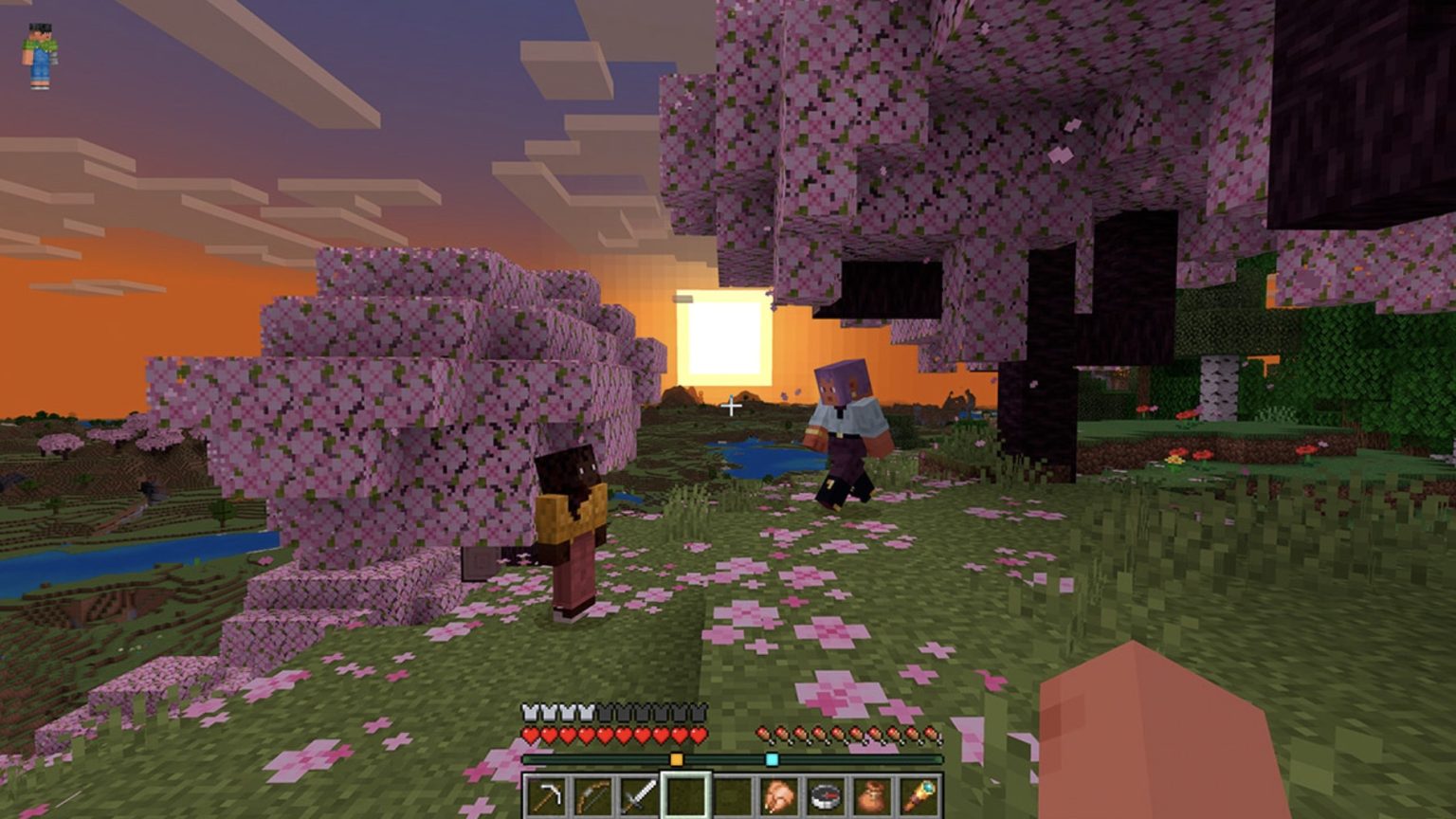
Updated for Minecraft Java Edition 1.21.6. Java Edition 1.21.6 added the Locator Bar as a multiplayer navigation tool. When enabled, coloured player indicators appear above the experience bar and show horizontal direction. The feature helps groups reconnect without replacing coordinates, maps or communication.
Minecraft Locator Bar guide: the plan
Use the bar for relative direction, then combine it with terrain and coordinates for distance. Each player receives a coloured indicator derived from their marker colour. The marker changes when another player is significantly above or below, but the bar is not a full three-dimensional map.
This guide is a repeatable decision framework, not a promise that every opponent or server will react identically. Test it first in a low-stakes environment, record where it breaks and change one variable at a time.
Step-by-step execution
- Step 1: Join a world or server where the Locator Bar game rule is enabled. In multiplayer, look above the experience bar for other player indicators.
- Step 2: Turn slowly and watch an indicator move across the bar. Centre it before travelling so small direction errors do not grow over long distance.
- Step 3: Check the vertical symbol when the player is far above or below your position. Use coordinates or named landmarks to resolve the remaining height difference.
- Step 4: Change a player’s marker colour through supported team or command behaviour when several indicators are difficult to distinguish.
- Step 5: To hide intentionally, crouch, use invisibility or wear an appropriate mob head or carved pumpkin under the documented conditions. Confirm the marker disappears before relying on stealth.
- Step 6: Server operators can disable the feature with the relevant Locator Bar game rule if the world design depends on hidden positions.
Assign one player or one clear cue to each transition. Plans often fail because two correct actions happen at different times. Short, specific communication keeps information useful without filling the channel with narration.
Common mistakes
The bar does not display exact distance, so walking toward a centred marker can still take longer than expected. Players also misread a vertical indicator as a precise block level. Another mistake is assuming invisibility always hides every trace without checking equipment and effects. On servers, a missing bar may be a deliberate game-rule choice rather than a broken client.
Do not repair every mistake by adding complexity. First identify whether failure came from information, timing, spacing, resources or execution. The smallest correction is easier to remember and test on the next attempt.
Practice routine
Stand with a friend at a known landmark and test cardinal directions, then move one player far above and below the other. Record how the indicator changes. Repeat while crouching and using invisibility so everyone understands when a marker is hidden. Finally, travel beyond familiar terrain while sharing coordinates as a backup.
- Record the first moment the plan became uncertain.
- Check whether the required resource was actually available.
- Review spacing before blaming individual mechanics.
- Keep successful parts when changing the failed step.
Use objective evidence when possible. A replay, demo or saved clip is more reliable than memory after a tense round. Review the decision before the outcome, because a poor choice can succeed and a sound choice can still lose.
Communication and role ownership
Pair the indicator with short location calls: biome, structure, approximate coordinates and elevation. “Marker centred, I am at river level” solves more than “come to me.” If several teammates overlap, one player stops moving while the others separate and identify their colours.
Every required job needs one owner and one backup condition. Name the information that triggers the action rather than asking a teammate to guess from tone. When several players can solve the same problem, use the cheapest resource first.
Adaptation checklist
Adventure maps and competitive servers may disable the bar to preserve discovery or stealth. Cooperative worlds can leave it active while still using maps for fixed locations. If a player changes dimension, do not treat the absent indicator as a direction. When the group spreads vertically in caves, call depth because the symbol alone cannot describe the path.
If an update changes geometry, economy, cooldowns or damage, retest the affected step instead of assuming the entire guide is obsolete. The version label at the top defines the boundary of this advice.
Final routine
Centre the marker, confirm vertical relation and use terrain or coordinates to finish the route. Learn the documented hiding conditions before competitive play, and respect the server game rule. The Locator Bar is a direction aid, not a replacement for navigation.
Keep one learning goal per session. A narrow objective makes improvement visible and prevents a long checklist from competing with the match itself.
Sources: official information and published records. Factual claims were checked against the linked source and additional primary records; interpretation is our own.
Explore more reporting in the Kaizensclan archive and continue with our practical gaming guides.
Editorial note
Facts and mechanics were checked against the linked primary sources before publication.
- https://feedback.minecraft.net/hc/en-us/articles/37432144057997-Minecraft-Java-Edition-1-21-6-Chase-the-Skies
- Mojang Studios
This article was reviewed on August 7, 2026.

Related stories
Minecraft mace combat guide for Java 1.21.9
Minecraft mace combat turns vertical movement into damage. Java Edition 1.21.9 is the reference version. A smash attack requires striking while falling far.
Minecraft Trial Chambers guide for Java 1.21.9
This Minecraft Trial Chambers guide is updated for Java Edition 1.21.9. The structures are combat dungeons made from copper and tuff, with Trial Spawners,.
Minecraft Copper Golem sorting guide for Java 1.21.9
Java Edition 1.21.9 adds the Copper Golem as a simple sorting assistant. Build it by placing a carved pumpkin or jack o’lantern on a copper block. The new.
Community channel
Join the discussion
Start a thoughtful, specific conversation about this story.
Verified readers only
Continue with Google to comment.
Your Google account creates a reader-only Kaizensclan profile. Your first comment is reviewed before publication.