FANTASY LIFE i Review
Our FANTASY LIFE i review covers eight hours of freely switching between 14 Lives, gathering, crafting, combat and island restoration. Read the verified.

 8.6
8.6 Kaizensclan verdict
Our FANTASY LIFE i review covers eight hours of freely switching between 14 Lives, gathering, crafting, combat and island restoration. Read the verified.
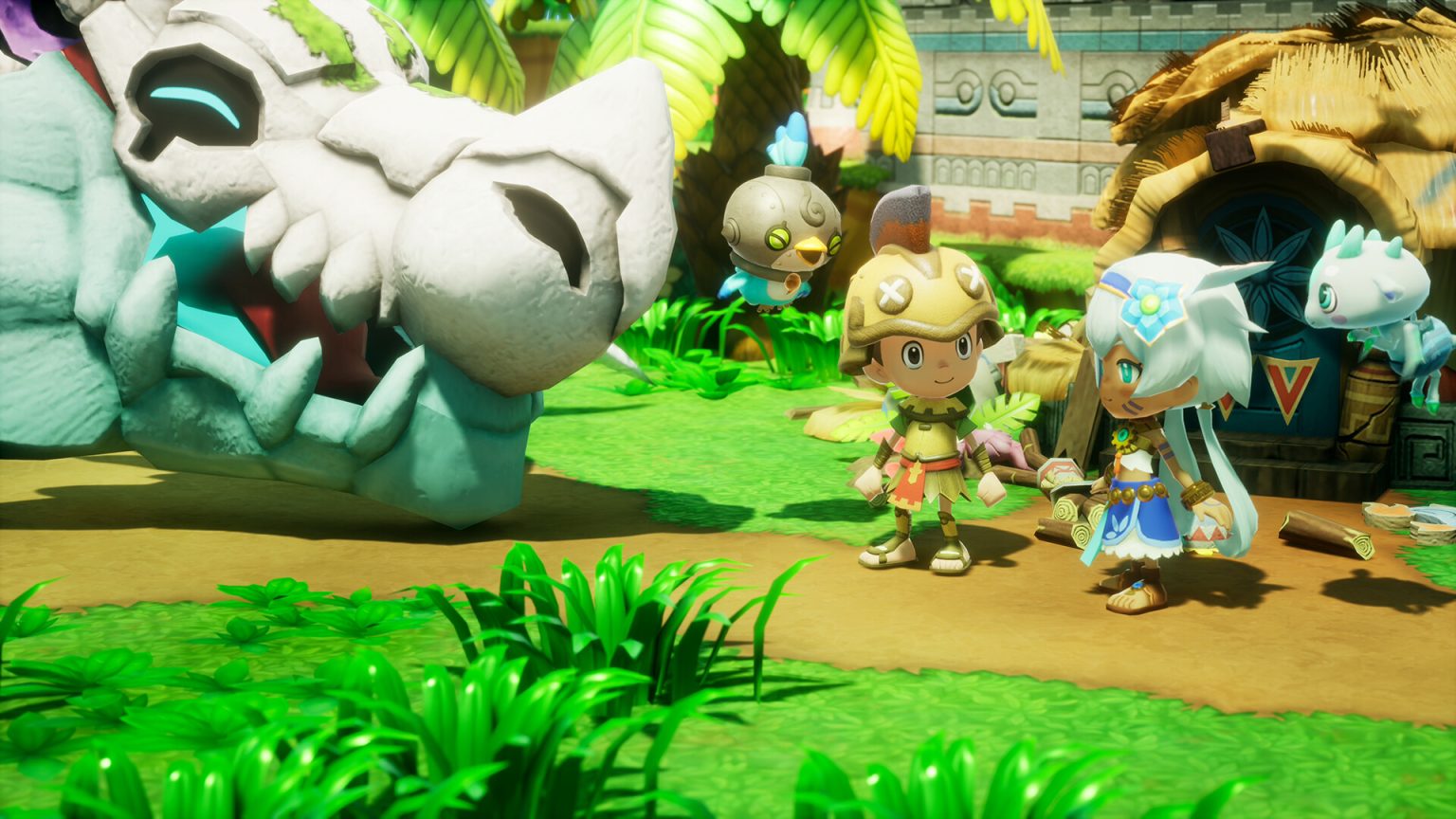
FANTASY LIFE i: The Girl Who Steals Time treats vocation as its main character system. Fourteen Lives cover gathering, crafting and combat, and the player can switch among them instead of committing one save to a permanent class. Materials, equipment and island restoration connect those jobs into one relaxed but purposeful loop.
What the first 8 hours cover
Eight hours reached several Life promotions, opened meaningful gathering and crafting chains, explored the island and larger world, and tested early combat roles. Multiplayer was sampled only briefly; the score therefore rests on the single-player progression and the way jobs support one another.
The story begins with an archaeological expedition and a mysterious island linked to events one thousand years in the past. It spends considerable time introducing characters and systems before the full freedom appears. The writing is warm and playful, but players eager to optimise jobs will feel the opening hold the door longer than necessary.
Core loop and decision-making
A tree cut by a Woodcutter becomes material for a Carpenter, whose product can support another task or improve the island. Mining, fishing, cooking and combat create similar chains. Because switching Lives is easy, a missing ingredient becomes an invitation to change activity rather than a demand to create another character.
The game rarely pressures the player into a perfect route. The meaningful choice is what kind of progress feels attractive now: advance a Life challenge, gather for equipment, continue the story or reshape the town. That flexibility is not aimlessness because each activity feeds several visible goals.
Progression and structure
Life ranks provide goals and new recipes, while equipment and character growth support exploration and combat. Early upgrades arrive often enough to make a short session productive. The number of parallel lists can look overwhelming, but shared materials mean progress in one Life frequently removes friction from another.
Time travel frames the island’s past and present, while the larger continent supplies open exploration. Restoration gives gathered materials a visible home rather than leaving every reward inside menus. The story remains more directed than the job system, creating a useful alternation between authored scenes and self-selected work.
Controls and difficulty
Movement, gathering and basic combat are approachable on a controller. Context actions reduce tool management, and visual effects clearly confirm successful work. Crafting uses active steps rather than a single button, though repetition can make familiar recipes feel like ceremony after the result is already certain.
Early combat is friendly and readable. Combat Lives differ in range and rhythm without demanding action-game precision, while gathering challenges provide their own resource management. The game is built around steady mastery and collection rather than punishing failure, which fits the slow-life promise.
Art, sound and world-building
Bright colours, rounded forms and expressive animation give the world immediate warmth. Each Life has distinct tools and effects, so work remains readable in a busy multiplayer or town scene. Music supports long gathering sessions without insisting that every discovery is an epic event.
The island becomes more personal as structures, paths and terrain choices accumulate. Characters are broad but charming, and the past-versus-present premise gives restoration emotional context. The abundance of rewards occasionally fragments attention, yet the world keeps those systems visually connected.
Performance and interface
The PC version provided stable performance during the review window at the selected settings. Menus contain a large amount of information but maintain clear categories. Online co-op and cross-platform conditions can change, so players buying primarily for multiplayer should verify current service details.
Session rhythm and replay value
A good review window needs to distinguish novelty from a loop that remains interesting after its rules are familiar. We therefore returned to ordinary activities after their first tutorial and compared how much attention the repeated version demanded. Repetition is not automatically a weakness: it can create mastery, comfort or strategic planning. It becomes friction when the same input produces no new information, meaningful execution or useful choice.
Replay value depends on the structure of FANTASY LIFE i Review. Alternate routes, builds, procedural incidents, job combinations or simply a strong authored atmosphere can all support another session, but they are not interchangeable. This review credits the forms of replay visible during testing and does not assume that unseen endgame content will solve an early limitation. A future patch may expand the game, yet the score belongs to the released experience played here.
Narrative, agency and consequences
Story was evaluated by how well it motivates the next action and whether characters respond consistently to the world around them. Agency does not require every scene to branch. A linear game can still make the player responsible for observation and execution, while an open game can offer many icons without meaningful decisions. The relevant question is whether the structure clearly communicates what the player controls and then gives those choices an appropriate consequence.
This review was completed across more than one session so that the score did not depend on the excitement of a single opening hour. Repeated actions were checked for consistency, feedback and recovery cost. A system earned credit when it created a meaningful choice after the tutorial had ended, not simply because its menu contained many options.
The stated playtime is enough to evaluate the opening contract, several repeated loops and the reliability of the basic controls. It is not enough to claim complete knowledge of every late-game build, route or ending. Where a system was visible but not properly tested, it was excluded from the verdict instead of being treated as guaranteed depth.
Difficulty was judged through clarity as well as challenge. A demanding encounter can be fair when the game communicates cause and consequence, while an easy sequence can still be frustrating when objectives or controls are inconsistent. Previous experience with the genre changes the learning curve, so the audience description should be read beside the numerical score.
Accessibility and comfort settings were considered within the tested PC build, but individual needs differ. Players who require a specific subtitle, colour, remapping, field-of-view or motion option should check the current official store information before buying. Patches can improve technical behaviour after this review date.
Price, discounts and online population are intentionally not used as permanent facts. Those values change. The durable question is whether the released mechanics and authored content support the kind of play the reader wants. Roadmaps were not scored; only features present in the tested build affected the verdict.
Who will enjoy it
This is a strong match for players who enjoy gathering because it leads somewhere, crafting because another profession needs the result, and combat as one Life among many. Those wanting a fast opening, difficult action or a single focused campaign may find its abundance too gentle.
Pros and cons
Pros
- Fourteen Lives support flexible play
- Gathering and crafting chains reinforce each other
- Island restoration makes progress visible
Cons
- The opening contains heavy tutorial pacing
- Repeated crafting actions can become routine
- Many parallel goals can scatter attention
Verdict after 8 hours
FANTASY LIFE i makes productivity relaxing by ensuring that almost every task helps another one. Its opening is slower than necessary, but the freedom that follows is substantial and coherent. Eight hours reveal an RPG built for curiosity rather than obligation, with enough connected progression to make changing jobs feel like continuing the same adventure.
This assessment covers 8 hours on PC. Release facts and advertised features were checked against the publisher’s official store materials; the score reflects the experience inside that declared window.
Source: official release information.
Read more in our practical guides and browse the Kaizensclan article archive.
Editorial note
Hands-on review window recorded in the article metadata, supported by official documentation and public technical coverage.
This article was reviewed on August 7, 2026.

Related stories

Metaphor: ReFantazio review: politics through turn-based combat
Metaphor: ReFantazio carries familiar Atlus structures into a new fantasy world, then gives them a sharper public purpose. The calendar no longer tracks only.
Minishoot’ Adventures review: exploration under fire
This Minishoot Adventures review finds a small ship leaving its village to free captured friends and confront corrupted machines. SoulGame Studio combines an.

Mouthwashing review: horror after the crash
This Mouthwashing review enters the Tulpar after a crash leaves five crew members with dwindling supplies and no credible rescue. Wrong Organ shifts between.
Community channel
Join the discussion
Start a thoughtful, specific conversation about this story.
Verified readers only
Continue with Google to comment.
Your Google account creates a reader-only Kaizensclan profile. Your first comment is reviewed before publication.