FBC: Firebreak review: co-op chaos needs coordination
Our FBC Firebreak review tests jobs, Crisis Kits, co-op combat, progression, technical performance and Remedy’s strange Oldest House atmosphere in five hours.

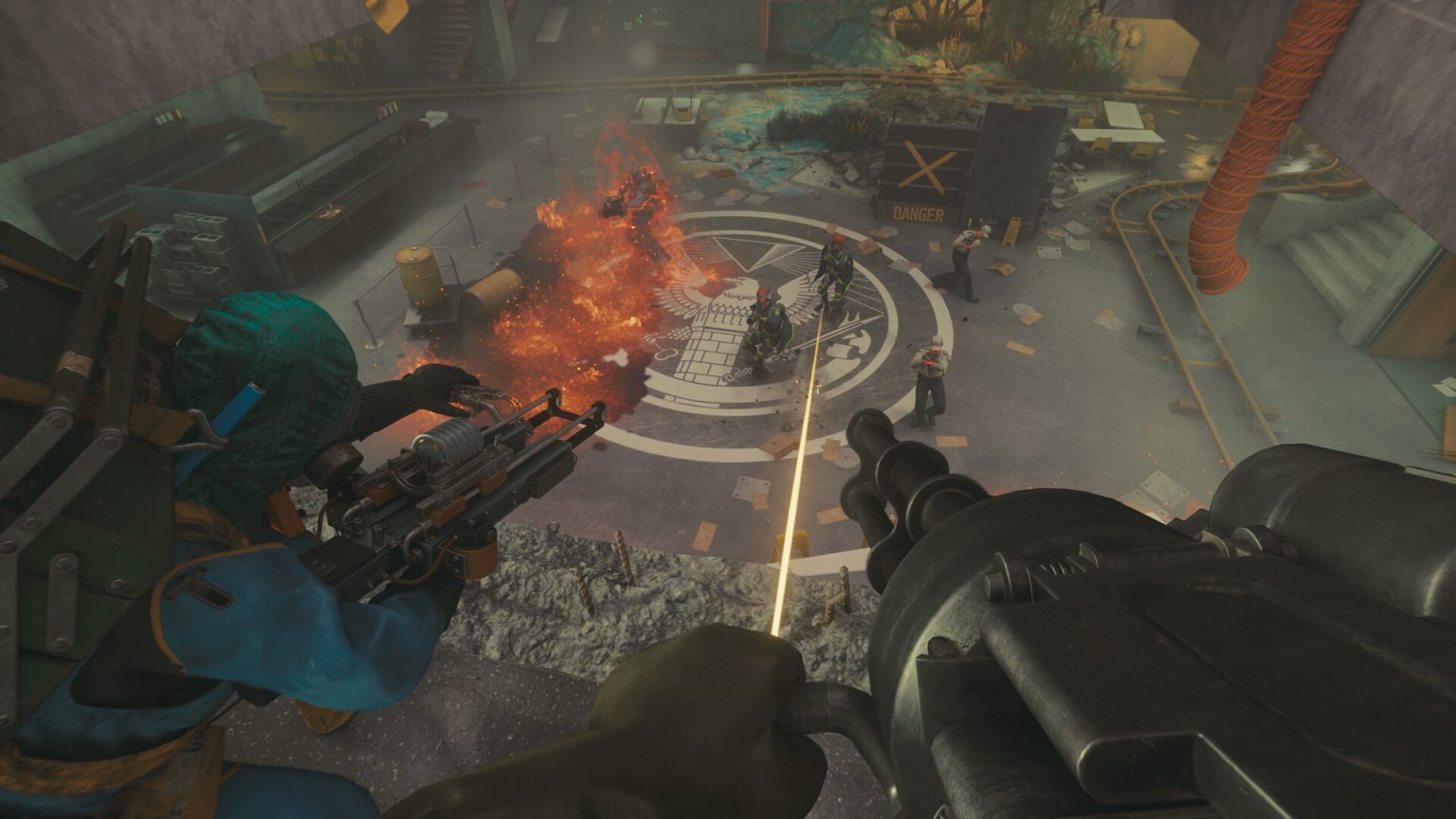 6.5
6.5 Kaizensclan verdict
Our FBC Firebreak review tests jobs, Crisis Kits, co-op combat, progression, technical performance and Remedy’s strange Oldest House atmosphere in five hours.
Review basis: five hours of play supported by official documentation and public technical coverage. Hours played: 5. The score reflects the systems, presentation and technical state observed within that review window rather than a completionist playthrough.
This FBC Firebreak review finds a cooperative shooter with a strong setting and an uneven first impression. Jobs ask three players to complete practical work inside supernatural disasters, but the combat and progression do not always communicate the same confidence as Remedy’s Oldest House.
FBC: Firebreak released on June 17, 2025 for PC, PlayStation 5 and Xbox Series X|S. It is a three-player cooperative first-person shooter set after the events of Control, although the immediate objectives are designed to be understood without a complete reading of that game’s lore.
Jobs make bureaucracy part of the action
Each mission is framed as a job inside the Federal Bureau of Control. The crew is not simply clearing rooms; it may need to repair equipment, remove contamination or keep a process running while hostile entities interrupt.
That structure creates useful cooperative pressure. One player can manage the objective while two contain enemies, then the roles change when a new hazard appears. The strongest moments happen when the practical task and the combat threat occupy the same space.
Objectives can also become repetitive. Repeating an interaction under heavier enemy pressure raises difficulty, but it does not always create a new decision. The game needs its hazards, layouts and team tools to carry the variation.
Crisis Kits define roles without locking classes
Crisis Kits combine weapons, tools and role identity. A crew benefits from complementary equipment because different hazards require different responses. The system gives players a reason to discuss loadouts before a job rather than selecting three copies of the same damage option.
Tools are most satisfying when they solve a visible problem. Cooling, repairing or clearing an obstacle creates immediate feedback and opens space for the team. The connection between action and result is less clear when upgrades add modest numerical advantages.
Role flexibility prevents a failed composition from feeling doomed, but teams still suffer when nobody accepts the unglamorous task. Firebreak is deliberately about maintenance under pressure; players who only chase kills miss part of the design.
Gunplay supports the objective but rarely leads it
Weapons are readable and enemies create enough movement to keep the crew busy. Yet impact can feel light, especially when several targets absorb fire in a visually chaotic room. Damage feedback is functional rather than exceptional.
The shooter improves when tools, hazards and guns overlap. Staggering a threat so a teammate can finish the objective is more interesting than draining another health bar in an empty corridor. Enemy types that alter positioning are therefore more valuable than simple durability increases.
Friendly coordination solves many rough edges. Focus fire shortens encounters, while communicated reloads and tool use reduce the moments where all three players are busy with the wrong problem.
The Oldest House still has personality
Concrete offices, institutional signage and impossible spaces retain the visual language of Control. Firebreak adds the mess of emergency work: damaged machinery, contaminated rooms and equipment that looks as if it came from a government storeroom with a cursed budget.
Environmental storytelling rewards players who slow down, but the mission format encourages forward motion. The tension is intentional. A cooperative team must decide when atmosphere is worth the delay.
Writing leans into workplace absurdity without turning every line into a joke. The tone works best when a mundane instruction sits beside something physically impossible.
Progression needs clearer milestones
Rewards and upgrades provide reasons to repeat jobs, yet the opening does not always explain which improvement will meaningfully change a role. Players can spend time pursuing a number before understanding its effect in the next crisis.
A strong cooperative progression system should create new team conversations. Firebreak sometimes reaches that goal through tools and kit combinations; smaller upgrades can feel like maintenance between missions.
The five-hour window is enough to identify the cadence, not to exhaust every job or late upgrade. Later patches may also alter progression, so readers should check current official notes rather than assume the launch path is unchanged.
Technical state and accessibility
The game supports online cooperative play and cross-platform multiplayer. Network conditions affect enemy movement and interactions, while the dense effects of the Oldest House can challenge hardware. Current requirements are listed on the official Steam page.
Interface and subtitle options support the basic information load, but visual chaos can still obscure the most important objective. Players benefit from lowering unnecessary effects and using clear voice callouts.
No five-hour test can certify every job, platform and network route. The score therefore treats technical performance as adequate inside the observed window, not universally solved.
Monetization and value
FBC: Firebreak is sold as a premium cooperative game with a Friend’s Pass option currently promoted on Steam. Edition contents and post-launch support can change, so groups should confirm which players need a full copy before organizing a team.
Value rises sharply with reliable partners. Matchmade teammates can complete jobs, but repeated play is more appealing when the group wants to refine roles and laugh at the same bureaucratic disaster.
FBC Firebreak review verdict
FBC: Firebreak has a smart premise: maintenance workers with weapons confronting impossible workplace crises. The setting, job structure and kits create moments of real cooperation, but uneven gun feedback and repetitive objectives prevent the opening from matching Control’s authority.
Score: 6.5/10. Recommended with caveats for three-player groups that value objectives over pure gunplay. Compare its cooperative demands with our Split Fiction review and its systems with our The Alters review.
What the five-hour window could not settle
The review window does not establish whether later upgrades solve the weak feedback of the opening hours or merely make existing jobs faster. It also cannot measure how much mission variety Remedy can add through post-launch support.
The foundation has room to improve because the cooperative verbs are understandable. A team can identify who carries the correct kit, who protects the objective and who handles the interruption. The frustration comes when rewards and combat feedback do not make that coordination feel proportionally satisfying.
Prospective groups should judge the current version, not a promised future. Check recent patch notes, confirm platform support and decide whether the available jobs provide enough variety for the intended session length.
Role rotation is the clearest way to test whether the kits have genuine depth. A player who always carries the same equipment may mistake familiarity for balance. Swapping responsibilities exposes whether one job creates decisions while another mostly repeats maintenance.
The Oldest House also deserves a slower pass between emergencies. Environmental signs, workplace language and altered architecture carry much of Remedy’s humour. Teams that sprint only toward objective markers will miss the setting’s best texture and make a repetitive mission feel even narrower.
None of that removes the combat problem. Enemies need enough reaction, sound and hit response to explain why a shot succeeded. Cooperative confusion can be entertaining; unclear feedback makes it harder for the group to improve.
A short onboarding session with the same trio is therefore more representative than three disconnected public matches. Familiar teammates reduce communication noise and reveal whether the jobs themselves can sustain cooperation.
Editorial note: The FBC Firebreak review score uses a half-point scale and accounts for the five-hour review window. A complete campaign test could change the late-game assessment, but it would not erase the design strengths and limitations observed above.
Editorial note
Five-hour review window, supported by official documentation and public technical coverage.
This article was reviewed on August 6, 2026.

Related stories

Minishoot’ Adventures review: exploration under fire
This Minishoot Adventures review finds a small ship leaving its village to free captured friends and confront corrupted machines. SoulGame Studio combines an.
Mouthwashing review: horror after the crash
This Mouthwashing review enters the Tulpar after a crash leaves five crew members with dwindling supplies and no credible rescue. Wrong Organ shifts between.
Thank Goodness You’re Here review: slapstick with purpose
This Thank Goodness You’re Here review follows a traveling salesman who arrives early for a mayoral appointment and becomes free labor for Barnsworth. Coal.
Community channel
Join the discussion
Start a thoughtful, specific conversation about this story.
Verified readers only
Continue with Google to comment.
Your Google account creates a reader-only Kaizensclan profile. Your first comment is reviewed before publication.