Clair Obscur: Expedition 33 review — timing meets tactics
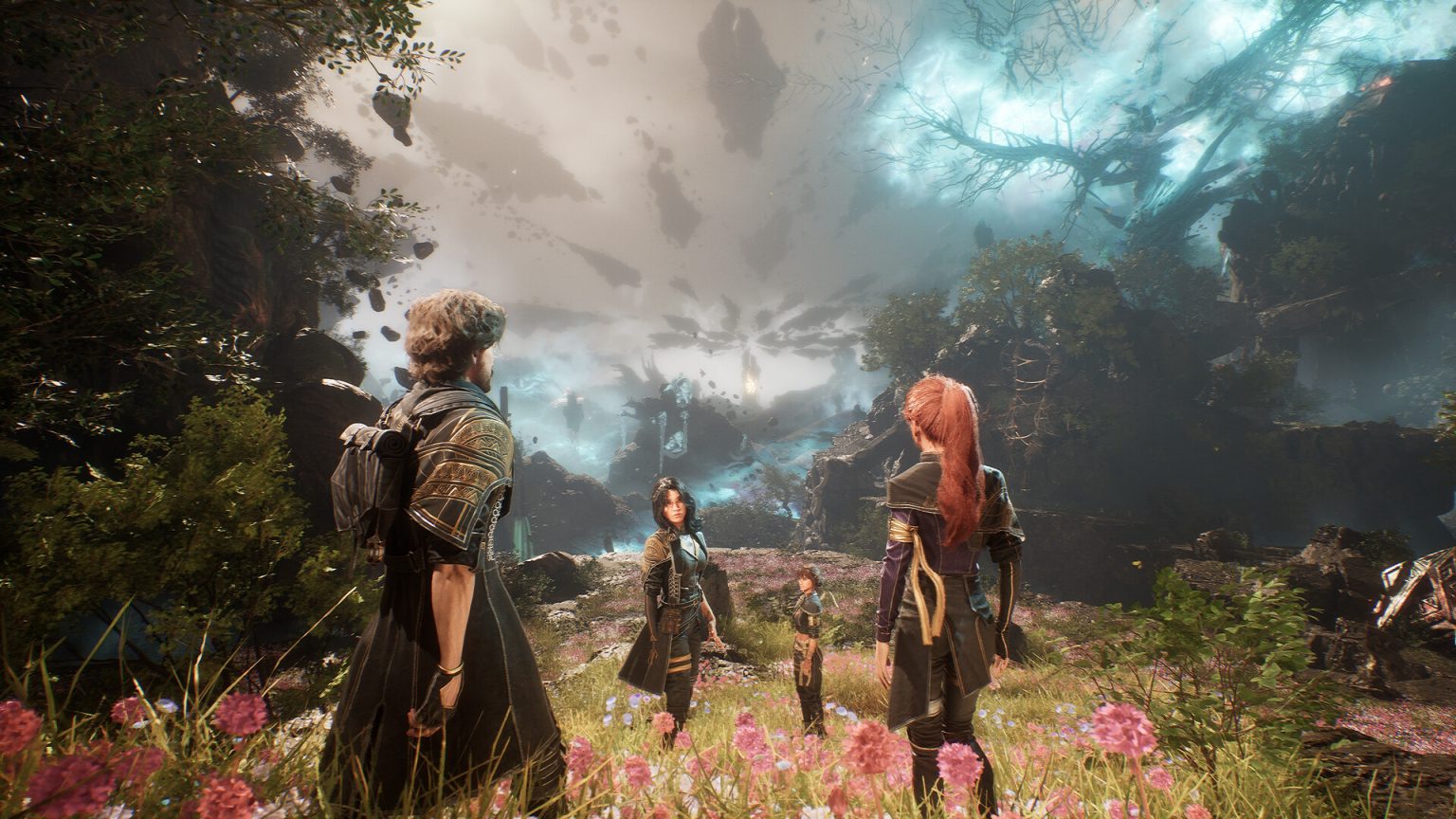
Our Clair Obscur Expedition 33 review examines its reactive turn-based combat, expressive party builds, striking world and occasionally uneven exploration.

 9.0
9.0 Kaizensclan verdict
Our Clair Obscur Expedition 33 review examines its reactive turn-based combat, expressive party builds, striking world and occasionally uneven exploration.
This Clair Obscur: Expedition 33 review finds a role-playing game that understands why turn-based combat still matters: a good decision should create tension before the animation starts. Sandfall Interactive builds that tension with character-specific systems, aggressive enemy patterns and real-time defensive inputs. The result is a confident debut whose mechanical ambition usually supports, rather than smothers, its melancholy story.
Review methodology: Kaizensclan did not receive or independently play a review build. This assessment is based on official release information, documented systems and publicly available gameplay; the zero-hour disclosure matters when weighing experiential claims. Factual details were checked against the official Steam listing and Sandfall Interactive’s published materials.
Clair Obscur: Expedition 33 makes every turn active
The foundation is familiar. Party members spend action points on attacks, support skills and resource-building moves while enemies wait for their sequence. Expedition 33 changes the texture of that exchange by asking for timed button presses during attacks and precise dodges or parries during enemy turns. It does not abandon turn-based planning; it gives the player something consequential to execute after choosing a plan.
That distinction keeps the system from becoming a rhythm-game overlay. Dodging offers the safer response, while a successful parry can lead to a counterattack and change the economy of an encounter. Enemy strings vary their pauses and accents, so recognising a creature is only the first step. The player still has to read the particular attack rather than repeat one universal beat.
Character design supplies the strategic layer. Each party member approaches damage and setup differently, from stance changes and marks to elemental interactions and resource loops. Pictos provide equippable effects, while mastered effects can become Lumina that other characters use within capacity limits. That structure rewards experimentation because a useful passive is not permanently trapped on the item where it first appeared.
The danger is cognitive overload. New skills, weapons, Pictos and character rules arrive quickly, and an efficient build can depend on relationships the interface explains across several screens. Players who enjoy the deliberate buildcraft in our Path of Exile 2 review will recognise the appeal, although Expedition 33 is far more contained.
A compact world benefits from strong encounter direction
Expedition 33 uses an overworld to connect authored locations rather than presenting one continuous open map. That choice gives each region a distinct palette and encounter rhythm. Optional paths lead to bosses, merchants and upgrade materials, while the critical route remains legible enough to preserve story momentum.
Individual environments can still make navigation harder than it needs to be. The painterly density that gives the game its identity also makes some ledges, forks and interactable objects blend into the scenery. There is satisfaction in finding an optional challenge, but less in circling a decorative landmark because two exits share the same visual language.
Combat placement compensates for that friction. Regular encounters teach a pattern or build interaction, then optional enemies demand that the player combine those lessons under more pressure. Because defensive execution can prevent most incoming damage, level and equipment are not the only answers. A difficult fight can become manageable through recognition, though that also means players with slower reactions may encounter steeper walls than the turn-based label suggests.
The campaign’s scale is one of its strengths. This is a premium single-player game with a defined arc, not a framework waiting for seasonal obligations. Side activities deepen character builds and the setting without turning the map into a checklist of repeated icons.
Art and music make Lumière feel fragile
The Belle Époque inspiration is more than surface decoration. Architecture, clothing and typography establish a society living beside an impossible annual death sentence, while distorted landscapes make that culture feel as if it is already becoming memory. Faces and performance capture carry intimate scenes without asking every conversation to become a cinematic spectacle.
Enemy design is especially effective. Creatures resemble sculptures, performers and broken ceremonial objects rather than standard fantasy wildlife. That makes attack anticipation harder at first, but it also supports the premise: the world feels constructed by an artistic force whose logic is beautiful and hostile at the same time.
The score moves between restrained vocal pieces, orchestral themes and combat music that can become surprisingly forceful. It does not merely tell the player when to feel sad or triumphant. Recurring motifs connect people and places, giving later scenes musical context without requiring an exposition dump.
This visual confidence invites comparison with the environmental storytelling discussed in our Elden Ring review. Expedition 33 is more linear and verbally explicit, but both games understand that colour, silhouette and sound can make a location meaningful before the plot explains it.
Technical state and value
The official PC release requires a 64-bit system and DirectX 12-class hardware, while the console version targets the current PlayStation and Xbox generation. The presentation uses dense effects, detailed characters and wide landscapes, so stable performance depends on sensible settings rather than treating every option as free image quality. This research review does not claim a measured frame-rate result.
Accessibility is more complicated than a list of toggles. Difficulty options reduce some pressure, yet the central dodge-and-parry layer still asks players to interpret animation timing. That is integral to the combat identity, but stronger timing assists would broaden access without removing the planning layer.
Monetisation is restrained. The base game is complete, while the Deluxe upgrade focuses on cosmetic outfits and the soundtrack is sold separately. There is no rotating shop, paid power or battle pass interrupting progression. Weapons, Pictos and party growth remain part of playing the campaign.
At its standard price, the value comes from density rather than an endlessly repeatable endgame. Players receive a substantial story, optional bosses and enough build variation to support another run, but the game is not designed as a permanent hobby. That clarity is welcome.
Who should join Expedition 33
The clearest audience is a player who enjoys making party decisions but does not want combat to become passive observation. Expedition 33 asks for attention during every enemy turn, so it fits people who like turn-based planning and are comfortable adding execution to it. Players who need to pause freely during all incoming attacks should examine the timing demands and accessibility settings before buying.
Its story also assumes patience with grief, memory and characters who do not explain themselves immediately. The campaign is not structured as a light sequence of disconnected adventures. Humour and warmth exist, but they sit beside a premise built around recurring loss.
Completionists have optional bosses, build experiments and hidden areas to pursue, while a story-focused player can follow the central route without clearing every challenge. The game respects both approaches better than many open-world RPGs because optional content is meaningful without being required to keep the main campaign numerically possible.
Anyone choosing between platforms should prioritise stable performance, preferred controls and display setup over small graphical differences. The defensive timing makes consistent input response more valuable than a marginal increase in visual detail.
Verdict
Clair Obscur: Expedition 33 succeeds because its real-time inputs do not apologise for turn-based combat. They sharpen it. Party composition, action-point planning and passive combinations still determine the plan; parries and attack prompts decide how cleanly the player executes it.
The navigation and system onboarding can be uneven, and the defensive timing will not suit everyone seeking a traditional menu-driven RPG. Those limitations are real, but they do not dilute the game’s strongest achievement: mechanics, art and story all describe a world trying to create meaning under a fixed deadline.
Score: 9.0/10. This is a research-based score with zero independently played hours, disclosed so readers can distinguish analysis from hands-on testing. Players interested in a focused party RPG should still verify platform-specific performance and accessibility needs before choosing a version.
Sources: Sandfall Interactive and Kepler Interactive official Steam materials, checked August 6, 2026.
Editorial note
This research-based editorial assessment uses official release information and public gameplay. Kaizensclan logged zero first-hand playtest hours.
This article was reviewed on August 6, 2026.

Related stories

Metaphor: ReFantazio review: politics through turn-based combat
Metaphor: ReFantazio carries familiar Atlus structures into a new fantasy world, then gives them a sharper public purpose. The calendar no longer tracks only.
Minishoot’ Adventures review: exploration under fire
This Minishoot Adventures review finds a small ship leaving its village to free captured friends and confront corrupted machines. SoulGame Studio combines an.

Mouthwashing review: horror after the crash
This Mouthwashing review enters the Tulpar after a crash leaves five crew members with dwindling supplies and no credible rescue. Wrong Organ shifts between.
Community channel
Join the discussion
Start a thoughtful, specific conversation about this story.
Verified readers only
Continue with Google to comment.
Your Google account creates a reader-only Kaizensclan profile. Your first comment is reviewed before publication.