WUCHANG: Fallen Feathers Review
Our WUCHANG: Fallen Feathers review covers nine hours of its soulslike combat, weapon disciplines, interconnected regions and demanding technical performance.

 7.0
7.0 Kaizensclan verdict
Our WUCHANG: Fallen Feathers review covers nine hours of its soulslike combat, weapon disciplines, interconnected regions and demanding technical performance.
WUCHANG: Fallen Feathers places soulslike structure inside a dark fantasy interpretation of Shu during the late Ming period. Its most persuasive ideas are a flexible weapon system and a world where disease, faith and political collapse share the same spaces.
First 9 hours
The first hours establish familiar rules: guarded exploration, scarce healing, rest points and enemies positioned to punish careless pursuit. WUCHANG becomes more distinctive when weapon disciplines and the Madness system begin to interact, turning each risk into a question of resource use rather than only stamina.
Nine hours covered settlements, temples, caves and branching paths filled with shortcuts. Progress alternates between learning an enemy arrangement and finding a route that reframes it. NPC stories and environmental details pull exploration beyond the next boss gate, although quest tracking expects careful memory.
Systems and progression
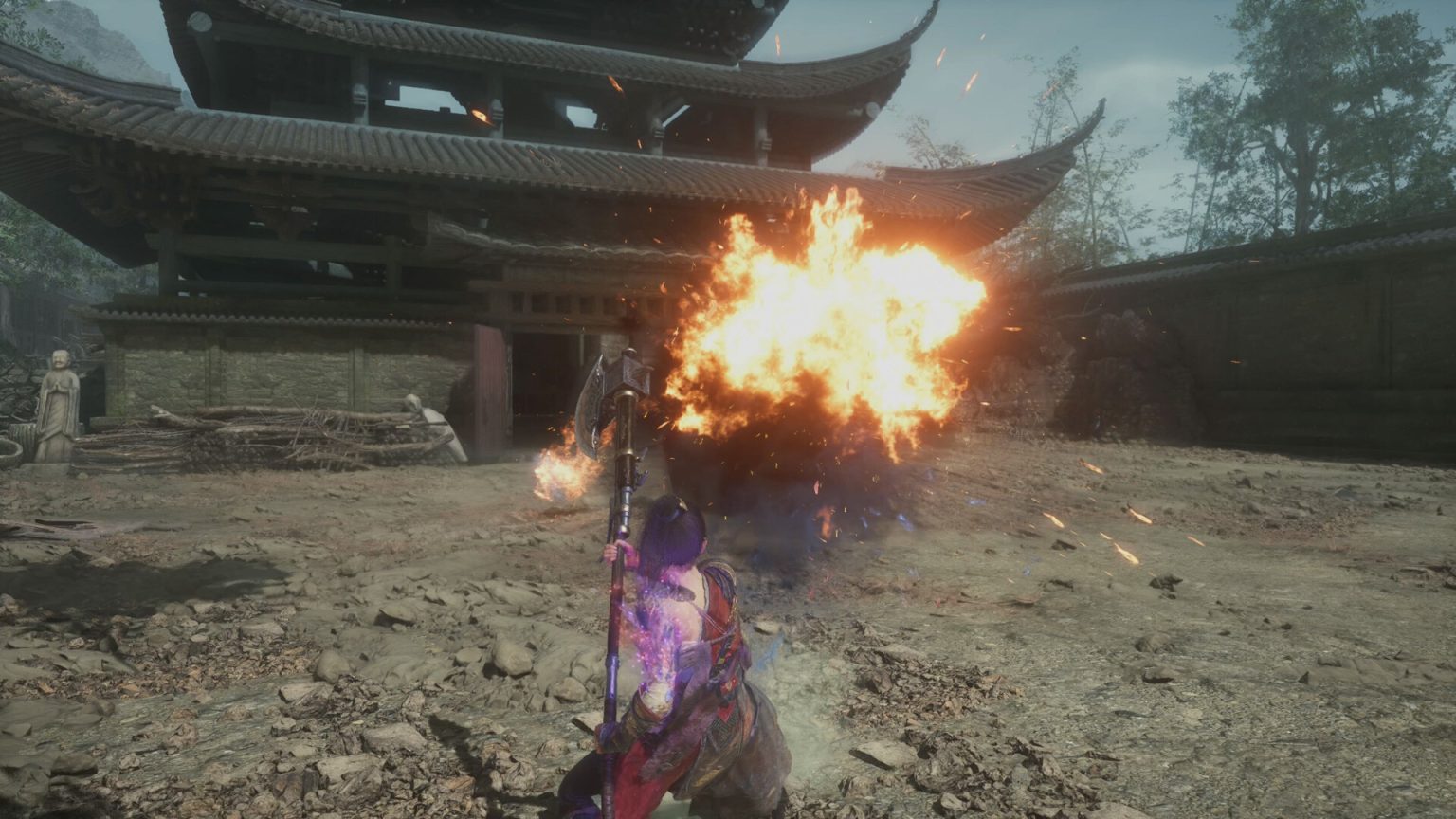
Weapons carry separate move sets and discipline skills, while the skill tree allows points to be reassigned. That freedom encourages experimentation with long swords, axes, spears and faster blades. Skyborn Might fuels powerful techniques, so clean dodges and specific actions can become part of an offensive plan.
Because respec friction is low, a newly found weapon is a real option instead of salvage. The system still rewards commitment through familiarity: reach, recovery frames and discipline timing matter more than a nominal damage advantage. Equipment and spell choices create useful answers to status-heavy encounters.
Combat, control and difficulty
Bosses are built around readable strings, delayed strikes and moments when aggression can interrupt their control. The best fights reward a practiced rhythm without demanding one build. Regular enemies are more uneven; groups in tight corridors can amplify camera problems and turn a small mistake into a stun chain.
Dodging and weapon switching respond well when frame delivery is stable. Lock-on behavior is less reliable near walls or oversized targets, and the camera can lose the most important attack. Players should adjust settings before judging timing, because inconsistent performance changes the perceived dodge window.
World, presentation and performance
The historical inspiration gives locations a strong material identity: carved religious spaces, ruined villages and natural growth sit beside grotesque Feathering transformations. Creature designs are at their best when human silhouettes remain visible beneath the corruption. The world invites detours without becoming visually incoherent.
PC performance is the largest reservation. Shader behavior, traversal and demanding scenes can create uneven delivery depending on hardware and updates. The review does not treat later patches as guaranteed fixes. Players close to minimum specifications should consult current official requirements and recent technical reports.
Onboarding and learning curve
WUCHANG: Fallen Feathers Review introduces its ideas through the normal play loop rather than assuming immediate mastery. During this review window, the useful measure was how often a failed attempt taught a transferable lesson. Clear feedback makes experimentation productive; unclear feedback makes the same repetition feel arbitrary. The game is strongest when a new system changes the next decision instead of adding another menu notification.
Familiarity with the soulslike action rpg genre shortens the adjustment period, but it should not be confused with quality. We judged whether controls, objectives and consequences were communicated consistently. Tutorials can explain buttons; the design still has to show why and when those buttons matter.
Pacing and decision density
A useful hour is not necessarily an hour packed with rewards. Strong pacing alternates pressure with enough quiet time to understand a place, compare options or prepare the next attempt. WUCHANG: Fallen Feathers Review is most convincing when its slower passages create context for the following decision. It is less convincing when travel, repeated setup or interface work delays a choice whose answer is already obvious.
The stated playtime is long enough to evaluate the opening contract and several repeated loops, but not enough to promise that late-game balance follows the same pattern. We therefore avoided projecting an early upgrade curve across the entire campaign. Where later systems are visible but not properly tested, they remain outside the score rather than being treated as guaranteed depth.
Accessibility and player fit
Readable text, remappable controls, subtitle presentation and adjustable audiovisual settings can determine whether a player reaches the design at all. Available options were considered alongside the moment-to-moment experience, although individual access needs differ. Anyone relying on a specific feature should verify the current platform build and official accessibility information before purchasing.
The clearest audience for WUCHANG: Fallen Feathers Review is a player who values flexible weapon skills and can tolerate uneven performance. Someone seeking a different pace or structure may reasonably reach another conclusion even if every system works as intended. A review score summarizes that balance; it does not replace the audience description.
Replay value and longer-term outlook
Replay value can come from alternate choices, improved execution, cooperative variation or simply the pleasure of revisiting a well-made space. The first 9 hours show whether the core loop supports repetition, but live updates and undiscovered content can change its durability. We do not award points for a roadmap. The verdict is based on the released experience tested here.
Price and online population can change after publication, so neither is presented as a permanent fact. The durable buying question is whether the current mechanics and authored content justify a place in the reader’s rotation. Technical fixes may improve friction later, but they should be confirmed in patch notes rather than assumed.
What works
Build experimentation is unusually welcoming for the genre, and the setting avoids feeling like a simple collage of familiar inspirations. Strong shortcuts, weapon variety and memorable bosses produce the essential desire to return after defeat with a better plan.
What holds it back
Technical inconsistency can undermine a combat system built on timing. Camera behavior and crowded encounters occasionally create difficulty that feels informational rather than deliberate. Some quest steps are also easy to miss without written notes.
Verdict after 9 hours
WUCHANG is worth considering for experienced soulslike players who value weapon experimentation and setting. Nine hours exposed real friction, but also enough mechanical identity to keep curiosity alive. Performance tolerance will determine whether its roughness feels manageable or decisive.
This assessment covers a focused 9-hour review window on PC. It is an early-game verdict, not a claim to have exhausted every route, build or endgame system. The release facts were checked against the publisher’s official store materials, while the score reflects the experience available within that stated window.
Continue with our practical guides and follow the latest stories in the Kaizensclan archive.
Editorial checks and boundaries
We compared the repeated experience across more than one session instead of scoring the excitement of a single opening hour. Novelty can disguise friction, while early confusion can disappear once a control pattern becomes familiar. Notes focused on the decisions repeated most often, the clarity of feedback and the cost of recovering from an error. Those observations support the verdict more reliably than isolated visual highlights.
No review window can reproduce every hardware configuration or player history. Platform, input method and prior genre knowledge can alter the result. The score therefore belongs beside the stated 9-hour scope, strengths and limitations. Readers should use all four pieces together when deciding whether the game matches their priorities.
Editorial note
Hands-on review window recorded in the article metadata, supported by official documentation and public technical coverage.
This article was reviewed on August 7, 2026.

Related stories

Minishoot’ Adventures review: exploration under fire
This Minishoot Adventures review finds a small ship leaving its village to free captured friends and confront corrupted machines. SoulGame Studio combines an.

Mouthwashing review: horror after the crash
This Mouthwashing review enters the Tulpar after a crash leaves five crew members with dwindling supplies and no credible rescue. Wrong Organ shifts between.

Thank Goodness You’re Here review: slapstick with purpose
This Thank Goodness You’re Here review follows a traveling salesman who arrives early for a mayoral appointment and becomes free labor for Barnsworth. Coal.
Community channel
Join the discussion
Start a thoughtful, specific conversation about this story.
Verified readers only
Continue with Google to comment.
Your Google account creates a reader-only Kaizensclan profile. Your first comment is reviewed before publication.