Titan Quest II review: myth rebuilt in early access
Our Titan Quest II review examines nine early-access hours of deliberate action-RPG combat, dual Masteries, loot and its Greek myth setting. Read the verified.

 7.5
7.5 Kaizensclan verdict
Our Titan Quest II review examines nine early-access hours of deliberate action-RPG combat, dual Masteries, loot and its Greek myth setting. Read the verified.
Review basis: 9 hours on PC Early Access. This research review covers the systems and release build observed in that window, not a completionist playthrough.
Titan Quest II returns to Greek mythology with a different tempo from the fastest modern loot games. Grimlore Games asks the player to read attacks, combine two Masteries and value a useful drop instead of filling every second with disposable enemies.
Titan Quest II review: the first session
The first region establishes deliberate movement and smaller enemy groups. Telegraphs matter, positioning prevents damage and an early skill point can change how a fight is approached. The pace may surprise players arriving from screen-clearing action RPGs, but it gives basic opponents room to teach.
Exploration reveals quests, encounters and equipment; combat supplies experience and loot; Mastery choices then reshape the next route. Town returns and inventory comparison interrupt the action, but the game avoids burying every useful decision under a flood of nearly identical items.
Systems and meaningful decisions
Selecting two Masteries creates the sequel’s central build identity. Skills can be modified, attributes support equipment and combat goals, and respec considerations encourage planning without requiring a copied build immediately. Early Access limits the final breadth, yet the combinations already create distinct ranged, melee and magical approaches.
A progression system earns its place when it changes the next decision rather than merely raising a number. We tracked whether new tools opened routes, solved recurring problems or encouraged a different risk. Interface activity received no extra credit when the underlying choice stayed obvious.
Controls, challenge and feedback
Dodging and spacing are reliable, and stronger enemies communicate large attacks. Some encounters become awkward when terrain constrains the camera or several effects overlap. Success usually comes from understanding a pattern and build interaction rather than clicking faster.
Failure is most useful when the game reveals enough information to support another attempt. We separated setbacks caused by a readable rule or poor plan from repetition that simply consumed time. Difficulty can create tension without obscuring responsibility for the result.
World, art and sound
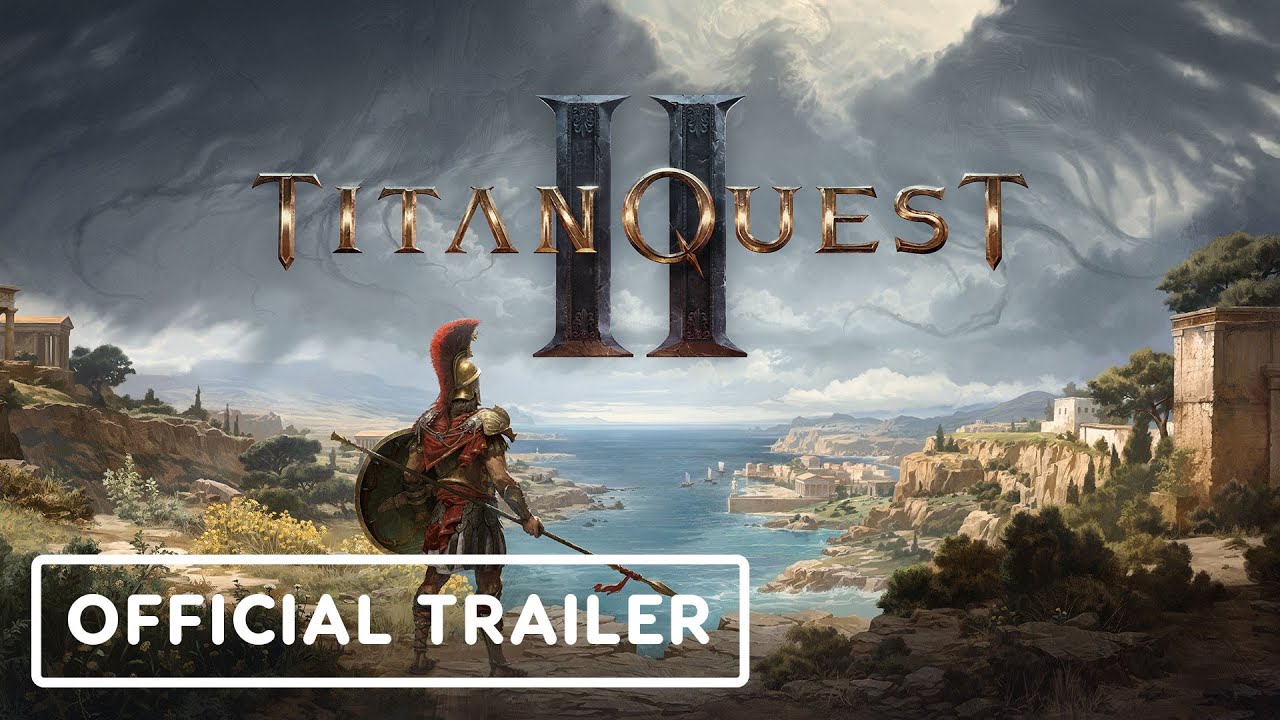
Coasts, ruins and sacred spaces use bright Mediterranean colour instead of treating mythology as permanently dark. Enemy designs draw from recognisable creatures while keeping enough silhouette clarity for combat.
Weapons and spells have appropriate weight, though not every repeated attack is equally satisfying. Music supports exploration with restraint and rises for encounters without overwhelming telegraphs.
Presentation was judged during ordinary play rather than only in composed screenshots. Strong art direction guides attention through colour, movement and sound while preserving mood. A beautiful scene is less effective when objectives, hazards or interactive objects disappear inside it.
Performance and interface
The tested Early Access build showed a functional core alongside expected optimisation and polish needs. Multiplayer was described by the developer as an early preview. Performance and feature completeness should be checked again after major updates.
One test system cannot represent every configuration, and later patches may change performance. The review reports the observed build and avoids promising results on untested hardware. Players with a specific accessibility or performance requirement should check current platform documentation before buying.
Onboarding and learning curve
Tooltips explain many parts, but the interaction between Masteries and modifiers rewards patient reading. The slower opening helps experimentation. Players who dislike comparing skills or equipment will still find the genre’s planning demands intact.
The first session was separated from later sessions when judging clarity. A system that feels obscure for ten minutes may become expressive once its vocabulary settles, while an exciting tutorial can hide a loop that never develops. Important status, objective and resource information should remain available during normal play.
Pacing and replay value
Nine hours covered several build decisions and a representative amount of the announced early content. The existing campaign slice offers replay through Mastery combinations, but a future complete game is expected to contain more regions, quests and systems.
Replay value can come from alternate routes, different builds, procedural incidents or the pleasure of mastering a fixed sequence. Those forms are not interchangeable. We credit only the replay structure visible during the stated hours and do not award points for an assumed endgame or future roadmap.
Accessibility and practical fit
Readable telegraphs help, yet repeated mouse or controller input, effects and isometric movement remain core. Confirm current remapping, text and visual settings if a particular accommodation determines the purchase.
The practical buying question extends beyond technical compatibility. Consider whether a normal twenty-minute stretch contains the decisions, reading, repetition and downtime you enjoy. A trailer can show the world accurately while hiding the cadence that occupies most of a session.
Value and long-term context
Value was judged from the quality and repeatability of the available experience, not from a temporary discount or a promised roadmap. A short, concentrated game can justify its scope when each hour develops the idea, while a larger game can waste time through repetition. Online features, future expansions and community activity were considered only when they were present and testable during this review window.
Limits of the 9-hour review
The score applies to the Early Access state observed in the stated window. It does not assume planned Masteries, crafting or later chapters are already present, and it cannot measure the final campaign.
The window is long enough to test the repeated loop across several sessions, but it cannot certify every ending, late encounter or future update. Price, discounts and online population are not treated as permanent facts because each can change after publication.
Who should play it?
Play now if experimenting with builds is rewarding even when the campaign is unfinished. Wait for version 1.0 if story completion, stable balance, complete multiplayer or a polished endgame matters more than participating in development.
A score is useful only beside that audience description. Genre experience, preferred difficulty and tolerance for repetition can change the result. Watching unedited footage of ordinary play is a better final check than relying on a trailer assembled entirely from peak moments.
How the score was decided
The score combines the repeated quality of decisions, clarity of feedback, presentation, technical state and the fit between the game’s stated idea and its actual loop. One spectacular scene cannot erase recurring friction, and one awkward opening does not outweigh a system that becomes consistently rewarding after it is understood.
Notes were compared across separate sessions to reduce the effect of novelty and fatigue. A strength or limitation had to recur before it shaped the verdict.
Titan Quest II review verdict
Titan Quest II has the right foundation: measured combat, readable mythology and a dual-Mastery system that creates real build questions. Its unfinished content ceiling prevents a stronger recommendation today, not a lack of identity.
Pros: Deliberate and readable combat; Flexible dual-Mastery builds; Strong mythological environments.
Cons: Early Access content limits; Some performance and camera roughness; Multiplayer remains incomplete.
Final score: 7.5/10. A thoughtful mythic action RPG with strong build foundations and an unfinished horizon.
Sources: official information and published records. Factual claims were checked against the linked source and additional primary records; interpretation is our own.
Explore more reporting in the Kaizensclan archive and continue with our practical gaming guides.
Editorial note
Hands-on review window recorded in the article metadata, supported by official documentation and public technical coverage.
- https://store.steampowered.com/app/1154030/Titan_Quest_II/
- IGN / THQ Nordic
This article was reviewed on August 10, 2026.

Related stories
Minishoot’ Adventures review: exploration under fire
This Minishoot Adventures review finds a small ship leaving its village to free captured friends and confront corrupted machines. SoulGame Studio combines an.
Mouthwashing review: horror after the crash
This Mouthwashing review enters the Tulpar after a crash leaves five crew members with dwindling supplies and no credible rescue. Wrong Organ shifts between.
Thank Goodness You’re Here review: slapstick with purpose
This Thank Goodness You’re Here review follows a traveling salesman who arrives early for a mayoral appointment and becomes free labor for Barnsworth. Coal.
Community channel
Join the discussion
Start a thoughtful, specific conversation about this story.
Verified readers only
Continue with Google to comment.
Your Google account creates a reader-only Kaizensclan profile. Your first comment is reviewed before publication.