Stronghold Crusader DE review: a faithful siege
Our Stronghold Crusader Definitive Edition review covers eight hours of castle building, skirmishes, campaigns and siege warfare on PC. Read the verified.

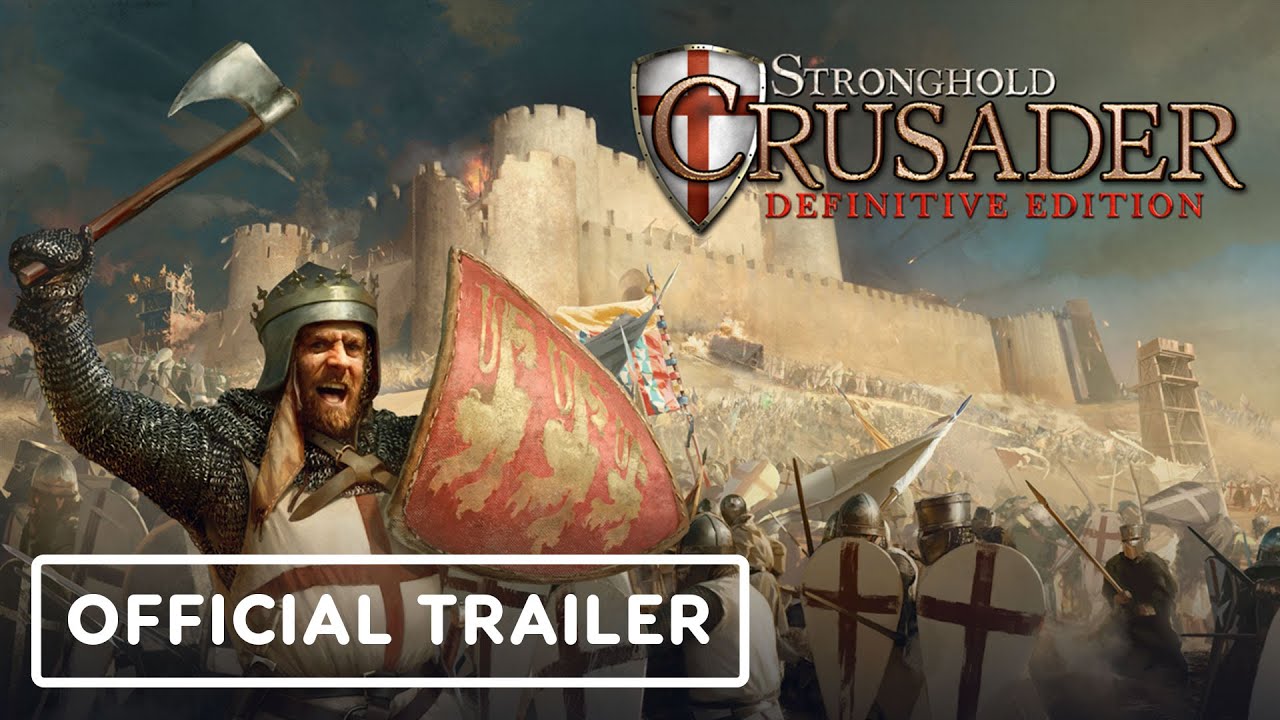 8.5
8.5 Kaizensclan verdict
Our Stronghold Crusader Definitive Edition review covers eight hours of castle building, skirmishes, campaigns and siege warfare on PC. Read the verified.
Review basis: 8 hours on PC. The stated time covers several sessions with the release build and is not a claim of full completion.
Stronghold Crusader: Definitive Edition rebuilds a 2002 strategy game whose economy and warfare occupy the same walls. Bread, pitch, taxes and troop morale are not separate minigames; every production chain changes what a castle can survive.
Stronghold Crusader Definitive Edition review: first impressions
The opening missions explain placement through scarcity. An oasis supports farms, stone demands transport and exposed industry needs protection. Familiar low-resolution logic remains under the new art, so an inefficient road or misplaced granary can hurt more than a slow click.
Each match alternates between securing resources, satisfying peasants, shaping walls and choosing when to spend stockpiles on an army. Skirmish opponents have recognizable personalities and build habits. The loop works because attacking too early and waiting too long are both expensive.
Systems and meaningful decisions
Popularity controls population growth, linking food variety, rations, taxes, religion and fear. Weapon production converts a stable settlement into specialized troops rather than abstract points. Walls, towers, gates and kill zones make terrain a persistent decision. The Definitive Edition adds eight units and four AI lords without replacing this foundation.
We judged progression by whether it changed the next decision rather than simply raising a number. A useful unlock opens a route, answers a recurring problem or creates a new risk. Busy menus received no extra credit when the underlying choice remained obvious.
Controls, combat and feedback
Modern resolution support and interface refinements make selection easier, but the game still expects precise placement on a compact grid. Large mixed armies can require more management than contemporary strategy players expect. Siege feedback remains satisfying because destroyed stone and collapsing defenses visibly explain progress.
Failure is productive when the game reveals enough information for a better attempt. We separated setbacks caused by a readable rule or poor plan from repetition that only consumed time. Challenge can create tension without hiding responsibility for the outcome.
World and visual direction
Redrawn desert maps preserve the crisp, busy readability of the original. Farms, hovels and workshops communicate function through animation, while new unit art fits the established scale. The visual approach is restoration rather than reinvention, which serves both nostalgia and tactical clarity.
Presentation was assessed during ordinary play, not only in composed screenshots. Strong direction guides attention through colour, movement and contrast while preserving mood. A beautiful effect becomes a liability when it hides an objective, hazard or rival.
Music and sound design
Workers’ responses, warning calls and the advisor’s dry observations make economic changes audible. Combat is full of arrows, impacts and collapsing masonry without losing the distinctive unit acknowledgments. The soundtrack supports long construction phases rather than demanding constant attention.
Audio was judged as both atmosphere and information. Distinct warnings, impacts and movement cues matter more over several hours than one loud set piece, although memorable themes can give repeated actions identity.
Performance and interface
The PC edition ran reliably during tested campaign and skirmish sessions. Workshop support and larger maps expand the practical package. Some legacy pathfinding and formation behavior remain visible, especially around gates and crowded walls, so modern presentation does not mean fully modern unit logic.
One test platform cannot represent every configuration, and later patches may change performance. We report the observed experience without promising results on untested hardware. Players with a specific accessibility or frame-rate requirement should check current platform documentation.
Learning curve
Campaigns introduce production and combat in manageable pieces, while the skirmish trail turns knowledge into escalating tests. Tooltips help, but the best lessons come from watching why peasants stop arriving or why a resource chain stalls. Returning players can move quickly; newcomers should resist skipping economic scenarios.
The opening session was separated from later play. A system that feels obscure for ten minutes may become expressive after its vocabulary settles, while a polished tutorial can hide a loop that never develops. Essential status and resource information should remain available during play.
Pacing and replay value
Castle growth creates a strong long arc, and AI personalities make rematches recognizable. New campaigns, historical missions, cooperative play and the expanded trail add reasons to continue. Some defensive games become prolonged when neither side can convert its economy into a clean breach.
Replay value can come from alternate routes, builds, rivals or mastery of a fixed sequence. Those forms are not interchangeable. We credit only the structure visible in the stated hours and do not award points for an assumed endgame or promised roadmap.
Monetization and value
This is a premium standalone release. The reviewed package includes its remastered content, new units, AI lords, campaigns and workshop support. Future DLC or discounts should be evaluated separately rather than added to the score as promised value.
Value was judged from the quality and repeatability of the available experience, not from a temporary discount. A compact game can justify its scope when every hour develops the idea; a larger game can still waste time through repetition.
Accessibility and practical fit
Adjustable game speed and clear economic animation help players learn at their own pace. The density of small units and buildings may challenge players who need larger interface elements, and multiplayer expects comfort with shortcuts. Current store information should be checked for language and input support.
The buying question extends beyond technical compatibility. Consider whether a normal twenty-minute stretch contains the decisions, reading, repetition and downtime you enjoy. Unedited footage of ordinary play is often a better final check than a trailer built from peak moments.
We also compared the advertised fantasy with the action repeated between major set pieces. A review score rises when ordinary minutes express the same strengths as the trailer, and falls when progress regularly depends on friction that the game does not acknowledge or explain.
Limits of the 8-hour review
Eight hours covered the opening campaigns, several skirmishes and portions of the trail, not every mission, cooperative combination or workshop creation. Legacy behavior can appear differently on extreme custom maps, so this is not a certification of every possible siege.
The window was long enough to test the repeated loop across separate sessions, but not every ending, late encounter or future update. Price, discounts and online population are not treated as permanent facts.
Who should play it?
It is an easy recommendation for players who enjoy economy as part of military planning and for returning Crusader fans who want a respectful version on current systems. Players seeking frictionless formations or a purely competitive RTS may find its older habits demanding.
Stronghold Crusader Definitive Edition review verdict
The Definitive Edition understands that Crusader’s rough edges and identity are intertwined. It improves presentation and adds credible scenarios while preserving the pressure between feeding a settlement and funding a siege. That restraint makes the restoration feel purposeful.
Pros: Economic and military systems remain tightly connected; New campaigns and AI fit the original design; Excellent atmosphere and readable castle damage.
Cons: Legacy pathfinding still causes friction; Crowded army control feels dated; Long defensive matches can stall.
Final score: 8.5/10. A careful restoration that keeps the desert economy sharp and adds useful new battles without sanding away its character.
Sources: primary release information or official records. Dates, scores and named features were checked against the linked source; evaluative passages are our own.
Continue with the Kaizensclan archive and our practical gaming guides.
Editorial note
Hands-on review window recorded in the article metadata, supported by official documentation and public technical coverage.
This article was reviewed on August 10, 2026.

Related stories
Minishoot’ Adventures review: exploration under fire
This Minishoot Adventures review finds a small ship leaving its village to free captured friends and confront corrupted machines. SoulGame Studio combines an.
Mouthwashing review: horror after the crash
This Mouthwashing review enters the Tulpar after a crash leaves five crew members with dwindling supplies and no credible rescue. Wrong Organ shifts between.
Thank Goodness You’re Here review: slapstick with purpose
This Thank Goodness You’re Here review follows a traveling salesman who arrives early for a mayoral appointment and becomes free labor for Barnsworth. Coal.
Community channel
Join the discussion
Start a thoughtful, specific conversation about this story.
Verified readers only
Continue with Google to comment.
Your Google account creates a reader-only Kaizensclan profile. Your first comment is reviewed before publication.