PATAPON 1+2 REPLAY review: rhythm still commands
Our PATAPON 1+2 REPLAY review covers five hours of rhythm commands, army building, boss hunts and modern options on PC. Read the verified context and practical.

 8.0
8.0 Kaizensclan verdict
Our PATAPON 1+2 REPLAY review covers five hours of rhythm commands, army building, boss hunts and modern options on PC. Read the verified context and practical.
Review basis: 5 hours on PC. The stated time covers several sessions with the release build and is not a claim of full completion.
PATAPON 1+2 REPLAY asks the player to command an army with four drum sounds. A marching phrase moves the tribe, another attacks, and maintaining the pulse builds Fever. The idea remains unusual because rhythm is not decoration; it is the control system.
PATAPON 1+2 REPLAY review: first impressions
The first commands are easy to imitate and hard to perform carelessly. The game waits for a complete phrase, then the Patapons execute it on the following beat. That delay creates strategy: the correct order must be chosen before an enemy’s animation reaches its consequence.
Missions provide materials, equipment and new units, which feed preparation for hunts, bosses and story stages. The second game expands classes and evolution. Repeating older missions is often useful for resources, connecting musical consistency to the slower work of army development.
Systems and meaningful decisions
Unit composition, weapons and elemental conditions determine which command will succeed. Fever rewards a sustained rhythm with stronger performance, but panic can break the chain precisely when defense matters. The mixture turns a small input vocabulary into planning about timing, range and preparation.
We judged progression by whether it changed the next decision rather than simply raising a number. A useful unlock opens a route, answers a recurring problem or creates a new risk. Busy menus received no extra credit when the underlying choice remained obvious.
Controls, combat and feedback
Four inputs are enough to learn quickly, and the remaster offers adjustable timing support. Feedback is strongest when the army repeats a phrase and the Fever state rises. Visual action can distract from the beat, so relying on animation alone is less dependable than listening.
Failure is productive when the game reveals enough information for a better attempt. We separated setbacks caused by a readable rule or poor plan from repetition that only consumed time. Challenge can create tension without hiding responsibility for the outcome.
World and visual direction
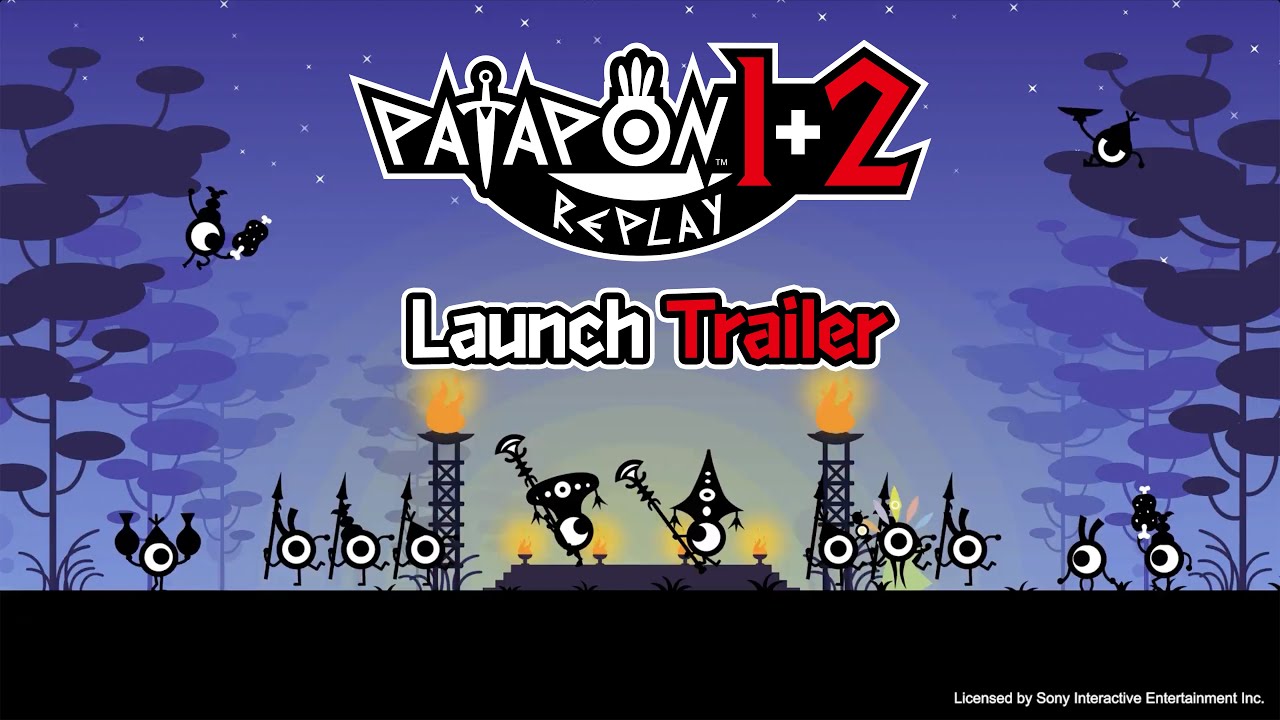
Silhouetted one-eyed warriors, bold flat landscapes and enormous creatures remain instantly recognizable. The art scales cleanly because its identity depends on shape and rhythm rather than detail. Menu presentation shows its handheld origin more than the battlefield does.
Presentation was assessed during ordinary play, not only in composed screenshots. Strong direction guides attention through colour, movement and contrast while preserving mood. A beautiful effect becomes a liability when it hides an objective, hazard or rival.
Music and sound design
Sound is the interface. Drum timbre, call-and-response vocals and the growing Fever song explain whether the command was understood. Repetition is intentional, but grinding the same resource stage can turn a catchy phrase into fatigue faster than an ordinary strategy soundtrack.
Audio was judged as both atmosphere and information. Distinct warnings, impacts and movement cues matter more over several hours than one loud set piece, although memorable themes can give repeated actions identity.
Performance and interface
The PC version presented both games cleanly during the test window and supported modern display expectations. The collection’s improvements do not redesign every menu or remove historical pacing. Input timing felt consistent with the chosen settings, which matters more here than elaborate graphics options.
One test platform cannot represent every configuration, and later patches may change performance. We report the observed experience without promising results on untested hardware. Players with a specific accessibility or frame-rate requirement should check current platform documentation.
Learning curve
Early missions teach one command at a time and provide safe repetition. The deeper challenge is switching phrases without losing tempo while reading an enemy. Players with no rhythm-game background can learn, but anyone unable to use audio cues may depend heavily on available visual and timing assistance.
The opening session was separated from later play. A system that feels obscure for ten minutes may become expressive after its vocabulary settles, while a polished tutorial can hide a loop that never develops. Essential status and resource information should remain available during play.
Pacing and replay value
Short missions suit compact sessions, and army experiments create replay value. Resource farming and failed boss preparation can slow the campaign because knowing the rhythm does not guarantee the right equipment. Having both games makes the development from the first design to the richer sequel easy to see.
Replay value can come from alternate routes, builds, rivals or mastery of a fixed sequence. Those forms are not interchangeable. We credit only the structure visible in the stated hours and do not award points for an assumed endgame or promised roadmap.
Monetization and value
The collection is a premium package containing Patapon and Patapon 2. The reviewed loop did not rely on a live-service store or paid power. Regional price and discounts vary; value depends on tolerance for deliberate replay and resource gathering.
Value was judged from the quality and repeatability of the available experience, not from a temporary discount. A compact game can justify its scope when every hour develops the idea; a larger game can still waste time through repetition.
Accessibility and practical fit
Adjustable timing windows are the most important modern aid. Simple buttons reduce physical complexity, but the demand for recurring audio patterns is fundamental and cannot be removed without changing the game. Players should check current accessibility descriptions for their platform.
The buying question extends beyond technical compatibility. Consider whether a normal twenty-minute stretch contains the decisions, reading, repetition and downtime you enjoy. Unedited footage of ordinary play is often a better final check than a trailer built from peak moments.
We also compared the advertised fantasy with the action repeated between major set pieces. A review score rises when ordinary minutes express the same strengths as the trailer, and falls when progress regularly depends on friction that the game does not acknowledge or explain.
Limits of the 5-hour review
Five hours covered early campaigns, several unit types, hunting and boss encounters across the collection, not complete progression in either game. Later evolution paths and the hardest timing demands are outside this score’s direct test window.
The window was long enough to test the repeated loop across separate sessions, but not every ending, late encounter or future update. Price, discounts and online population are not treated as permanent facts.
Who should play it?
It is ideal for players who enjoy rhythm, preparation and charming repetition. Anyone looking for free movement, direct unit control or a story that advances without revisiting missions may find the structure restrictive.
PATAPON 1+2 REPLAY review verdict
PATAPON 1+2 REPLAY preserves a design that still has few substitutes. The beat turns every order into commitment and every mistake into audible evidence. Old menu habits and resource repetition remain, but the central act of commanding a singing army is still delightful.
Pros: Unique rhythm-command system; Timeless visual identity; Two complementary campaigns.
Cons: Resource grinding can blunt the music; Legacy menu pacing; Core audio dependence limits some players.
Final score: 8.0/10. Two inventive rhythm-strategy games return with their charm intact and their repetition still audible.
Sources: primary release information or official records. Dates, scores and named features were checked against the linked source; evaluative passages are our own.
Continue with the Kaizensclan archive and our practical gaming guides.
Editorial note
Hands-on review window recorded in the article metadata, supported by official documentation and public technical coverage.
This article was reviewed on August 10, 2026.

Related stories
Minishoot’ Adventures review: exploration under fire
This Minishoot Adventures review finds a small ship leaving its village to free captured friends and confront corrupted machines. SoulGame Studio combines an.

Mouthwashing review: horror after the crash
This Mouthwashing review enters the Tulpar after a crash leaves five crew members with dwindling supplies and no credible rescue. Wrong Organ shifts between.

Thank Goodness You’re Here review: slapstick with purpose
This Thank Goodness You’re Here review follows a traveling salesman who arrives early for a mayoral appointment and becomes free labor for Barnsworth. Coal.
Community channel
Join the discussion
Start a thoughtful, specific conversation about this story.
Verified readers only
Continue with Google to comment.
Your Google account creates a reader-only Kaizensclan profile. Your first comment is reviewed before publication.