Mecha BREAK review: speed inside heavy armor
Our Mecha BREAK review covers six hours of 3v3 and 6v6 mech combat, role design, movement, feedback and free-to-play progression on PC. Read the verified.

 6.5
6.5 Kaizensclan verdict
Our Mecha BREAK review covers six hours of 3v3 and 6v6 mech combat, role design, movement, feedback and free-to-play progression on PC. Read the verified.
Review basis: 6 hours on PC. The stated time covers several sessions with the release build and is not a claim of full completion.
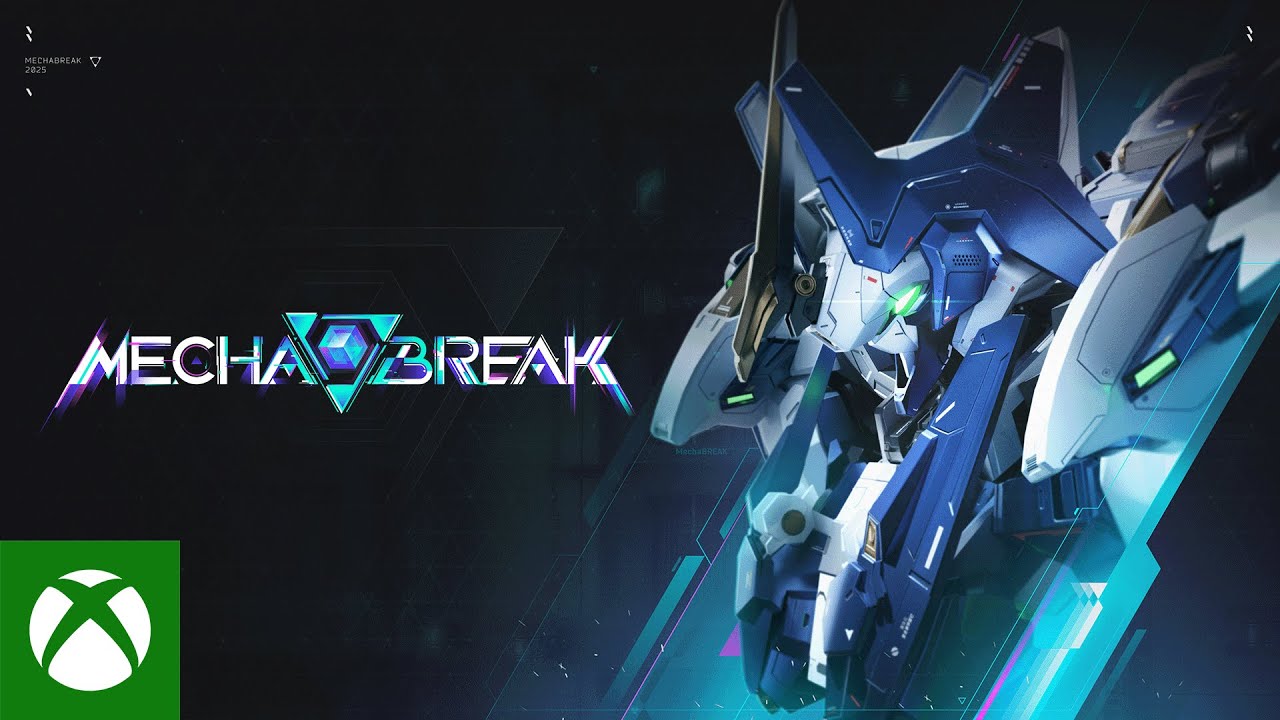
Mecha BREAK understands the appeal of a giant machine but refuses to make one slow. Its Strikers boost, climb, lock on and exchange missiles at a pace closer to an aerial arena shooter than a conventional vehicle simulation.
Mecha BREAK review: first impressions
Choosing a first Striker is the most important early decision. Attackers, defenders and support machines share basic movement language, yet their effective ranges and responsibilities differ sharply. A fast duelist feels almost like a different game from an armored anchor holding an objective.
Six-versus-six modes provide the clearest team structure, while three-versus-three pushes mechanical coordination into smaller spaces. The broader Mashmak concept adds PvPvE extraction ideas, but the competitive matches best explain the roster because every cooldown and angle has an opposing player attached.
Systems and meaningful decisions
Energy, lock range, armor and cooldowns make movement a resource rather than free spectacle. Team composition matters: damage without repair or control can win an opening exchange and still lose the objective. Preset machine identities create clarity, though players who expect deep part-by-part construction may feel constrained.
We judged progression by whether it changed the next decision rather than simply raising a number. A useful unlock opens a route, answers a recurring problem or creates a new risk. Busy menus received no extra credit when the underlying choice remained obvious.
Controls, combat and feedback
Boosting and lateral evasion feel responsive with mouse and keyboard, and lock-on reduces the impossible precision that full three-dimensional combat might otherwise demand. The camera can become crowded at close range, particularly when several large effects overlap, and target selection sometimes competes with the intended escape route.
Failure is productive when the game reveals enough information for a better attempt. We separated setbacks caused by a readable rule or poor plan from repetition that only consumed time. Challenge can create tension without hiding responsibility for the outcome.
World and visual direction
Industrial arenas and enormous Striker silhouettes sell scale through hangars, towers and long sightlines. Individual machines have clear visual roles, from sharp aerial frames to thick defensive armor. Mission spaces are functional, but few environments establish a memorable place beyond their tactical geometry.
Presentation was assessed during ordinary play, not only in composed screenshots. Strong direction guides attention through colour, movement and contrast while preserving mood. A beautiful effect becomes a liability when it hides an objective, hazard or rival.
Music and sound design
Thrusters and heavy weapons provide convincing weight even when the machine changes direction quickly. Lock warnings are vital and usually distinct, although overlapping alarms and allied effects can become noisy in a full fight. Voice cues help explain objectives but are less useful than the HUD under pressure.
Audio was judged as both atmosphere and information. Distinct warnings, impacts and movement cues matter more over several hours than one loud set piece, although memorable themes can give repeated actions identity.
Performance and interface
The PC build offered scalable settings and generally responsive inputs during the six-hour window. Network conditions and hardware variety prevent one setup from representing everyone. Menus are more demanding than the match HUD, with currencies, rewards and customization pages competing for attention.
One test platform cannot represent every configuration, and later patches may change performance. We report the observed experience without promising results on untested hardware. Players with a specific accessibility or frame-rate requirement should check current platform documentation.
Learning curve
Basic boosting is easy; learning why a Striker died is harder. Role labels help, but a new player must understand range, break states, vertical cover and the enemy roster. Practice tools reduce the cost of testing, while real matches expose how quickly an unsupported push collapses.
The opening session was separated from later play. A system that feels obscure for ten minutes may become expressive after its vocabulary settles, while a polished tutorial can hide a loop that never develops. Essential status and resource information should remain available during play.
Pacing and replay value
Matches move quickly and produce dramatic reversals around objectives. Respawns preserve action but can weaken the consequence of an early pick. The game is most replayable when several roles coordinate; solo sessions vary with matchmaking quality and whether teammates recognize the objective.
Replay value can come from alternate routes, builds, rivals or mastery of a fixed sequence. Those forms are not interchangeable. We credit only the structure visible in the stated hours and do not award points for an assumed endgame or promised roadmap.
Monetization and value
Mecha BREAK is free to play and includes in-app purchases. That makes its progression, currencies and cosmetic presentation part of the review rather than an optional storefront footnote. Players should inspect current purchase descriptions and unlock routes because live-service economies can change after publication.
Value was judged from the quality and repeatability of the available experience, not from a temporary discount. A compact game can justify its scope when every hour develops the idea; a larger game can still waste time through repetition.
Accessibility and practical fit
Lock-on and clear role identities lower the mechanical entrance, but rapid camera movement, dense effects and layered menus create other barriers. Players sensitive to motion or visual noise should test available settings. Competitive success also depends on communication that random teams do not always provide.
The buying question extends beyond technical compatibility. Consider whether a normal twenty-minute stretch contains the decisions, reading, repetition and downtime you enjoy. Unedited footage of ordinary play is often a better final check than a trailer built from peak moments.
We also compared the advertised fantasy with the action repeated between major set pieces. A review score rises when ordinary minutes express the same strengths as the trailer, and falls when progress regularly depends on friction that the game does not acknowledge or explain.
Limits of the 6-hour review
Six hours covered several machines and both small- and large-team PvP, not every Striker, advanced rank or long-term economy state. Balance and population are especially changeable in an online game, so the score reflects the observed release-era loop.
The window was long enough to test the repeated loop across separate sessions, but not every ending, late encounter or future update. Price, discounts and online population are not treated as permanent facts.
Who should play it?
It is best for players who value speed, hero-like machine roles and coordinated objectives. Pilots seeking a simulation, fully modular construction or a campaign-led experience should adjust expectations before committing time.
Mecha BREAK review verdict
The machines are the triumph: fast, distinct and satisfying to move. Mecha BREAK becomes less confident when progression pages and uneven team behavior surround those machines. With friends and a chosen role it can be electric; alone, the same spectacle is less dependable.
Pros: Excellent boost movement; Distinct Striker roles; Impressive weapon and machine feedback.
Cons: Busy free-to-play progression; Close fights can become visually crowded; Solo match quality varies heavily.
Final score: 6.5/10. Spectacular movement and distinct machines carry uneven objectives and an intrusive progression shell.
Sources: primary release information or official records. Dates, scores and named features were checked against the linked source; evaluative passages are our own.
Continue with the Kaizensclan archive and our practical gaming guides.
Editorial note
Hands-on review window recorded in the article metadata, supported by official documentation and public technical coverage.
- https://store.steampowered.com/app/2452280/Mecha_BREAK/
- Amazing Seasun Games / Xbox
This article was reviewed on August 10, 2026.

Related stories
Minishoot’ Adventures review: exploration under fire
This Minishoot Adventures review finds a small ship leaving its village to free captured friends and confront corrupted machines. SoulGame Studio combines an.

Mouthwashing review: horror after the crash
This Mouthwashing review enters the Tulpar after a crash leaves five crew members with dwindling supplies and no credible rescue. Wrong Organ shifts between.

Thank Goodness You’re Here review: slapstick with purpose
This Thank Goodness You’re Here review follows a traveling salesman who arrives early for a mayoral appointment and becomes free labor for Barnsworth. Coal.
Community channel
Join the discussion
Start a thoughtful, specific conversation about this story.
Verified readers only
Continue with Google to comment.
Your Google account creates a reader-only Kaizensclan profile. Your first comment is reviewed before publication.