Mario Kart World review: racing beyond the circuit
Our Mario Kart World review examines Knockout Tour, Free Roam, 24-driver races, controls and progression after seven hours on Switch 2. Read the verified.

 8.5
8.5 Kaizensclan verdict
Our Mario Kart World review examines Knockout Tour, Free Roam, 24-driver races, controls and progression after seven hours on Switch 2. Read the verified.
Review basis: 7 hours on Nintendo Switch 2. The stated time covers several sessions with the release build and is not a claim of full completion.
Mario Kart World makes its largest promise before the starting lights: races no longer need to stay inside tidy barriers. Roads, dunes, rivers and walls connect the competition into one broad space, supporting 24 drivers and a new knockout format.
Mario Kart World review: first impressions
The first hour feels familiar because acceleration, drifting, items and readable character classes remain intact. The difference arrives when a route leaves a circuit and keeps travelling. Long connective stretches ask for lane choices, wall rides and quick reactions to terrain instead of repeating three identical laps.
Grand Prix still supplies cups and points, while Knockout Tour turns a long route into staged elimination. Free Roam removes the starting grid and scatters short missions and collectibles around the map. Switching modes reveals that the world is a racing surface first and an exploration playground second.
Systems and meaningful decisions
Rail grinds, wall rides and charged jumps make route knowledge more expressive. They create shortcuts and recovery options without replacing the importance of a clean drift. Twenty-four racers increase traffic and item volatility, so front-running feels less controllable than in smaller fields, particularly when narrow roads compress everyone together.
We judged progression by whether it changed the next decision rather than simply raising a number. A useful unlock opens a route, answers a recurring problem or creates a new risk. Busy menus received no extra credit when the underlying choice remained obvious.
Controls, combat and feedback
Steering is immediate, and the new movement has strong animation cues. Wall contact occasionally produces a result that is harder to predict than an ordinary corner, but successful transitions feel physical rather than automatic. Assists make family sessions approachable while manual lines retain room for optimization.
Failure is productive when the game reveals enough information for a better attempt. We separated setbacks caused by a readable rule or poor plan from repetition that only consumed time. Challenge can create tension without hiding responsibility for the outcome.
World and visual direction
The map is a playful remix of Mario geography rather than a realistic continent. Biomes move from city streets to snow, sea and desert with confident color coding. Courses look strongest when a landmark becomes a route decision; empty connecting ground is less memorable when explored slowly.
Presentation was assessed during ordinary play, not only in composed screenshots. Strong direction guides attention through colour, movement and contrast while preserving mood. A beautiful effect becomes a liability when it hides an objective, hazard or rival.
Music and sound design
Engines, item warnings and collision sounds remain clear in a crowded field. Music adapts to locations and revisits familiar Nintendo motifs without turning every race into nostalgia. Knockout checkpoints receive enough audio emphasis to explain urgency even when the screen is full.
Audio was judged as both atmosphere and information. Distinct warnings, impacts and movement cues matter more over several hours than one loud set piece, although memorable themes can give repeated actions identity.
Performance and interface
Across the tested Switch 2 sessions, races loaded reliably and input response remained consistent. The interface communicates position, lap or checkpoint state and held items well. Free Roam’s abundance of small icons can make completion goals feel busier than the elegant race HUD.
One test platform cannot represent every configuration, and later patches may change performance. We report the observed experience without promising results on untested hardware. Players with a specific accessibility or frame-rate requirement should check current platform documentation.
Learning curve
Veterans can drive immediately, but wall riding and rail transfers need deliberate practice. Short Free Roam challenges teach individual tricks more effectively than a long text tutorial. Younger players can lean on steering options without preventing experienced players from learning tighter routes.
The opening session was separated from later play. A system that feels obscure for ten minutes may become expressive after its vocabulary settles, while a polished tutorial can hide a loop that never develops. Essential status and resource information should remain available during play.
Pacing and replay value
Knockout Tour is the pacing highlight because every checkpoint removes the slowest drivers and keeps a long journey consequential. Grand Prix offers the cleaner competitive rhythm. Free Roam works as a relaxed break, although its small tasks do not all carry the craft of a designed circuit.
Replay value can come from alternate routes, builds, rivals or mastery of a fixed sequence. Those forms are not interchangeable. We credit only the structure visible in the stated hours and do not award points for an assumed endgame or promised roadmap.
Monetization and value
Mario Kart World is sold as a premium Switch 2 game. Our sessions did not present a power-selling microtransaction loop. Hardware bundles and regional prices vary, so the useful comparison is whether the included modes justify the platform-specific purchase.
Value was judged from the quality and repeatability of the available experience, not from a temporary discount. A compact game can justify its scope when every hour develops the idea; a larger game can still waste time through repetition.
Accessibility and practical fit
Control assists, recognizable icons and quick local sessions broaden the audience. Twenty-four-player chaos can still overwhelm players who prefer a precise duel, and Free Roam objectives sometimes depend on noticing small environmental cues. Local and online needs should be checked against Nintendo’s current service information.
The buying question extends beyond technical compatibility. Consider whether a normal twenty-minute stretch contains the decisions, reading, repetition and downtime you enjoy. Unedited footage of ordinary play is often a better final check than a trailer built from peak moments.
We also compared the advertised fantasy with the action repeated between major set pieces. A review score rises when ordinary minutes express the same strengths as the trailer, and falls when progress regularly depends on friction that the game does not acknowledge or explain.
Limits of the 7-hour review
Seven hours covered multiple cups, Knockout Tour runs, Free Roam challenges and multiplayer-style race conditions, but not every unlock or high-level online matchup. The score does not claim a complete survey of all routes, characters or future events.
The window was long enough to test the repeated loop across separate sessions, but not every ending, late encounter or future update. Price, discounts and online population are not treated as permanent facts.
Who should play it?
It suits players who want an accessible party racer with a meaningful new movement layer. Drivers seeking strict item control or a dense open-world adventure may prefer the cleaner rules of traditional circuits or a game built around exploration.
Mario Kart World review verdict
Mario Kart World succeeds when the landscape keeps moving. Knockout Tour and expanded movement make familiar handling feel newly adventurous. Free Roam is a pleasant connective tissue rather than the main reason to play, but the racing underneath it remains exceptionally readable and inviting.
Pros: Excellent handling and movement feedback; Knockout Tour gives long routes real tension; Strong family and local-session appeal.
Cons: Large fields increase item volatility; Free Roam tasks vary in depth; Some wall interactions are initially unpredictable.
Final score: 8.5/10. A generous, wonderfully physical racer whose connected world is more convincing at speed than at rest.
Sources: primary release information or official records. Dates, scores and named features were checked against the linked source; evaluative passages are our own.
Continue with the Kaizensclan archive and our practical gaming guides.
Editorial note
Hands-on review window recorded in the article metadata, supported by official documentation and public technical coverage.
- https://www.nintendo.com/store/products/mario-kart-world-switch-2/
- Nintendo / GameSpot Trailers
This article was reviewed on August 10, 2026.

Related stories
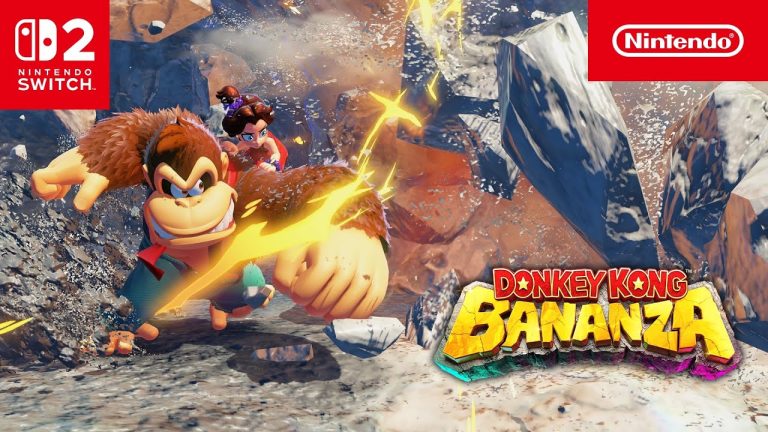
Donkey Kong Bananza review: destruction with purpose
Our Donkey Kong Bananza review examines eight hours of terrain destruction, Pauline’s transformations, exploration and performance on Switch 2. Read our.
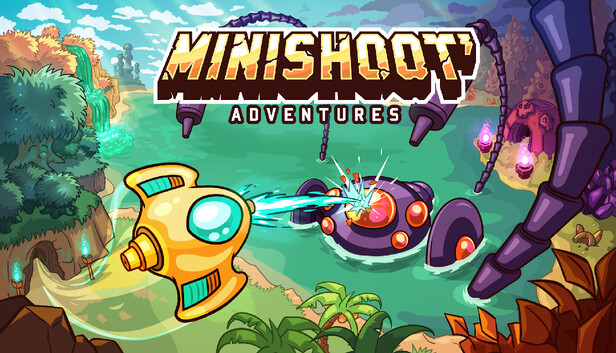
Minishoot’ Adventures review: exploration under fire
This Minishoot Adventures review finds a small ship leaving its village to free captured friends and confront corrupted machines. SoulGame Studio combines an.

Mouthwashing review: horror after the crash
This Mouthwashing review enters the Tulpar after a crash leaves five crew members with dwindling supplies and no credible rescue. Wrong Organ shifts between.
Community channel
Join the discussion
Start a thoughtful, specific conversation about this story.
Verified readers only
Continue with Google to comment.
Your Google account creates a reader-only Kaizensclan profile. Your first comment is reviewed before publication.