The First Berserker: Khazan review — exacting combat
Our The First Berserker Khazan review tests its guard timing, stamina management, bosses and cel-shaded presentation during five demanding hours on PC.

 8.0
8.0 Kaizensclan verdict
Our The First Berserker Khazan review tests its guard timing, stamina management, bosses and cel-shaded presentation during five demanding hours on PC.
The First Berserker: Khazan makes defense feel active. After five hours on PC, its exact guards, stamina pressure and readable boss attacks create an action RPG that is demanding for clear reasons rather than simply inflated damage.
Score: 8.0/10. This research review covers a five-hour hands-on window and does not claim completion of the full campaign.
Every exchange is a stamina argument
Khazan can dodge, block and perform a precisely timed guard. The strongest response depends on the attack sequence and the player’s remaining stamina. Holding block survives a mistake, but repeated impact can break posture and hand the enemy a decisive opening.
Exact guards turn defense into progress. Learning the rhythm of a combo preserves resources and creates a better counterattack window. Success feels earned because the animation and sound communicate the timing with unusual clarity.
Bosses teach before they punish
The opening bosses hit hard, yet their core patterns can be studied. Delayed swings prevent panic reactions, multi-hit strings test concentration and unblockable threats demand a different answer. Attempts become shorter as knowledge replaces caution.
That learning loop is the game’s best feature. A loss usually points to a specific error: spending stamina too aggressively, rolling without direction or attacking after a sequence that was not actually finished.
Weapons support different rhythms
Weapon choices alter reach, commitment and combo structure. Skills add routes without removing the importance of basic defense. A build can improve damage or resource recovery, but statistics do not bypass the need to read an enemy.
Equipment arrives frequently enough to encourage comparison. The danger is spending more time evaluating small number changes than practicing the pattern that caused a death. The game is at its best when gear supports execution rather than substitutes for it.
A striking world with a slow narrative opening
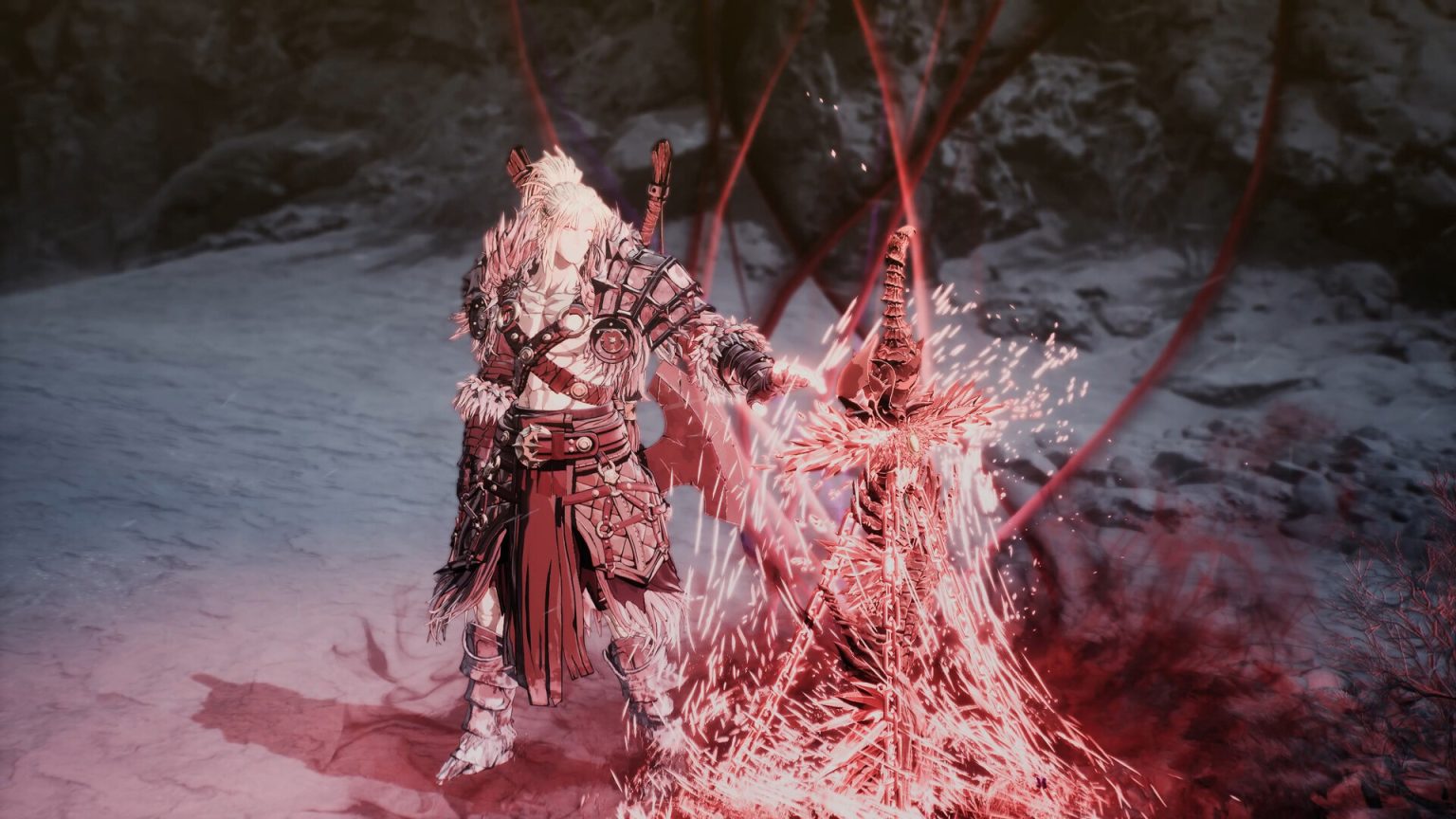
The cel-shaded visual style gives characters and monsters a sharp illustrated silhouette. It separates Khazan from more naturalistic action RPGs and keeps attacks readable even when effects fill the arena.
The Dungeon & Fighter setting supplies history, but the first hours deliver names and grievances faster than emotional attachment. Khazan’s anger is understandable; the supporting cast takes longer to become more than a delivery system for the next mission.
Levels are functional, sometimes repetitive
Routes provide shortcuts, ambushes and optional rewards, yet several corridors feel built mainly to stage the next combat test. Enemy placement remains competent, but exploration does not initially equal the creativity of the bosses.
Performance during the five-hour PC test supported accurate timing, the most important technical requirement for this combat model. Hardware configurations vary, so current system requirements and patches should be checked before purchase.
Verdict
Khazan earns its difficulty through readable attacks and a defense system that rewards deliberate practice. Repetitive connective fights and a slow story keep it from a higher score, but the central combat is precise, forceful and satisfying.
Players who enjoy rehearsed execution can also read our CS2 utility guide and VALORANT attack-default guide.
Source: official Steam page; Nexon and Neople.
Brink Guard turns danger into opportunity
The exact defensive timing, often framed through the Brink Guard system, is more than a flourish for expert players. It protects stamina and helps damage an opponent’s endurance, shortening the route to a punish. The window demands attention, but it is consistent enough to learn through repetition.
Blocking remains a legitimate fallback. Khazan does not insist that every attack be parried, and combining safe blocks with selected precise guards is often wiser than chasing perfection. That flexibility keeps the combat from becoming a single rhythm game.
Stamina links offense and defense
An extended combo may look available, yet spending the final portion of stamina can leave Khazan unable to answer the retaliation. The best attacks end with enough reserve to block, reposition or capitalize on a stagger. This makes restraint an offensive skill.
Enemies follow the same broad logic. Pressure can exhaust them and create a larger opening, so defense is not passive waiting. A successful sequence changes the resource state on both sides and sets up the next decision.
Skill trees support experimentation
Weapon-specific skills unlock new follow-ups, defensive responses and resource tools. The early tree is readable, and experimentation feels practical rather than permanently dangerous. This lets players learn whether a move belongs in their natural rhythm before shaping the rest of a build around it.
The most useful skills solve a recurring problem: reaching a mobile target, converting a guard into damage or recovering stamina safely. Pure numerical improvements have value, but the game becomes more expressive when a skill changes available decisions.
Regular enemies prepare boss concepts
Corridor encounters sometimes repeat, but many enemies introduce a timing or positioning idea later demanded by a boss. Shielded opponents discourage careless frontal strings; agile enemies punish healing without space; groups make target selection as important as guard timing.
Shortcuts and checkpoints keep failed experiments from becoming excessively costly. The route back to a boss is generally structured to preserve focus on learning rather than attrition, although optional exploration can add further fights.
Animation clarity supports fairness
Large wind-ups, weapon trails and sound cues separate attacks even when the visual style is highly detailed. Delays are designed to catch automatic reactions, but they are not invisible. A player who watches the enemy rather than their own character can identify the intended response.
Camera behavior is equally important in close arenas. During the tested opening, it usually kept the threat readable, though fighting near walls can still compress the view. Lock-on should be treated as a tool and released when managing several targets.
Challenge settings and expectations
Khazan is designed around repeated attempts. Players who dislike losing to learn a pattern will not be persuaded by strong animation alone. Those who enjoy measurable improvement will find that early bosses provide clear milestones.
The five-hour boundary prevents a responsible verdict on late build variety, endgame difficulty or the complete story. It does establish that the core combat is not waiting for later systems to become interesting. Exact guards, stamina and weapon commitment are compelling from the opening missions.
Who should play it
Khazan is easy to recommend to action RPG players who value bosses, defensive precision and a strong illustrated look. It is a more cautious recommendation for explorers seeking intricate level stories or players who want narrative momentum before mechanical mastery.
What the five-hour window can establish
The test covers early weapon progression, several regular enemy families and the first demanding boss lessons. It cannot establish the balance of endgame builds, the quality of every later arena or the complete narrative payoff. A finished-campaign review could reasonably move the score if enemy and level variety changes substantially.
The current verdict is anchored to systems already proven: guard timing, stamina exchange, animation readability and early encounter design. Later content could deepen or repeat those ideas, but it would not erase the precision that defines Khazan’s opening. The game communicates why an attempt failed, which is the foundation a difficult action RPG needs.
Players should expect improvement to come from observation rather than grinding alone. Better equipment creates margin, while recognition of attack delays and safe punish windows turns that margin into consistent progress.
Review scope: Five hours establish the opening systems and presentation, while a completed campaign could change conclusions about late-game variety and narrative payoff.
Editorial note
Five-hour review window, supported by official documentation and public technical coverage.
This article was reviewed on August 7, 2026.

Related stories

Minishoot’ Adventures review: exploration under fire
This Minishoot Adventures review finds a small ship leaving its village to free captured friends and confront corrupted machines. SoulGame Studio combines an.

Mouthwashing review: horror after the crash
This Mouthwashing review enters the Tulpar after a crash leaves five crew members with dwindling supplies and no credible rescue. Wrong Organ shifts between.

Thank Goodness You’re Here review: slapstick with purpose
This Thank Goodness You’re Here review follows a traveling salesman who arrives early for a mayoral appointment and becomes free labor for Barnsworth. Coal.
Community channel
Join the discussion
Start a thoughtful, specific conversation about this story.
Verified readers only
Continue with Google to comment.
Your Google account creates a reader-only Kaizensclan profile. Your first comment is reviewed before publication.