DOOM: The Dark Ages review — stand your ground
Our DOOM The Dark Ages review examines shield parries, grounded combat, large battlefields and why its vehicle chapters cannot match the Slayer on foot.

 8.5
8.5 Kaizensclan verdict
Our DOOM The Dark Ages review examines shield parries, grounded combat, large battlefields and why its vehicle chapters cannot match the Slayer on foot.
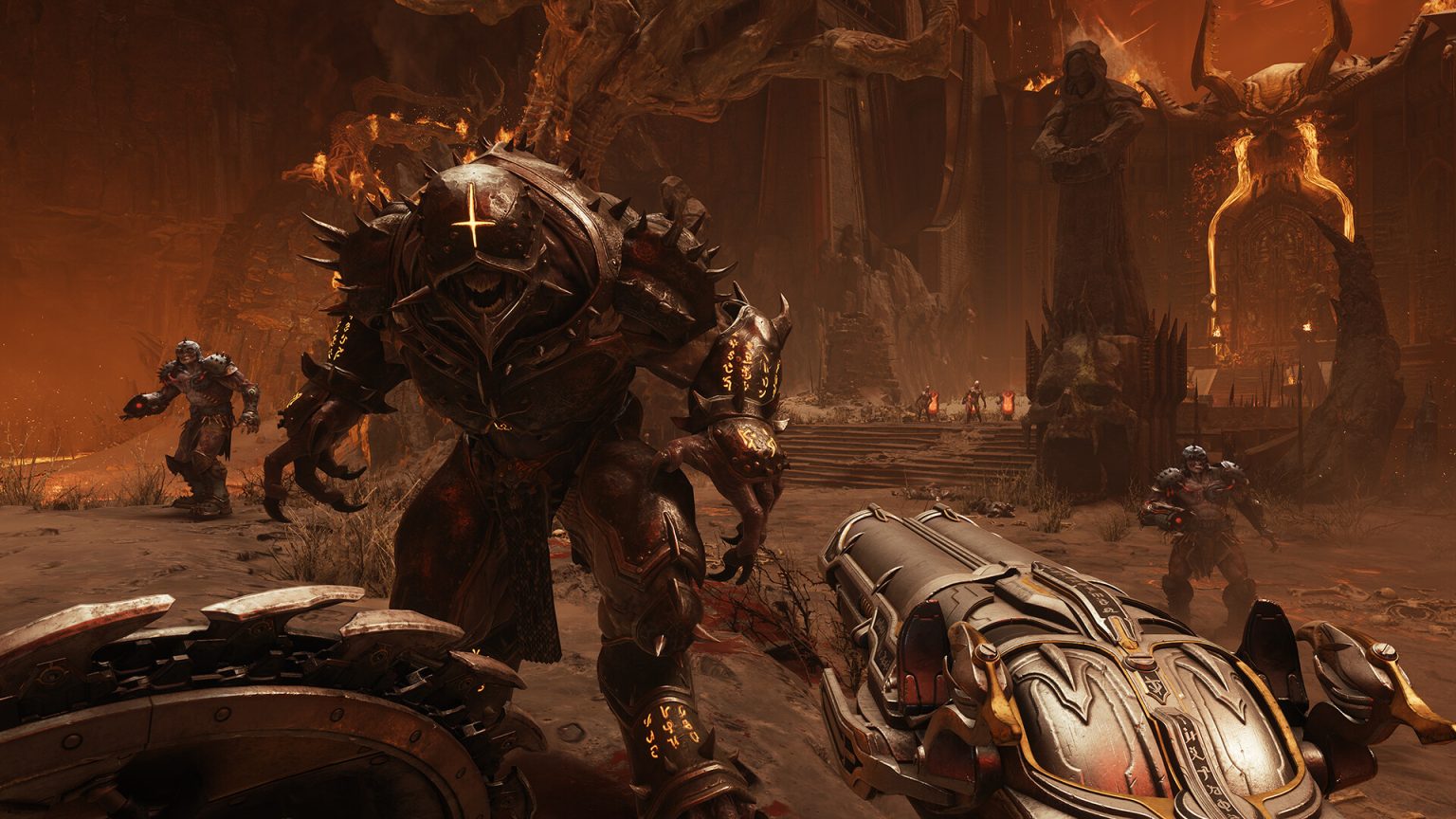
This DOOM: The Dark Ages review finds id Software changing the Slayer’s posture without weakening his authority. The 2025 prequel replaces DOOM Eternal’s airborne resource choreography with a heavier loop built around blocking, parrying and advancing through pressure. It is a forceful first-person shooter whose best on-foot battles make defence feel aggressive, even if its largest cinematic detours are less expressive.
Review methodology: Kaizensclan did not independently test a release build. The score is a research-based assessment of official documentation and public gameplay, with zero hands-on hours stated explicitly. Release facts and feature descriptions were checked against the official Steam page and Bethesda materials.
DOOM: The Dark Ages makes defence violent
The Shield Saw defines the new combat language. It can block incoming pressure, parry clearly signalled attacks and launch across an arena to damage or disrupt a target. A successful defence does not pause the fight; it creates the next offensive opportunity. That relationship keeps the Slayer moving toward danger rather than hiding behind cover.
Colour-coded projectiles communicate which attacks can be parried, while enemy formations ask the player to prioritise threats before the arena becomes saturated. The system is readable at speed because the important distinction is behavioural, not merely numerical. A parryable attack is an invitation to take space.
Weapons feel slower and heavier than their Eternal equivalents, but they still support distinct jobs. Shotguns control close pressure, automatic weapons sustain damage and explosive tools punish clusters. Melee attacks and shield actions help generate resources, keeping the familiar DOOM principle that survival comes from interacting with enemies rather than retreating from them.
The lower emphasis on acrobatic traversal will divide players. Eternal specialists may miss the precision of dash routes, airborne weapon swaps and tightly rehearsed cooldown cycles. The Dark Ages offers a wider front and a sturdier centre instead. Its challenge comes from reading a battlefield while holding ground, closer to the angle discipline discussed in our CS2 positioning guide than to a conventional cover shooter.
Large battlefields create freedom and downtime
Several levels open into broad combat spaces with optional encounters and upgrade resources. The scale supports target choice: the Slayer can interrupt a distant threat, clear a close group or use terrain to separate pressure. It also gives the medieval war premise room to exist beyond corridors.
Exploration is less convincing when it separates battles with routine searches for upgrade currency. DOOM benefits from rhythm, and a wide space can lose urgency when the player is checking its perimeter after the dangerous work is complete. Secrets are part of the series, but not every collectible route produces an interesting decision.
Dragon and Atlan sequences provide spectacle at a different scale. Flying through a battlefield or controlling a giant machine sells the Slayer’s legend, yet these chapters use narrower mechanical vocabularies than the on-foot combat. Their duration matters: as punctuation they are effective, while extended stretches expose repetition.
Boss fights work best when they test shield timing and target reading developed in regular arenas. Encounters that rely on spectacle without enough tactical variation feel less representative of the game’s strengths. The campaign is at its best when new enemy combinations reinterpret familiar tools.
Metal, stone and sound give every action weight
The medieval science-fiction art direction combines castles, siege machinery and demonic industry without turning the world into a generic dark-fantasy backdrop. Shield impacts throw sparks and fragments, weapons occupy substantial screen space, and enemies deform under sustained punishment. The visual message is mass.
That density could have buried combat information, but parry colours, projectile motion and enemy silhouettes remain strong. Effects are loud without making every threat identical. On higher difficulty settings, readability becomes part of survival rather than a cosmetic virtue.
Sound design carries much of the physicality. The Shield Saw has an abrasive mechanical presence, heavy weapons report differently and successful defensive actions cut through the wider mix. Music supplies momentum, but the most useful audio is local: the warning, impact and resource response that confirms a decision worked.
The result has the clarity valued in our Counter-Strike 2 review, although the two shooters pursue opposite fantasies. CS2 removes noise to expose a duel; The Dark Ages organises noise so the player can dominate a crowd.
Technical demands and monetisation
DOOM: The Dark Ages is a current-generation release with official support for PC, PlayStation 5 and Xbox Series consoles. The PC edition requires ray-tracing-capable hardware as part of its rendering baseline, so older graphics cards that run DOOM Eternal may not qualify. This research review does not claim benchmark results.
Difficulty customisation is a notable strength. Players can adjust several dimensions of the combat experience rather than selecting only one global label. That flexibility helps preserve the intended aggression while changing the punishment, projectile pressure or timing demands around it.
The release is a premium single-player game. Higher-priced editions include campaign-related extras and cosmetics, and the store lists separate digital content, but the core arsenal and progression do not operate through a live-service shop. There is no competitive multiplayer economy to distort weapon balance.
Value depends on appetite for authored replay. Difficulty changes and encounter mastery support additional runs, but there is no multiplayer mode or endless seasonal structure. Players are buying a substantial campaign, not a service designed to occupy every week.
Who should enter the medieval war
The Dark Ages is easiest to recommend to players who want a campaign shooter with a defined combat language. It provides enough difficulty control for newcomers to learn the shield loop, while higher settings ask experienced players to manage projectiles, resources and target order under sustained pressure.
DOOM Eternal players should approach it as a redesign rather than a direct expansion. The absence of the same aerial tempo is intentional. Anyone whose enjoyment depended on constant dashes and airborne weapon cycling may respect the new systems without preferring them.
Exploration-minded players will find optional routes and upgrade resources, but the game is not an immersive simulation. Its spaces ultimately exist to organise combat and spectacle. Conversely, players who want uninterrupted arenas should expect quieter searches and large-scale vehicle chapters between the strongest fights.
On PC, verify hardware support before purchase because the rendering baseline excludes some older cards. On console, compare current performance modes and display features. Input response and visual clarity matter more to the parry system than maximum texture settings.
Verdict
DOOM: The Dark Ages proves that slowing the Slayer’s vertical movement does not require making him passive. The Shield Saw turns defence into tempo, and the best arenas build entire threat hierarchies around that exchange.
The vehicle chapters and upgrade scavenging do not reach the same depth. They expand the legend more effectively than they expand the mechanics. Even so, the on-foot campaign has a coherent identity rather than reproducing Eternal with medieval scenery.
Score: 8.5/10. This is a research-based score with zero independent hands-on hours. Players who want a heavy, readable campaign shooter should find a confident redesign; those seeking Eternal’s aerial execution should study unedited combat before assuming the new rhythm is interchangeable.
Sources: id Software and Bethesda Softworks official Steam and release materials, checked August 6, 2026.
Editorial note
This research-based editorial assessment uses official release information and public gameplay. Kaizensclan logged zero first-hand playtest hours.
This article was reviewed on August 6, 2026.

Related stories
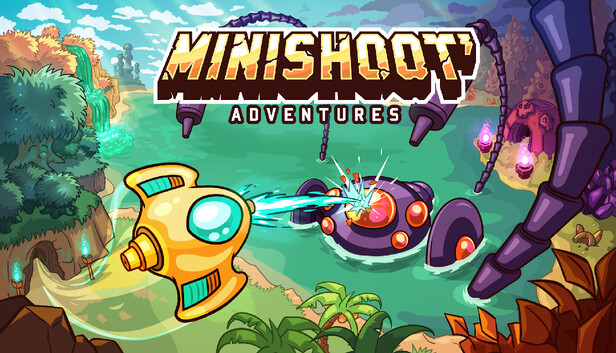
Minishoot’ Adventures review: exploration under fire
This Minishoot Adventures review finds a small ship leaving its village to free captured friends and confront corrupted machines. SoulGame Studio combines an.
Mouthwashing review: horror after the crash
This Mouthwashing review enters the Tulpar after a crash leaves five crew members with dwindling supplies and no credible rescue. Wrong Organ shifts between.

Thank Goodness You’re Here review: slapstick with purpose
This Thank Goodness You’re Here review follows a traveling salesman who arrives early for a mayoral appointment and becomes free labor for Barnsworth. Coal.
Community channel
Join the discussion
Start a thoughtful, specific conversation about this story.
Verified readers only
Continue with Google to comment.
Your Google account creates a reader-only Kaizensclan profile. Your first comment is reviewed before publication.