despelote review: football memory in a changing Quito
Our despelote review explores five hours of its childhood football, documentary texture, Quito setting, loose interactions and deliberately modest scope.

 8.0
8.0 Kaizensclan verdict
Our despelote review explores five hours of its childhood football, documentary texture, Quito setting, loose interactions and deliberately modest scope.
Review basis: 5 hours on PC (Steam). The score covers the systems and release build observed within that window, not a completionist playthrough.
despelote is a football game about people, which is not marketing misdirection. Set in Quito during Ecuador’s 2001 World Cup qualifying campaign, it follows eight-year-old Julián through schoolyards, streets and family spaces where kicking a ball is one part of listening to a country imagine qualification.
despelote review: the opening hours
The first minutes establish a loose first-person relationship with the ball. You can tap it toward a friend, chase it into an inconvenient corner or ignore it while adults talk. Objectives are present but rarely shout. The game wants curiosity and interruption to resemble a remembered afternoon rather than a designed drill.
Walking, listening and kicking form the basic rhythm. Conversations overlap and continue without waiting for perfect player attention. Small scenes move between private childhood concerns and public football anticipation. The ball provides tactile continuity, but it is not a score system that turns every space into a match.
Systems and meaningful decisions
Aiming and charging a kick are intentionally simple. The important decision is social: who receives the ball, what conversation is interrupted and whether Julián follows the expected path. Light interaction keeps the player embodied inside the memory without pretending that childhood can be reduced to a branching-stat screen.
Progression matters when it changes the next decision instead of merely raising a number. During this review window, tools and upgrades were judged by whether they opened a route, solved a recurring problem or encouraged a different risk. Busy interfaces received no extra credit when the underlying choice stayed obvious.
Controls, challenge and feedback
Kicking has enough weight to be satisfying but remains imprecise in cramped spaces. That looseness fits playground play, although it can frustrate anyone who expects sports-game accuracy. Movement and contextual prompts are otherwise clear, with little interface between the player and the street.
Failure is most useful when the game explains enough to support another attempt. We tracked whether setbacks revealed a readable rule, exposed a poor plan or simply demanded repetition. That distinction matters because difficulty can create tension without wasting the player’s time.
World, art and sound
Photographic textures over simplified 3D geometry create a visual language halfway between documentary evidence and recollection. Quito is not generic Latin American scenery; local speech, school routines, buses, politics and urban spaces define the experience.
Overlapping Spanish dialogue is central to the atmosphere. Voices feel captured from life rather than queued for the protagonist. Radio and crowd reactions show national football as a shared sound travelling through homes and streets, even when the player is dealing with a smaller concern.
Presentation was judged during ordinary play, not only in composed screenshots. Strong art direction guides attention through colour, motion and sound while preserving mood. A beautiful scene is less successful if objectives, hazards or interactive objects disappear inside it.
Performance and interface
The modest geometry supports stable performance and fast movement between scenes on the tested PC. Subtitle reading can be demanding when several voices compete, especially for players listening in another language. Current language and display options deserve a personal check.
One PC cannot represent every configuration, and later patches may change performance. This review reports the observed build and avoids promising results on untested hardware. Players with a specific accessibility or performance requirement should check the current platform documentation before buying.
Onboarding and learning curve
There is little mechanical vocabulary to memorise, but the absence of constant direction requires adjustment. The game communicates through framing, movement and social cues. Players who stop to observe receive more than those who sprint from prompt to prompt.
The first session was separated from later sessions when judging clarity. A system that feels obscure for ten minutes may become expressive once its vocabulary settles, while an exciting tutorial can conceal a loop that never develops. Important status, objective and resource information should remain available to a new player during normal play.
Pacing and replay value
The campaign is deliberately concise, and five hours were enough to see its central arc without chasing every optional interaction. Replay value comes from lingering in different conversations rather than selecting a new tactical build. That modesty suits a work about memory.
Replay value can come from alternate routes, different builds, procedural incidents or the pleasure of mastering a fixed sequence. Those forms are not interchangeable. We credit only the replay structure visible during the stated hours and do not award points for an assumed endgame or future roadmap.
Accessibility and practical fit
Subtitles are important for many players, while overlapping speech can strain reading speed. First-person movement is gentle but persistent. Anyone sensitive to camera motion or dependent on a specific language track should review current options before purchase.
The practical buying question is broader than technical compatibility. Consider whether a normal twenty-minute stretch contains the decisions, reading, repetition and downtime you enjoy. A trailer can accurately show the world while still hiding the cadence that occupies most of a session.
Limits of the 5-hour review
Five hours covered the complete central experience and additional wandering, but not every optional line or interaction. Because the game is short, this review avoids spoiling its later political and family context.
The window is long enough to test the repeated loop across several sessions, but it cannot certify every ending, late encounter or future update. Price, discounts and online population are not treated as permanent facts because each can change after publication.
Who should play it?
Choose despelote if you value autobiographical games, place-specific storytelling and football as culture. It will disappoint players seeking competitive matches, career progression or puzzles with clear optimisation.
A score is useful only beside that audience description. Genre experience, preferred difficulty and tolerance for repetition can change the result. Watching unedited footage of normal play is a better final check than relying on a trailer built entirely from peak moments.
How the score was decided
The score combines the repeated quality of decisions, clarity of feedback, presentation, technical state and the fit between the game’s stated idea and its actual loop. One spectacular scene cannot erase recurring friction, and one awkward first hour does not outweigh a system that becomes consistently rewarding after it is understood.
Notes were compared across separate sessions to reduce the effect of novelty and fatigue. Strengths and limitations had to appear more than once before shaping the verdict.
despelote review verdict
despelote understands that a national sporting moment is remembered through ordinary rooms. Its small mechanical vocabulary leaves space for voices, streets and awkward childhood motion. The result is not a football simulation, but it is one of the more truthful games about why football matters.
Pros: Remarkably specific sense of place; Natural overlapping dialogue; Simple football interactions feel expressive; Short scope supports the theme.
Cons: Loose interaction can feel aimless; Limited mechanical development; Some players will want more direct objectives.
Final score: 8/10. A specific, tactile memory of childhood and a city briefly united by football.
Source: official information and published records.
Continue with our practical guides and browse more reporting in the Kaizensclan archive.
A final comparison separated the quality of the repeated play from the novelty of its first appearance. Features that remained useful across several sessions carried more weight than isolated surprises, while recurring friction counted even when each individual interruption looked minor.
Editorial note
Hands-on review window recorded in the article metadata, supported by official documentation and public technical coverage.
This article was reviewed on August 7, 2026.

Related stories

1000xRESIST review: memory becomes rebellion
This 1000xRESIST review begins in the Orchard, where generations of sisters serve the immortal ALLMOTHER after an alien catastrophe. Sunset Visitor uses memor.
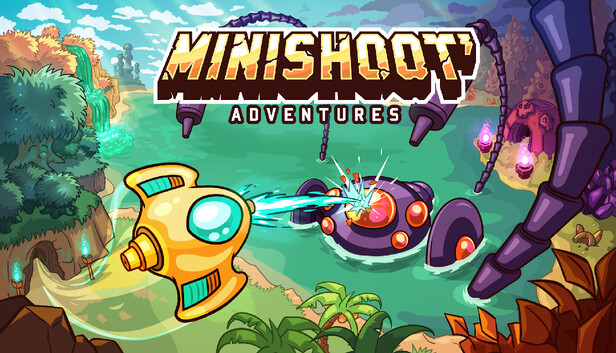
Minishoot’ Adventures review: exploration under fire
This Minishoot Adventures review finds a small ship leaving its village to free captured friends and confront corrupted machines. SoulGame Studio combines an.

Mouthwashing review: horror after the crash
This Mouthwashing review enters the Tulpar after a crash leaves five crew members with dwindling supplies and no credible rescue. Wrong Organ shifts between.
Community channel
Join the discussion
Start a thoughtful, specific conversation about this story.
Verified readers only
Continue with Google to comment.
Your Google account creates a reader-only Kaizensclan profile. Your first comment is reviewed before publication.