Balatro review: poker hands become a score engine
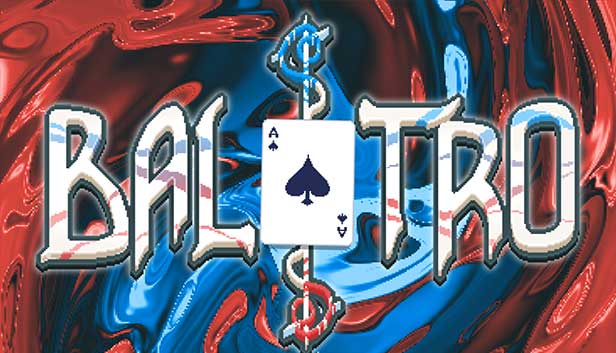
Balatro borrows the recognition of poker hands without becoming a gambling simulation. Cards are resources in a run, blinds are score targets and jokers.

 9.0
9.0 Kaizensclan verdict
Balatro borrows the recognition of poker hands without becoming a gambling simulation. Cards are resources in a run, blinds are score targets and jokers.
Review basis: 9 hours on PC. The stated time covers several sessions with the release build and is not a claim of full completion.
Balatro borrows the recognition of poker hands without becoming a gambling simulation. Cards are resources in a run, blinds are score targets and jokers rewrite the mathematics. The pleasure comes from spotting an engine early, then deciding whether to protect it or risk the shop for something stronger.
Balatro review: the opening hours
A run begins with an ordinary deck and modest hands. Small and Big Blinds establish the scoring language before a Boss Blind changes a rule. Between rounds, shops sell jokers, planet cards, tarot cards, vouchers and packs. Within minutes, a familiar pair can become more valuable than a straight because the deck has been shaped around it.
Each hand produces chips multiplied by a multiplier. Cards, hand levels, editions, seals and jokers modify that equation in a clear order. Winning earns money, interest rewards restraint and shops offer uncertain improvements. The run succeeds when the player builds scaling faster than blind requirements rise.
Systems and meaningful decisions
Joker slots force prioritization. One effect may add flat mult, another scales across rounds and a third multiplies the completed total. Deck manipulation can remove weak ranks, add copies or create enhanced cards. The strongest choices are relational: a mediocre joker becomes essential when it matches the deck’s suits, economy or scoring hand.
We judged progression by whether it changed the next decision rather than merely increasing a number. A useful unlock opens a route, answers a recurring problem or creates a new risk. Busy menus received no extra credit when the underlying choice remained obvious.
Controls, combat and feedback
Selecting, sorting and discarding cards is quick with mouse or controller. Score animations expose the order of operations, so a failed hand usually teaches where the engine stalled. Later runs can become visually busy, but speed controls reduce the wait without hiding the arithmetic.
Failure is productive when the game supplies enough information for a better attempt. We separated setbacks caused by a readable rule or poor plan from repetition that only consumed time. Challenge can create tension without hiding responsibility for the outcome.
World and visual direction
CRT distortion, saturated colours and tactile card motion give the abstract table a distinct identity. Joker illustrations are playful rather than tied to a literal casino. The background stays subdued enough that suit, rank and edition remain readable during complex scoring sequences.
Presentation was assessed during ordinary play, not only in composed screenshots. Strong direction guides attention through colour, movement and contrast while preserving mood. A beautiful effect becomes a liability when it hides an objective, hazard or rival.
Music and sound design
A looping electronic theme creates concentration without demanding attention. Card snaps, chips and score pulses make numerical growth feel physical. Audio escalates a large hand effectively, though players spending many hours may choose to lower the music before the interface sounds.
Audio was treated as atmosphere and information. Distinct warnings, impacts and movement cues matter more over several hours than one loud set piece, although a memorable score can give repeated actions identity.
Performance and interface
The PC build is lightweight and stable in the tested window. Text and card contrast are generally strong, and a high-contrast suit option helps distinguish red and black suits. The game saves between rounds, but a run remains a committed sequence rather than a set of manual save states.
One platform cannot represent every configuration, and later patches may change performance. We report the observed experience without promising results on untested hardware. Players with strict accessibility or frame-rate requirements should check current platform documentation.
We also compared the advertised fantasy with the action repeated between major set pieces. A score rises when ordinary minutes express the same strengths as the trailer, and falls when progress regularly depends on friction the game does not acknowledge or explain.
Learning curve and pacing
Poker literacy helps but is not required because hands and their values are always visible. Early unlocks introduce possibilities gradually. The harder lesson is multiplicative scaling: an engine that dominates early blinds can collapse if it cannot grow, survive a boss rule or draw consistently.
The opening session was separated from later play. A system that initially feels obscure may become expressive after its vocabulary settles, while a polished tutorial can hide a loop that never develops. Essential status and resource information should remain available during play.
Replay value and practical fit
Nine hours covered multiple deck types, successful antes and many failed experiments. Seeded runs support sharing, challenges narrow the rules and stakes add long-term difficulty. Repetition remains fresh because the same joker can demand a different choice under another deck or shop economy.
Replay value can come from alternate routes, builds, conversations or mastery of a fixed sequence. Those forms are not interchangeable. We credit only the structure visible in the stated hours and do not award points for an assumed endgame or promised roadmap.
Value and accessibility
Balatro offers a complete solo loop without real-money wagering. It uses poker imagery and score escalation, so players sensitive to gambling-like aesthetics should make an informed choice, but the mechanics contain no betting or cash-out system. Its low-friction sessions can easily run longer than intended.
Value was judged from the quality and repeatability of the available experience, not from a temporary discount. A compact game can justify its scope when every hour develops the idea; a larger game can still waste time through repetition.
The buying question extends beyond technical compatibility. Consider whether a normal twenty-minute stretch contains the decisions, reading, repetition and downtime you enjoy. Unedited footage of ordinary play is often a better final check than a trailer assembled from peak moments.
Limits of the 9-hour review
Nine hours cannot exhaust the joker pool, high stakes, challenges or every deck. Later balance patches may adjust individual effects. The review judges the fundamental scoring language and progression rather than total unlock completion.
The test window was long enough to revisit the core loop across separate sessions, but it did not cover every ending, late encounter or future update. Price, discounts and online population are not treated as permanent facts.
Who should play it?
It is ideal for players who enjoy Slay the Spire, probability and compact strategic runs. Those seeking narrative, character progression or direct tactical combat will find only the score engine.
Balatro review verdict
Balatro is easy to parse and difficult to solve. Familiar hands provide an entry point, while jokers and deck editing create enough combinatorial depth for hundreds of experiments. Its only real warning is how effortlessly one short run becomes an evening.
Pros: clear scoring with enormous build depth; fast interface and strong feedback; varied decks, stakes and challenges.
Cons: minimal narrative or theme beyond the table; repetition can consume long sessions; some boss rules sharply punish specialized builds.
Final score: 9/10. An exceptionally readable score-building game whose jokers turn familiar poker hands into strange, addictive engines.
Sources: primary release notes or official records. Factual claims were checked against these records; interpretation is our own.
Continue with the Kaizensclan archive, our practical guides and the latest game reviews.
Session notes were compared after play to separate lasting patterns from a single memorable encounter.
Editorial note
Hands-on review window recorded in the article metadata, supported by official documentation and public technical coverage.
This article was reviewed on August 10, 2026.

Related stories
Minishoot’ Adventures review: exploration under fire
This Minishoot Adventures review finds a small ship leaving its village to free captured friends and confront corrupted machines. SoulGame Studio combines an.

Mouthwashing review: horror after the crash
This Mouthwashing review enters the Tulpar after a crash leaves five crew members with dwindling supplies and no credible rescue. Wrong Organ shifts between.
Thank Goodness You’re Here review: slapstick with purpose
This Thank Goodness You’re Here review follows a traveling salesman who arrives early for a mayoral appointment and becomes free labor for Barnsworth. Coal.
Community channel
Join the discussion
Start a thoughtful, specific conversation about this story.
Verified readers only
Continue with Google to comment.
Your Google account creates a reader-only Kaizensclan profile. Your first comment is reviewed before publication.