Path of Exile 2 review — the most demanding ARPG in years
Deliberate combat and an exceptional endgame overcome an opaque opening and uneven performance.

 9.2
9.2 Kaizensclan verdict
Deliberate combat and an exceptional endgame overcome an opaque opening and uneven performance.
Path of Exile 2 is a deliberate action RPG that turns positioning, preparation and build knowledge into real combat decisions. After 86 hours on PC—one campaign clear, two abandoned characters and 31 hours in the endgame—its best systems feel exceptional, even when the game explains them with the warmth of a locked filing cabinet.
This review covers the May 5, 2026 release build and the first stability update. The score reflects the complete campaign, early endgame progression and a self-made lightning caster rather than a copied community build.
Combat asks you to watch before you attack
Most action RPGs teach confidence through speed: enter a pack, trigger the rotation and trust damage to erase the problem. Path of Exile 2 makes that instinct expensive. Enemies occupy space, heavy attacks commit the player for long enough to matter and bosses punish a dodge used from panic rather than information.
The slower rhythm is not the same as sluggishness. Strong builds still clear quickly, but they reach that speed by controlling the room first. A wall, chill, stun or well-placed area skill creates the safe second in which damage can happen. When the pieces connect, combat feels authored without becoming scripted.
The dodge roll carries too much responsibility during the opening acts. Narrow arenas and body blocking can turn one early mistake into a death that feels decided before the animation finishes. Later tools reduce that pressure, but the campaign takes too long to show new players the difference between a weak character and a weak plan.
Bosses are the campaign’s clearest teachers
Boss telegraphs remain readable even when the arena fills with effects. The strongest encounters introduce one idea, combine it with a second and then ask the player to recognise both under pressure. Death usually produces a useful thought—stand closer, save movement, clear the adds—rather than a vague sense that the numbers were too high.
A few fights stretch beyond their mechanical content. Large health pools can turn a solved pattern into three extra minutes of repetition, particularly for a character whose current weapon or gem links have fallen behind. The problem is not difficulty; it is feedback. The game could better distinguish a build check from an execution check.
Checkpoints are generous enough to encourage experimentation, and returning to a boss rarely becomes a chore. That matters because the campaign expects players to learn through failure instead of reading a solution before entering.
Buildcraft finally feels like a toolkit
Support gems are the centre of the sequel’s best design. Instead of only increasing a damage number, many supports change shape, timing or purpose. A projectile can become an area-control tool; a defensive skill can become a trigger; a reliable attack can trade consistency for a more demanding payoff.
The freedom is real, but the interface often hides the consequence of a choice. Damage estimates struggle with conditional effects, and a clean tooltip can conceal an interaction that determines the entire build. Experimentation needs a better comparison view: what changed, which condition enabled it and why the displayed number moved.
Respeccing is permissive enough for correction but not frictionless enough for curiosity. Moving a few points after a new item is sensible. Rebuilding the character around a different damage type still asks for a commitment that may send cautious players back to a guide.
The campaign is beautiful and uneven
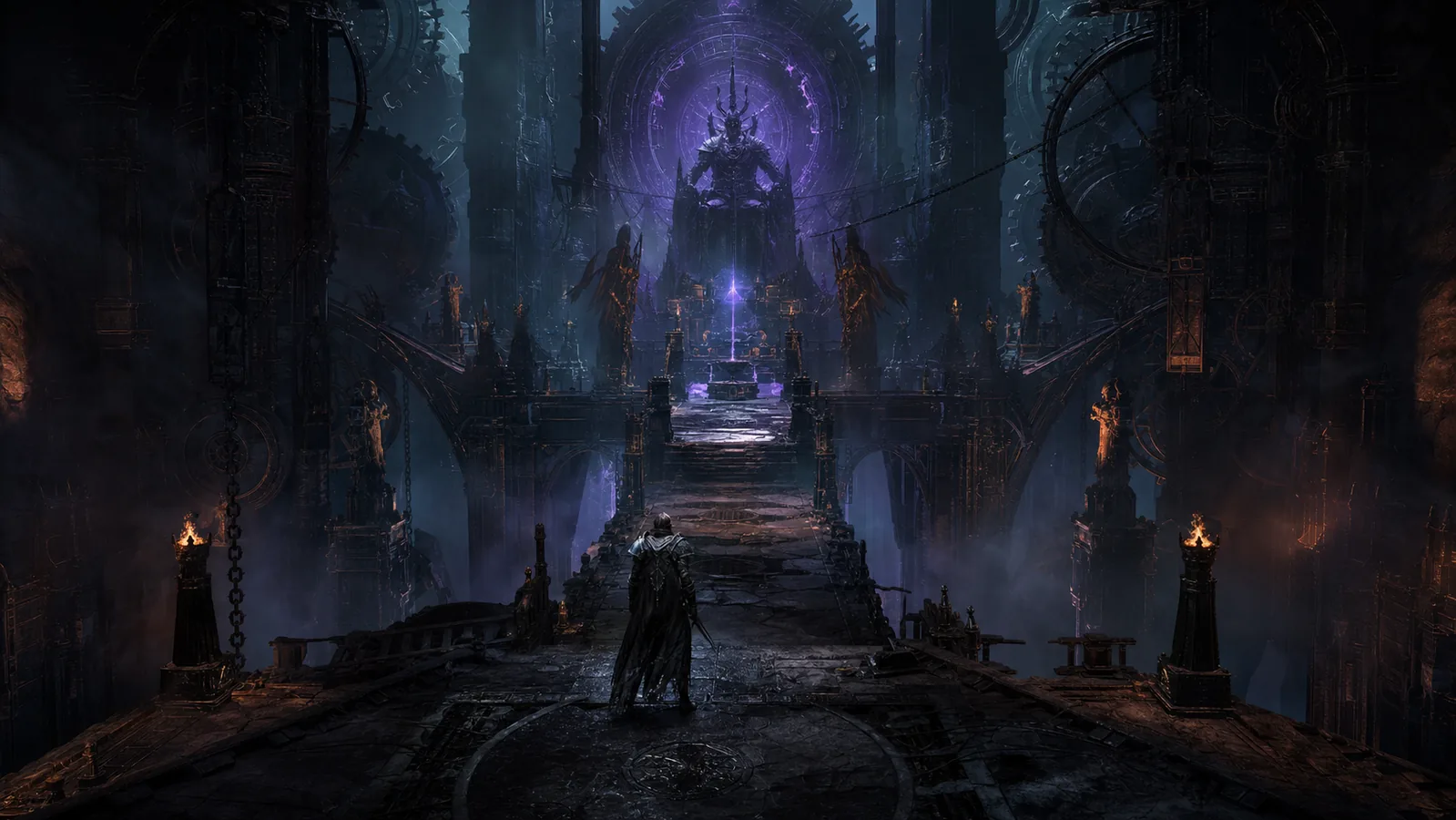
Each region has a strong material identity: wet stone, ash, carved wood and tarnished metal feel like surfaces rather than colour themes. The camera stays readable through most encounters, and the restrained interface gives environments room to carry the tone.
That confidence slips when optional areas reuse a route without adding a new tactical problem. Exploration then becomes a search for the correct branch rather than a decision. Shorter layouts or clearer landmarks would preserve the hostile atmosphere without turning navigation into administrative work.
Sound does excellent mechanical work. Heavy attacks have an audible beginning, shields communicate failure differently from armour and dangerous off-screen actions usually announce themselves. The music knows when to leave space, which makes a boss theme feel earned instead of continuous.
Technical performance is improved, not solved
On the reviewed PC, performance stayed stable in the campaign at the chosen settings, but effect-heavy endgame encounters produced noticeable frame-time spikes. The average frame rate remained acceptable; the uneven delivery was the problem because it arrived exactly when dodge timing mattered.
Network behaviour was generally predictable. A small number of crowded instances produced delayed item interaction and one disconnect, but progress recovered correctly. Loading times were short from a solid-state drive, and controller support handled combat better than inventory management.
The settings menu offers enough control to protect readability, though several effect categories still move together. Players should be able to reduce cosmetic intensity without weakening important enemy telegraphs.
Endgame progression gives maps a purpose
The endgame turns individual maps into a campaign of decisions. Paths, modifiers and rewards create reasons to pause before opening the next area. The system rewards a player who understands risk instead of only a character that clears faster.
That clarity makes failures sharper. Losing a valuable attempt because of an unreadable combination feels worse than losing a campaign boss, and the game does not always surface the dangerous interaction before entry. Experienced players will learn the vocabulary; everyone else may discover it after spending the resource.
After 31 hours, the system still produced meaningful goals rather than a single optimal loop. I changed routes for crafting resources, safer experience and boss access, and each choice altered the next session. That variety is the main reason the review score reaches 9.2.
Monetisation respects power, with familiar caveats
The store sells cosmetics and account convenience rather than combat strength. Visual items do not improve damage, defences or drop rates. Stash organisation, however, becomes important for a committed endgame player, which places useful convenience close to the boundary between optional and expected.
Cosmetic effects can also compete with the game’s own visual language. Players who group with highly decorated characters may see more noise than they chose for themselves. A stronger option to limit allied cosmetic intensity would improve accessibility without changing ownership.
Path of Exile 2 review verdict
Path of Exile 2 earns its difficulty because the best failures teach a specific lesson. Its combat has weight, its build system creates genuine authorship and its endgame gives planning a place beside execution. The campaign remains too opaque, trade still pushes essential friction outside the game and technical spikes arrive at the worst moments.
Those flaws are substantial, but they do not erase the quality of the underlying decisions. Players who want immediate power may find the opening exhausting. Players who enjoy learning why a build works will find one of the richest and most demanding action RPGs available today.
Before starting, decide whether you want to discover systems or optimise them; trying to do both at once creates the roughest experience. For more structured learning, browse our patch-checked game guides and our latest review catalogue.
Editorial note
- Kaizensclan editorial playtest and review notes
This article was reviewed on July 27, 2026.

Related stories
Minishoot’ Adventures review: exploration under fire
This Minishoot Adventures review finds a small ship leaving its village to free captured friends and confront corrupted machines. SoulGame Studio combines an.
Mouthwashing review: horror after the crash
This Mouthwashing review enters the Tulpar after a crash leaves five crew members with dwindling supplies and no credible rescue. Wrong Organ shifts between.
Thank Goodness You’re Here review: slapstick with purpose
This Thank Goodness You’re Here review follows a traveling salesman who arrives early for a mayoral appointment and becomes free labor for Barnsworth. Coal.
Community channel
Join the discussion
Start a thoughtful, specific conversation about this story.
Verified readers only
Continue with Google to comment.
Your Google account creates a reader-only Kaizensclan profile. Your first comment is reviewed before publication.