How to build a Valorant default your ranked team can run
Simple map control, clear triggers and comms that survive five unfamiliar teammates.

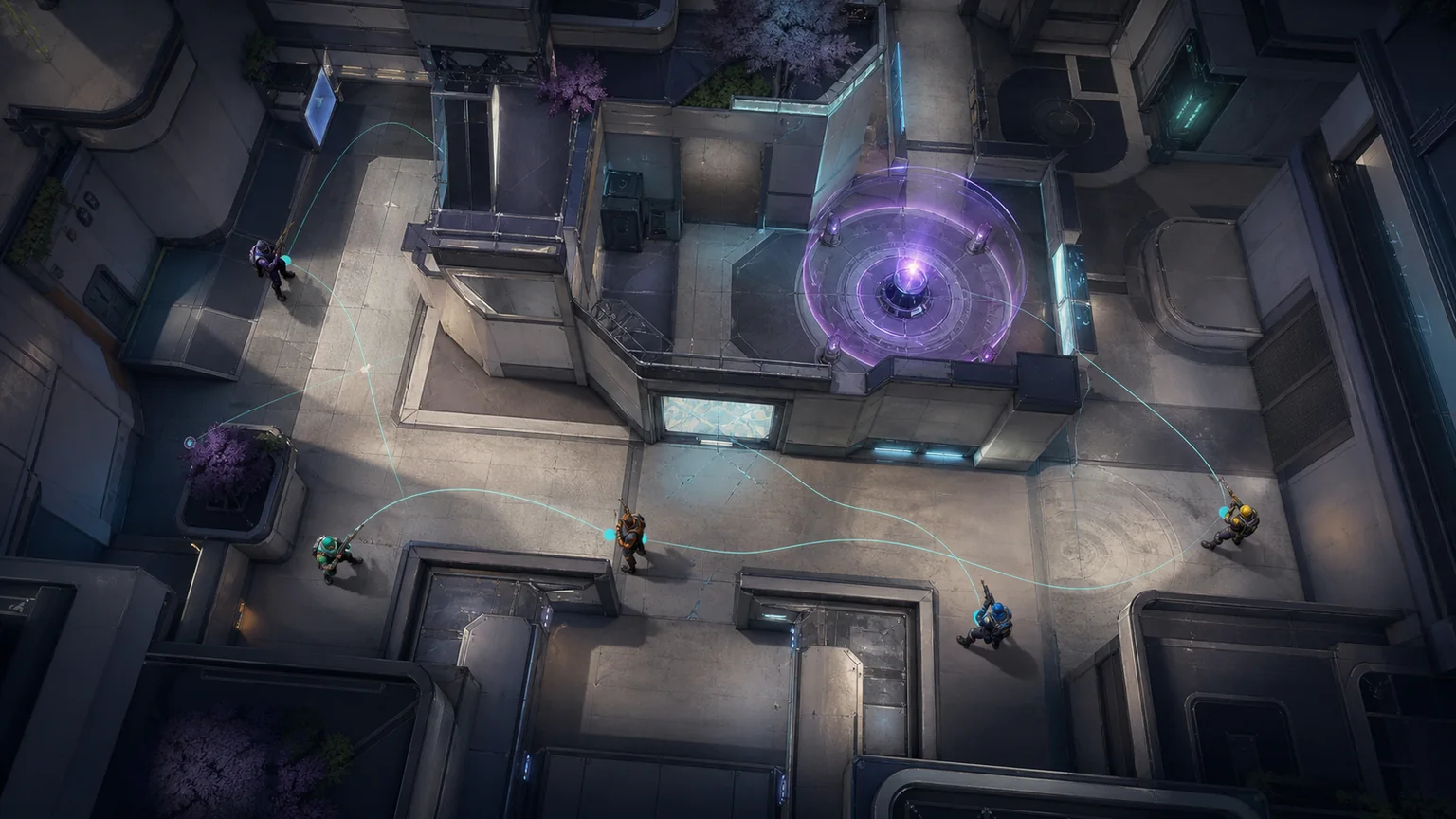
Simple map control, clear triggers and comms that survive five unfamiliar teammates.
This guide is for Valorant players who understand the basic controls but need a repeatable decision instead of another isolated trick. By the end, you will have a short practice block, a way to recognise the correct situation and one measurement that shows whether the habit transfers into matches.
The advice is designed as an editorial framework. Verify map geometry, balance values and ability behaviour against the current live patch before using a precise setup in competition.
The core idea
Simple map control, clear triggers and comms that survive five unfamiliar teammates. The important part is the connection between information and action. A useful routine does not ask the player to repeat movement without context; it establishes a visible cue, a prepared response and a clear condition for stopping or adapting.
Reduce the problem to one decision during the first session. Adding every advanced variation at once makes successful repetitions difficult to explain and failed repetitions impossible to diagnose.
Step 1: define the trigger
- Name the game state that requires the technique.
- Choose the earliest reliable visual or audio cue.
- State the action in one short sentence.
- Decide which event cancels the plan.
A trigger should be observable by the player using it. “When the opponent is weak” is vague; a missing resource, revealed position, wave state or committed ability is something the player can identify and review.
Step 2: practise without match noise
Use a custom environment, replay or low-pressure mode for the first repetitions. Remove unrelated goals and run the same starting state several times. Reset immediately when the setup is wrong, even if the final action succeeds through a lucky correction.
Keep the block short enough to preserve attention. Ten deliberate repetitions usually teach more than an hour in which the cue, route and success condition keep changing.
Step 3: add one source of pressure
After the clean version becomes stable, introduce one realistic complication: an alternate timing, missing teammate, imperfect resource or opponent contest. Do not add all variations together. The purpose is to learn which part of the routine remains fixed.
If performance collapses, return to the clean version for two repetitions and then reintroduce the same pressure. That contrast makes the missing step easier to identify.
Common mistakes
- Judging only the final kill, objective or score.
- Changing settings and practice conditions simultaneously.
- Copying a professional setup without its team context.
- Continuing after the original trigger has disappeared.
- Adding speed before the sequence is readable.
The outcome can hide a weak process. Review the position, information and timing that existed before the result, then mark the repetition as clean, recoverable or structurally wrong.
A 20-minute practice block
- Five minutes: identify the trigger in static examples.
- Five minutes: execute the clean response and reset after errors.
- Five minutes: add one realistic variation.
- Five minutes: enter a live mode and track only this decision.
Stop when attention drops. Repeating the wrong cue at full speed creates confidence without reliability.
Measure transfer into matches
Choose one metric connected to the decision: first-contact quality, utility remaining, time created, safe waves completed or calls that produced a teammate response. Raw win rate is too distant from one new habit.
Review three examples after the session. Write one correction for the next practice block and keep every other variable stable. Once the decision appears without conscious prompting, move to a second map, role or matchup.
Patch and update note
How to build a Valorant default your ranked team can run should be checked whenever a major patch changes geometry, timing, resources or role responsibilities. The framework may remain useful while one exact setup becomes outdated.
Follow the related guides below to connect this technique with communication, map reading and team timing. Each article uses the same principle: fewer rehearsed actions, clearer triggers and feedback that can be reviewed.
A one-week progression plan
On day one, learn the trigger and clean sequence. On day two, repeat it from a second starting state. On day three, add one opponent response. Use day four only for live matches and record three examples. Day five is review: remove one unnecessary input or call. After a rest day, test the decision again without a warm-up.
The schedule is deliberately small. A habit that survives several short sessions is more valuable than a technique performed perfectly during one long practice block and forgotten under pressure.
How to coach yourself
Describe the mistake without judging the player: “the action began before the cue” is useful, while “too slow” is not. Then choose the earliest point where a different decision was possible. Corrections made after the outcome rarely transfer because they arrive too late in the sequence.
Keep one successful example beside one failed example. Comparing both reveals which part remained stable and prevents review from becoming a collection of mistakes. When the same correction appears three times, make it the only focus of the next session.
Editorial note
- Official update notes and Kaizensclan editorial testing
This article was reviewed on July 27, 2026.

Related stories
VALORANT Bind A execute guide for patch 13.02
A reliable Bind A execute creates two simultaneous problems instead of sending five players through A Short. Control either Showers or the Short cubbies, cut.

VALORANT Lotus A execute guide for patch 13.02
A consistent Lotus A execute begins before the barrier drops. The attacking team needs a Rubble plan, utility for A Main and Tree, a plant location that.

VALORANT Haven C-site execute guide for patch 13.02
A Haven C execute succeeds when Garage, C Long and the defender rotation are handled as one timing. Patch 13.02 did not redesign Haven, so the plan remains.
Community channel
Join the discussion
Start a thoughtful, specific conversation about this story.
Verified readers only
Continue with Google to comment.
Your Google account creates a reader-only Kaizensclan profile. Your first comment is reviewed before publication.