Valorant Summit defense: three layers, fewer gambles
Preserve early information, site resistance and a reliable route into the retake.

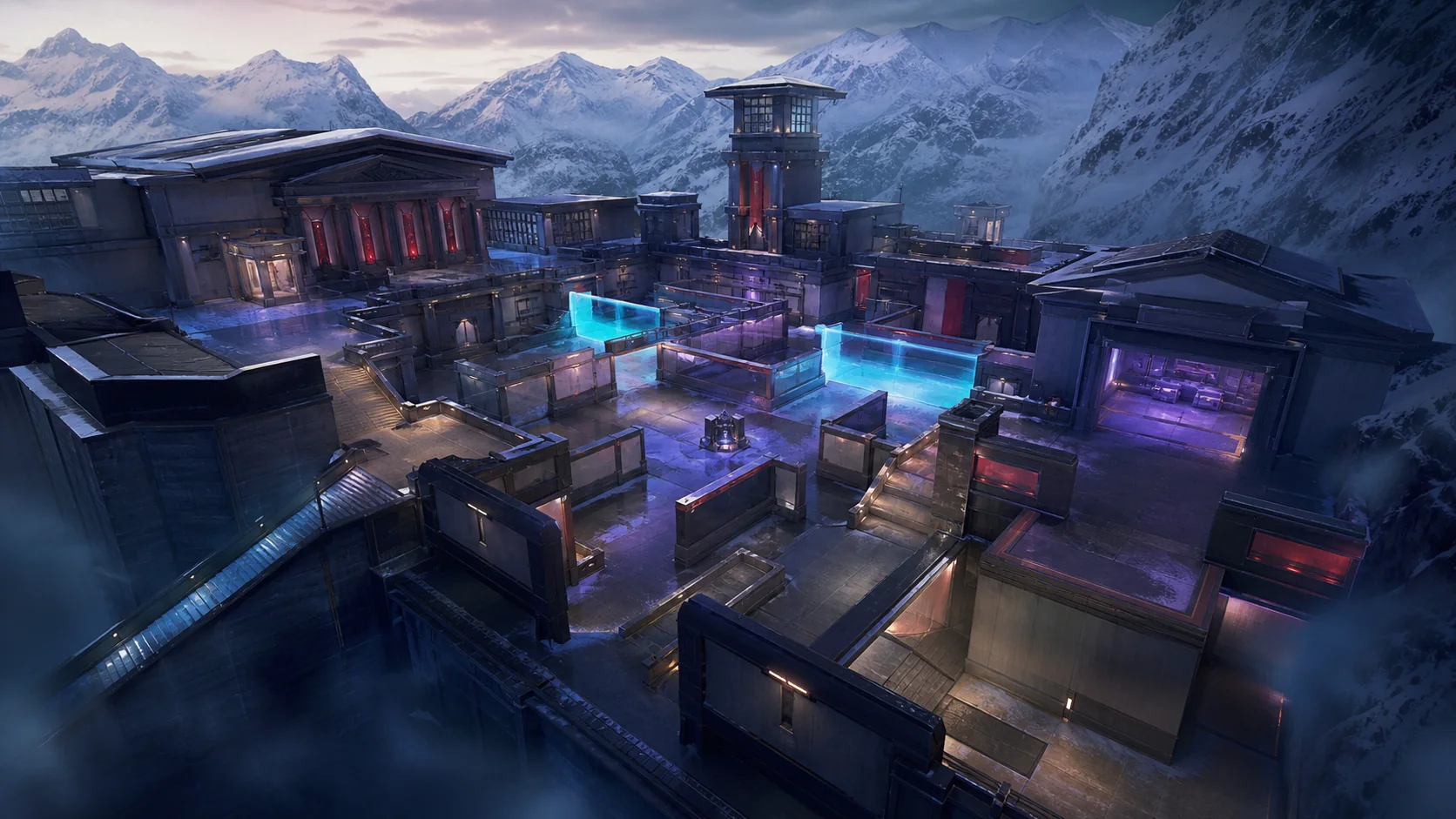
This Valorant Summit defense guide gives ranked teams a three-layer setup for Riot’s mountain map. The goal is not to memorise a professional composition, but to preserve information, contest space safely and arrive at the retake with useful utility.
Why Summit punishes static holds
Summit’s three lanes and movable walls can change the value of a sightline during the round. A position that feels safe at barrier drop may become isolated once attackers reshape the route. Defenders need permission to give ground before the duel becomes mandatory.
Think in three layers: early information, site resistance and retake space. Each player should know which layer they occupy and what event tells them to move backward.
Layer 1: take information without donating
Use one recoverable or low-cost tool to test the first lane. The player supporting it holds the punish angle rather than copying the same peek. If the attackers spend two pieces of utility to remove one defender, that defender has already created value by leaving alive.
Call absence carefully. “Nothing heard” is not “clear.” Report what your tool checked and when, then keep an escape route that does not cross the lane you just revealed.
Layer 2: make the hit show its shape
Site resistance should force attackers to reveal whether the pressure is a real commit. A delaying smoke, trap or molotov-style ability is more valuable when it divides the first entry from the second. The anchor then fights the isolated timing or exits before the trade arrives.
Avoid stacking every stopping tool on the same doorway. Summit’s changing walls reward attackers who identify a single overloaded choke and rotate. Spread your first response across two likely paths.
Layer 3: protect retake space
The rotating player should claim a route into the future retake, not sprint directly to the site marker. Hold the connector that lets teammates group, clear a close pocket and save one ability for the planted position. The site can be lost while the round remains healthy.
If a movable wall changes the route, state the new path in plain language. A two-second update prevents teammates from arriving with a plan that no longer exists.
A default setup for ranked
- One player tests an outer lane with recoverable information.
- One player supports the exit and owns the first rotation.
- Two anchors divide the site approaches.
- One flexible player protects the opposite extremity and watches the minimap.
- After first contact, everyone names their layer and remaining utility.
This is a responsibility map, not an agent prescription. Fit the jobs to the tools your composition actually has.
Review the trigger, not only the death
When a hold fails, rewind to the first event that should have caused a layer change: lost information, a wall move, two enemy abilities or a teammate’s rotation. The death may happen ten seconds later, but the decision failed earlier.
Riot added Summit to Competitive in patch 13.00 and may tune the map after launch. Check the official notes and update positions when geometry changes. Use our five-player retake protocol for the next phase and clear comms guide to shorten rotation calls.
How to rotate without opening the other site
The first rotation should come from the player whose information remains replaceable. If leaving creates an unchecked lane, delay until another defender can inherit it or until the attacking commitment is confirmed. Fast movement is not useful when it trades one weak site for another.
Name the space you are giving up: “leaving upper lane” tells the remaining anchor what can change. The call is more valuable than “rotating,” which reports motion without reporting the new risk.
Adapt the layers to your composition
Sentinel tools can own early information or site resistance depending on whether they are recoverable. Initiator utility often works best between layers, confirming that attackers crossed a boundary. Duelist movement can contest a lane, but it needs a planned exit rather than a hopeful second fight.
If the composition lacks a reliable delay, give ground earlier and invest in the retake layer. A weaker first hold is acceptable when it preserves five players and complementary utility.
Three-round custom drill
- Run one round where defenders must leave the first layer after a single enemy ability.
- Run one round where the attackers change a wall before committing.
- Run one round where the opposite anchor gives a false contact call, then corrects it.
After each attempt, identify the exact trigger that moved every defender. If two players used different triggers, align the language before repeating.
Before you queue
Choose the retreat trigger for each early position before the barrier drops. It can be two enemy abilities, lost information or a wall change. A position without an exit condition becomes a gamble disguised as a setup.
When reviewing, pause at the first layer change and inspect the minimap. Did the rotation preserve the opposite lane? Did the anchor still have a route out? Did the team keep one tool for the retake? Answering those questions is more useful than judging the final duel. Summit will evolve as players and patches reshape its routes, but a clear trigger and an inherited responsibility remain reliable.
Sources and update note
Riot Games: Valorant patch notes 13.00
This article was manually reviewed on July 27, 2026. Generated editorial artwork is credited to Kaizensclan.
Editorial note
- Official update notes and Kaizensclan editorial testing
This article was reviewed on July 27, 2026.

Related stories
VALORANT Bind A execute guide for patch 13.02
A reliable Bind A execute creates two simultaneous problems instead of sending five players through A Short. Control either Showers or the Short cubbies, cut.
VALORANT Split B execute guide for patch 13.02
A Split B execute works when B Main and mid pressure arrive together. Patch 13.02 is the reference version. Clear close angles, deny Heaven vision and reserve.

VALORANT Lotus A execute guide for patch 13.02
A consistent Lotus A execute begins before the barrier drops. The attacking team needs a Rubble plan, utility for A Main and Tree, a plant location that.
Community channel
Join the discussion
Start a thoughtful, specific conversation about this story.
Verified readers only
Continue with Google to comment.
Your Google account creates a reader-only Kaizensclan profile. Your first comment is reviewed before publication.