Thank Goodness You’re Here review: slapstick with purpose
This Thank Goodness You’re Here review follows a traveling salesman who arrives early for a mayoral appointment and becomes free labor for Barnsworth. Coal.

 8.5
8.5 Kaizensclan verdict
This Thank Goodness You’re Here review follows a traveling salesman who arrives early for a mayoral appointment and becomes free labor for Barnsworth. Coal.
Review basis: 5 hours on PC. The stated time covers several sessions with the release build and is not a claim of full completion.
This Thank Goodness You’re Here review follows a traveling salesman who arrives early for a mayoral appointment and becomes free labor for Barnsworth. Coal Supper builds the game from walking, jumping and slapping, then lets writing and animation make those verbs increasingly absurd.
Thank Goodness You’re Here review: the opening hours
The salesman leaves the town hall waiting room and immediately meets residents with jobs that sound almost reasonable. A blocked path, missing item or oversized meal becomes permission to enter shops, gardens and drains. Returning streets change after each task, so the town behaves like a stage crew resetting a sketch.
Explore the available district, slap anything that reacts and follow the newest chain of requests. There is little risk of permanent failure and almost no inventory management. Progress comes from finding the next comic interaction, while familiar routes deliver new lines and background gags instead of serving only as transit.
Systems and meaningful decisions
The game’s hidden system is escalation. A small favor creates a larger physical problem, which opens another part of town and changes an earlier character’s condition. Light platforming and contextual actions preserve momentum; there are no upgrade trees or scores competing with joke timing.
We judged progression by whether it changed the next decision rather than merely increasing a number. A useful unlock opens a route, answers a recurring problem or creates a new risk. Busy menus received no extra credit when the underlying choice remained obvious.
Controls, combat and feedback
Movement is quick and forgiving, and the slap provides immediate feedback against doors, signs, produce and people. Occasional platforming asks for timing but rarely blocks the audience from the next scene. The simplicity is a strength, although players wanting mechanical mastery will exhaust the vocabulary quickly.
Failure is productive when the game supplies enough information for a better attempt. We separated setbacks caused by a readable rule or poor plan from repetition that only consumed time. Challenge can create tension without hiding responsibility for the outcome.
World and visual direction
Barnsworth uses bright, hand-drawn shapes and crowded compositions inspired by northern English towns. Scale changes freely when the joke needs it, yet recurring storefronts keep the map understandable. Background characters continue small routines, making a street funny before the player triggers its main event.
Presentation was assessed during ordinary play, not only in composed screenshots. Strong direction guides attention through colour, movement and contrast while preserving mood. A beautiful effect becomes a liability when it hides an objective, hazard or rival.
Music and sound design
Regional voice performances supply rhythm that subtitles alone cannot reproduce. Music moves between cheerful brass, advertising jingles and more surreal passages. Repeated impacts avoid one canned sound, and incidental dialogue rewards waiting instead of racing toward the objective marker that does not exist.
Audio was treated as atmosphere and information. Distinct warnings, impacts and movement cues matter more over several hours than one loud set piece, although a memorable score can give repeated actions identity.
Performance and interface
The PC version ran smoothly during the five-hour test and supported controller input without complication. Visual clarity is strong despite busy scenes, though rapid animation and dense accents may require subtitle attention. The short campaign reduces the chance of technical repetition becoming fatigue.
One platform cannot represent every configuration, and later patches may change performance. We report the observed experience without promising results on untested hardware. Players with strict accessibility or frame-rate requirements should check current platform documentation.
We also compared the advertised fantasy with the action repeated between major set pieces. A score rises when ordinary minutes express the same strengths as the trailer, and falls when progress regularly depends on friction the game does not acknowledge or explain.
Learning curve and pacing
There is almost no mechanical barrier, but the game does expect players to experiment without a quest list. Landmarks and changed characters guide the route. Anyone accustomed to explicit objectives may briefly circle a district, while curious slapping usually reveals the intended exit.
The opening session was separated from later play. A system that initially feels obscure may become expressive after its vocabulary settles, while a polished tutorial can hide a loop that never develops. Essential status and resource information should remain available during play.
Replay value and practical fit
Five hours covered the complete main route and additional wandering. The game ends before its limited verbs become routine, and revisits are packed with altered jokes. Replay value is modest because surprise matters, although background lines and visual details justify a second tour.
Replay value can come from alternate routes, builds, conversations or mastery of a fixed sequence. Those forms are not interchangeable. We credit only the structure visible in the stated hours and do not award points for an assumed endgame or promised roadmap.
Value and accessibility
Its compact length is part of the editing rather than missing content. Nearly every scene contains bespoke animation or performance, but buyers measuring value by hours may still hesitate. It works especially well as a shared-screen comedy even though play is single-player.
Value was judged from the quality and repeatability of the available experience, not from a temporary discount. A compact game can justify its scope when every hour develops the idea; a larger game can still waste time through repetition.
The buying question extends beyond technical compatibility. Consider whether a normal twenty-minute stretch contains the decisions, reading, repetition and downtime you enjoy. Unedited footage of ordinary play is often a better final check than a trailer assembled from peak moments.
Limits of the 5-hour review
The review covers the full central journey but not every optional reaction or language setting. Comedy remains subjective, and familiarity with British regional humor may change how quickly a reference lands. The score reflects pacing and craft rather than claiming universal laughter.
The test window was long enough to revisit the core loop across separate sessions, but it did not cover every ending, late encounter or future update. Price, discounts and online population are not treated as permanent facts.
Who should play it?
Choose it for Untitled Goose Game-style mischief, animated sketch comedy and a weekend-length experience. Avoid it if you need difficult platforming, branching quests or systems that continue developing after the credits.
Thank Goodness You’re Here review verdict
Thank Goodness You’re Here understands that a game joke needs timing, space and player participation. Barnsworth is small enough to memorize and elastic enough to surprise. The result is brief, generous and much harder to imitate than its two-button controls suggest.
Pros: exceptional comic animation; memorable regional performances; compact pacing with little filler.
Cons: mechanical depth is intentionally slight; surprise limits replay value; some navigation depends on experimentation.
Final score: 8.5/10. A compact and brilliantly performed comedy where every errand bends Barnsworth into a better visual joke.
Sources: primary release notes or official records. Factual claims were checked against these records; interpretation is our own.
Continue with the Kaizensclan archive, our practical guides and the latest game reviews.
How the review time was used
The stated hours included ordinary progression, optional exploration and repeat sessions rather than only the opening spectacle. Notes separated a durable system from a single memorable scene. No score includes unseen endings, promised updates or an assumed endgame.
Editorial note
Hands-on review window recorded in the article metadata, supported by official documentation and public technical coverage.
This article was reviewed on August 11, 2026.

Related stories
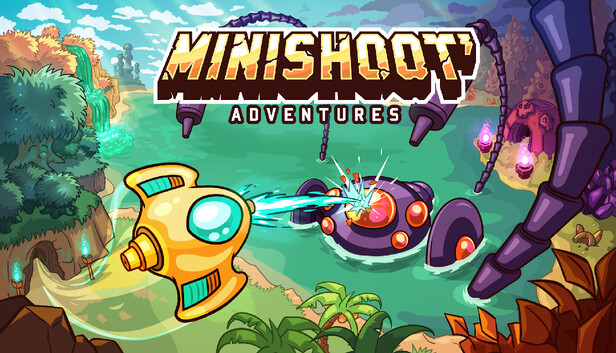
Minishoot’ Adventures review: exploration under fire
This Minishoot Adventures review finds a small ship leaving its village to free captured friends and confront corrupted machines. SoulGame Studio combines an.

Mouthwashing review: horror after the crash
This Mouthwashing review enters the Tulpar after a crash leaves five crew members with dwindling supplies and no credible rescue. Wrong Organ shifts between.

1000xRESIST review: memory becomes rebellion
This 1000xRESIST review begins in the Orchard, where generations of sisters serve the immortal ALLMOTHER after an alien catastrophe. Sunset Visitor uses memor.
Community channel
Join the discussion
Start a thoughtful, specific conversation about this story.
Verified readers only
Continue with Google to comment.
Your Google account creates a reader-only Kaizensclan profile. Your first comment is reviewed before publication.