Prince of Persia: The Lost Crown review: movement with intent
The Lost Crown does not imitate the Sands of Time. Ubisoft Montpellier returns instead to side-on action, giving Sargon a fast platforming vocabulary and.

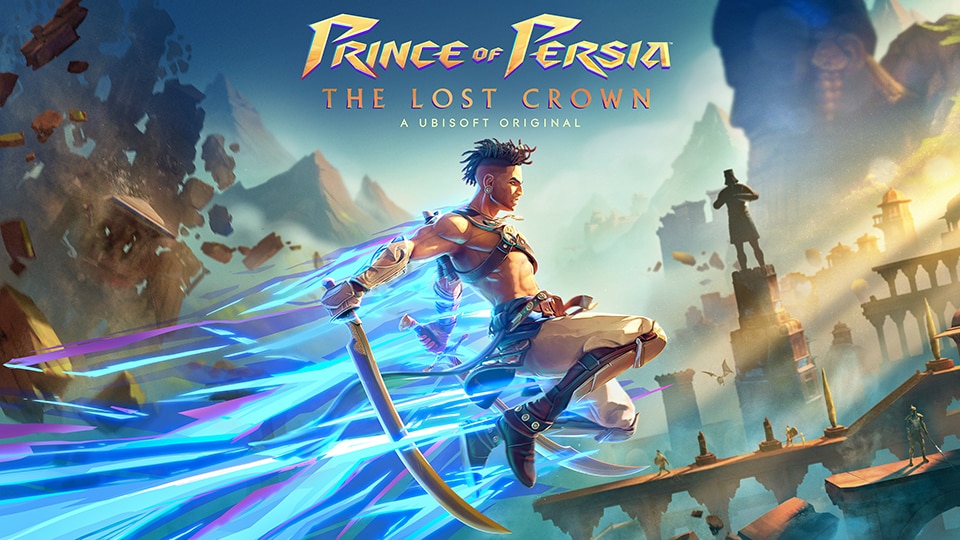 8.5
8.5 Kaizensclan verdict
The Lost Crown does not imitate the Sands of Time. Ubisoft Montpellier returns instead to side-on action, giving Sargon a fast platforming vocabulary and.
Review basis: 7 hours on Nintendo Switch. The stated time covers several sessions with the release build and is not a claim of full completion.
The Lost Crown does not imitate the Sands of Time. Ubisoft Montpellier returns instead to side-on action, giving Sargon a fast platforming vocabulary and building Mount Qaf as a large interconnected puzzle. The result feels modern because every new power improves movement and combat together.
Prince of Persia The Lost Crown review: the opening hours
Sargon enters Mount Qaf with the Immortals to rescue Prince Ghassan, then finds chronology breaking around them. Early rooms establish wall jumps, air control, slides and parries before larger regions introduce hazards. The story uses mythic betrayal efficiently, leaving room for the player to learn space through motion.
Exploration alternates between traversal tests, combat arenas, bosses and returns to blocked routes. Time powers gradually add aerial dash, teleport anchors and other ways to rewrite a jump. Wak-Wak trees restore health and act as checkpoints, while crystals purchase upgrades and amulets modify a focused build.
Systems and meaningful decisions
Amulets support options such as parry reward, projectile play or safer exploration, but limited slots prevent every benefit from being active. Athra surges convert combat momentum into special attacks. The map’s Memory Shards let players pin a screenshot to an inaccessible obstacle, a simple tool that removes the need to remember every mysterious door.
We judged progression by whether it changed the next decision rather than merely increasing a number. A useful unlock opens a route, answers a recurring problem or creates a new risk. Busy menus received no extra credit when the underlying choice remained obvious.
Controls, combat and feedback
Movement is immediate and cancellable enough to support demanding rooms. Parry flashes communicate timing clearly, while yellow attacks reward a successful response and red attacks must be avoided. Some boss effects crowd the Switch screen, yet hit feedback and reset speed keep practice constructive.
Failure is productive when the game supplies enough information for a better attempt. We separated setbacks caused by a readable rule or poor plan from repetition that only consumed time. Challenge can create tension without hiding responsibility for the outcome.
World and visual direction
Mount Qaf moves through royal ruins, forests, archives and impossible clockwork without losing a coherent Persian-mythology foundation. Character animation is stylized rather than realistic, which suits the speed. Strong colour separation usually keeps hazards visible against ornate backgrounds.
Presentation was assessed during ordinary play, not only in composed screenshots. Strong direction guides attention through colour, movement and contrast while preserving mood. A beautiful effect becomes a liability when it hides an objective, hazard or rival.
Music and sound design
Percussion and strings give traversal momentum without exhausting the player during repeated attempts. Parry, Athra and enemy wind-up sounds provide useful confirmation. Voice performances make the Immortals readable as a group, although the plot occasionally delivers exposition faster than a new rivalry can settle.
Audio was treated as atmosphere and information. Distinct warnings, impacts and movement cues matter more over several hours than one loud set piece, although a memorable score can give repeated actions identity.
Performance and interface
The Nintendo Switch version prioritizes a smooth, responsive feel and held up well during the tested hours. Image detail is naturally lower than on stronger platforms, but readability survives in handheld play. Loading after failure is brief, an important advantage when a platforming room demands many attempts.
One platform cannot represent every configuration, and later patches may change performance. We report the observed experience without promising results on untested hardware. Players with strict accessibility or frame-rate requirements should check current platform documentation.
We also compared the advertised fantasy with the action repeated between major set pieces. A score rises when ordinary minutes express the same strengths as the trailer, and falls when progress regularly depends on friction the game does not acknowledge or explain.
Learning curve and pacing
The game offers extensive difficulty and guidance settings, including ways to adjust combat variables. Guided mode can mark objectives without solving individual movement. New powers arrive with contained tests before the map asks for combinations, so difficulty grows from vocabulary rather than surprise.
The opening session was separated from later play. A system that initially feels obscure may become expressive after its vocabulary settles, while a polished tutorial can hide a loop that never develops. Essential status and resource information should remain available during play.
Replay value and practical fit
Seven hours revealed several regions, major bosses and enough backtracking to test the map tools. Optional challenges reward mastery and amulets encourage alternate combat approaches. The authored campaign is finite, but completion routes and harder difficulty create useful replay beyond collecting every token.
Replay value can come from alternate routes, builds, conversations or mastery of a fixed sequence. Those forms are not interchangeable. We credit only the structure visible in the stated hours and do not award points for an assumed endgame or promised roadmap.
Value and accessibility
The Lost Crown provides a complete single-player structure and unusually practical accessibility settings. Its best value is consistency: optional rooms are built with the same care as the main path. Buyers who want a cinematic 3D sequel should understand the deliberate side-scrolling design.
Value was judged from the quality and repeatability of the available experience, not from a temporary discount. A compact game can justify its scope when every hour develops the idea; a larger game can still waste time through repetition.
The buying question extends beyond technical compatibility. Consider whether a normal twenty-minute stretch contains the decisions, reading, repetition and downtime you enjoy. Unedited footage of ordinary play is often a better final check than a trailer assembled from peak moments.
Limits of the 7-hour review
This review does not cover every late time power, boss or optional platforming challenge. It evaluates the early and middle loop on Switch. Other platforms may offer higher image quality without changing level design.
The test window was long enough to revisit the core loop across separate sessions, but it did not cover every ending, late encounter or future update. Price, discounts and online population are not treated as permanent facts.
Who should play it?
It is an easy recommendation for players who enjoy Ori, Hollow Knight or precise action platformers but want clearer navigation. Those frustrated by backtracking can use guidance, while players seeking an easy spectacle may still find bosses demanding.
Prince of Persia The Lost Crown review verdict
The Lost Crown turns a franchise return into excellent design rather than nostalgia. Memory Shards respect the player’s time, movement feels deliberate and combat remains legible at speed. The story is less distinctive than Mount Qaf itself, but the journey is superb.
Pros: precise traversal and parry combat; excellent screenshot-based map pins; strong performance and accessibility options.
Cons: story exposition can feel rushed; some handheld effects become busy; genre structure requires backtracking.
Final score: 8.5/10. Precise movement, readable combat and excellent navigation tools restore Prince of Persia through a modern Metroidvania.
Sources: primary release notes or official records. Factual claims were checked against these records; interpretation is our own.
Continue with the Kaizensclan archive, our practical guides and the latest game reviews.
Session notes were compared after play to separate lasting patterns from a single memorable encounter.
Editorial note
Hands-on review window recorded in the article metadata, supported by official documentation and public technical coverage.
This article was reviewed on August 10, 2026.

Related stories
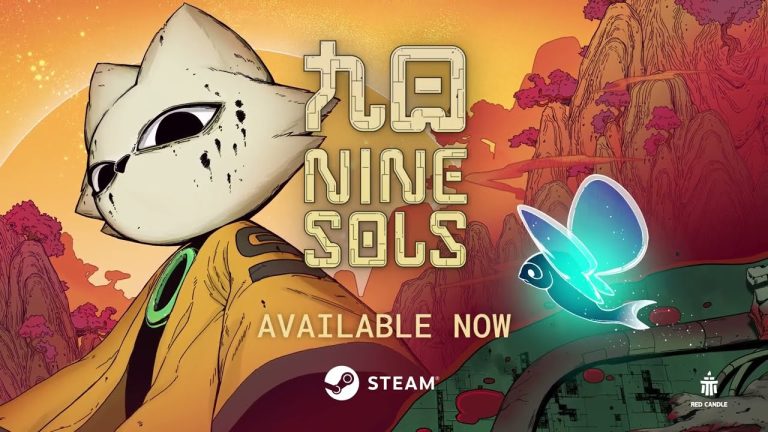
Nine Sols review: deflection sharpens the Metroidvania
This Nine Sols review finds Red Candle Games building a Metroidvania around confrontation rather than evasive attrition. Yi absorbs attacks with timed.
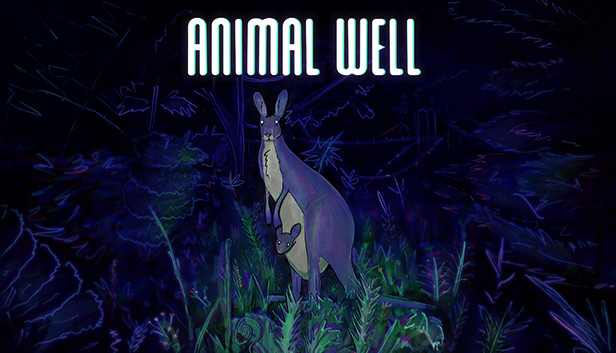
Animal Well review: a puzzle box beneath the pixels
Animal Well makes a small screen feel deep. Its caverns are filled with animals, switches and objects whose purpose is rarely exhausted by their first use.
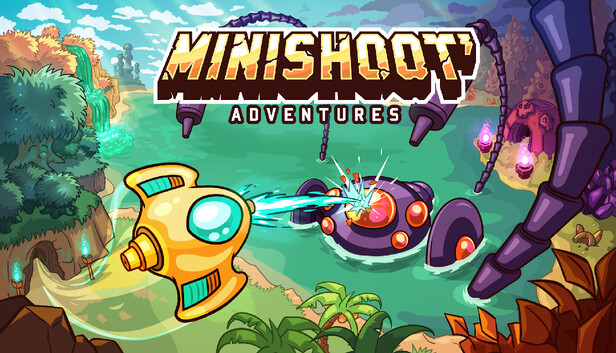
Minishoot’ Adventures review: exploration under fire
This Minishoot Adventures review finds a small ship leaving its village to free captured friends and confront corrupted machines. SoulGame Studio combines an.
Community channel
Join the discussion
Start a thoughtful, specific conversation about this story.
Verified readers only
Continue with Google to comment.
Your Google account creates a reader-only Kaizensclan profile. Your first comment is reviewed before publication.