Lost in Random The Eternal Die review: a sharper roll
Our Lost in Random The Eternal Die review tests seven hours of roguelite combat, dice powers, relic combinations and Queen Aleksandra’s escape. Read our.

 8.0
8.0 Kaizensclan verdict
Our Lost in Random The Eternal Die review tests seven hours of roguelite combat, dice powers, relic combinations and Queen Aleksandra’s escape. Read our.
Review basis: 7 hours on PC. The stated time covers several sessions with the release build and is not a claim of full completion.
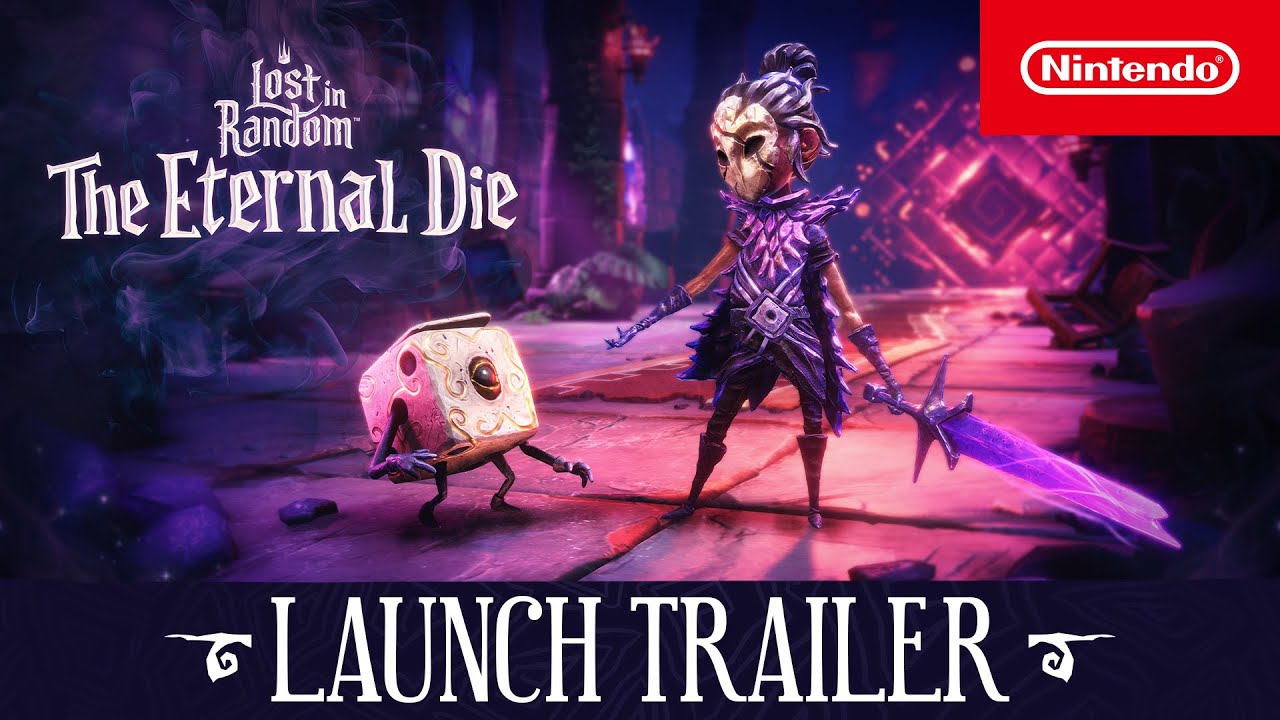
The Eternal Die keeps the crooked fairy-tale world of Lost in Random but replaces its adventure structure with a run-based action game. Queen Aleksandra and her die companion Fortune move quickly, attack directly and build synergies that make each escape attempt feel mechanically distinct.
Lost in Random The Eternal Die review: first impressions
The first runs teach a compact set of strikes, dodges and die-powered abilities. Rooms are short enough to encourage experimentation, while the hub frames defeat as another step through Aleksandra’s damaged realm. The visual connection to the original is immediate even though the play rhythm is fundamentally different.
A run moves through combat rooms, rewards, shops and bosses before death returns resources and knowledge to the hub. Fortune’s roll influences available powers without removing planning: players decide when to spend, which relics to combine and whether a risky room justifies its reward.
Systems and meaningful decisions
Weapons establish different ranges and tempos, while cards and relics shape status, critical hits, summons or resource use. Random offers can produce awkward combinations, but rerolls and route decisions preserve agency. Permanent progression helps learning without making early enemies irrelevant after a few upgrades.
Progression was judged by whether it changed the next decision instead of merely increasing a number. A useful unlock opens a route, answers a recurring problem or creates a new risk. Busy menus received no extra credit when the underlying choice remained obvious.
Controls, combat and feedback
Attacks and dodges respond quickly, and enemy tells usually leave enough time for deliberate movement. The camera maintains a useful combat angle in most arenas. Dense effects occasionally obscure small projectiles, but strong hit sounds and clear invulnerability timing make close-range play more trustworthy than the whimsical presentation suggests.
Failure is productive when the game supplies enough information for a better attempt. We separated setbacks caused by a readable rule or poor plan from repetition that only consumed time. Challenge can create tension without hiding responsibility for the outcome.
World and visual direction
Stop-motion-inspired shapes, uneven architecture and theatrical lighting preserve Random’s unsettling charm. Repeated biomes inevitably lose surprise, yet room layouts and enemy mixes use those assets efficiently. Character portraits and boss entrances provide personality without delaying every attempt with long exposition.
Presentation was assessed during ordinary play, not only in composed screenshots. Strong direction guides attention through colour, movement and contrast while preserving mood. A beautiful effect becomes a liability when it hides an objective, hazard or rival.
Music and sound design
Fortune’s roll, weapon hits and reward drops each have recognizable cues. Music builds urgency during bosses while leaving ordinary rooms space for mechanical sounds. Voice work keeps Aleksandra’s frustration and determination present, although repeated hub lines become familiar across consecutive failures.
Audio was treated as atmosphere and information. Distinct warnings, impacts and movement cues matter more over several hours than one loud set piece, although a memorable score can give repeated actions identity.
Performance and interface
The PC version ran consistently during the review window, with quick loads that supported immediate retries. Menus make relic interactions understandable and controller prompts remained accurate. Occasional effect overlap was a readability issue rather than a performance failure on the tested hardware.
One platform cannot represent every configuration, and later patches may change performance. We report the observed experience without promising results on untested hardware. Players with a strict accessibility or frame-rate requirement should check current platform documentation.
Learning curve
Early enemies isolate one attack pattern, then later rooms combine them. Bosses demand observation more than raw upgrades, and failed attempts usually reveal a missed cue. The game explains basic effects clearly, though understanding which relic interactions deserve a build takes several runs and some glossary checking.
The opening session was separated from later play. A system that initially feels obscure may become expressive after its vocabulary settles, while a polished tutorial can hide a loop that never develops. Essential status and resource information should remain available during play.
Pacing and replay value
Seven hours exposed multiple weapons, bosses and build directions without exhausting the unlock track. Runs are long enough to create attachment to a combination but short enough that defeat does not erase an evening. Repetition appears mainly when early rooms offer familiar low-impact rewards.
Replay value can come from alternate routes, builds, conversations or mastery of a fixed sequence. Those forms are not interchangeable. We credit only the structure visible in the stated hours and do not award points for an assumed endgame or promised roadmap.
Monetization and value
The base purchase contains the complete run structure assessed here. Its value rests on repeated combat and build discovery, not campaign length alone. Players who want one linear story should account for deliberate repetition; roguelite fans are more likely to see that repetition as the place where mastery develops.
Value was judged from the quality and repeatability of the available experience, not from a temporary discount. A compact game can justify its scope when every hour develops the idea; a larger game can still waste time through repetition.
Accessibility and practical fit
Difficulty assists and clear control mapping make entry easier, but the game still expects repeated failure and fast visual parsing. Sessions can be divided by rooms or runs, and pausing supports interruptions. Players sensitive to flashing effects should inspect current display options before purchase.
The buying question extends beyond technical compatibility. Consider whether a normal twenty-minute stretch contains the decisions, reading, repetition and downtime you enjoy. Unedited footage of ordinary play is often a better final check than a trailer assembled from peak moments.
We compared the advertised fantasy with the action repeated between major set pieces. A score rises when ordinary minutes express the same strengths as the trailer, and falls when progress regularly depends on friction the game does not acknowledge or explain.
Limits of the 7-hour review
Seven hours were enough to test several weapons, reach multiple bosses and compare distinct relic combinations, but not to unlock every upgrade or complete all narrative outcomes. The score reflects the quality of the established loop rather than total completion.
The window was long enough to test the repeated loop across separate sessions, but not every ending, late encounter or future update. Price, discounts and online population are not treated as permanent facts.
Who should play it?
It suits players who want Hades-like run structure with a darker storybook identity and dice-flavoured resource decisions. Fans expecting a direct sequel to the first game’s exploration and card combat should approach it as a genre change, not a continuation of the same mechanics.
Lost in Random The Eternal Die review verdict
Stormteller Games finds a stronger mechanical centre for Random. Luck influences the offer, but positioning, timing and build choices decide whether that offer becomes useful. A few repetitive rooms remain, yet the combat is sharp enough to make another roll inviting.
Pros: Responsive combat and dodge timing; Strong relic and weapon synergies; Distinctive crooked-fairytale art; Runs respect the player’s time.
Cons: Early rooms become repetitive; Effect density can hide projectiles; Genre shift may disappoint fans of the original structure.
Final score: 8/10. A focused action roguelite that gives Random’s dice motif cleaner combat and meaningful build choices.
Sources: official information or tournament records. Factual claims were checked against the linked record; interpretation is our own.
Continue with the Kaizensclan archive and our practical gaming guides.
Editorial note
Hands-on review window recorded in the article metadata, supported by official documentation and public technical coverage.
- https://store.steampowered.com/app/2564520/Lost_in_Random_The_Eternal_Die/
- Stormteller Games / Thunderful
This article was reviewed on August 10, 2026.

Related stories

Date Everything review: romance around the house
Our Date Everything review explores six hours of object romance, branching dialogue, voice performances and relationship outcomes inside one house. Read our.

MindsEye review: ambition under technical pressure
Our MindsEye review covers five hours of Jacob Diaz’s campaign, driving, third-person combat, mission scripting and technical performance. Read our verified.

Tony Hawk’s Pro Skater 3 + 4 review: the timer returns
Our Tony Hawk’s Pro Skater 3 + 4 review tests seven hours of classic parks, two-minute goals, new stages, trick chaining and multiplayer. Read our verified.
Community channel
Join the discussion
Start a thoughtful, specific conversation about this story.
Verified readers only
Continue with Google to comment.
Your Google account creates a reader-only Kaizensclan profile. Your first comment is reviewed before publication.