MindsEye review: ambition under technical pressure
Our MindsEye review covers five hours of Jacob Diaz’s campaign, driving, third-person combat, mission scripting and technical performance. Read our verified.

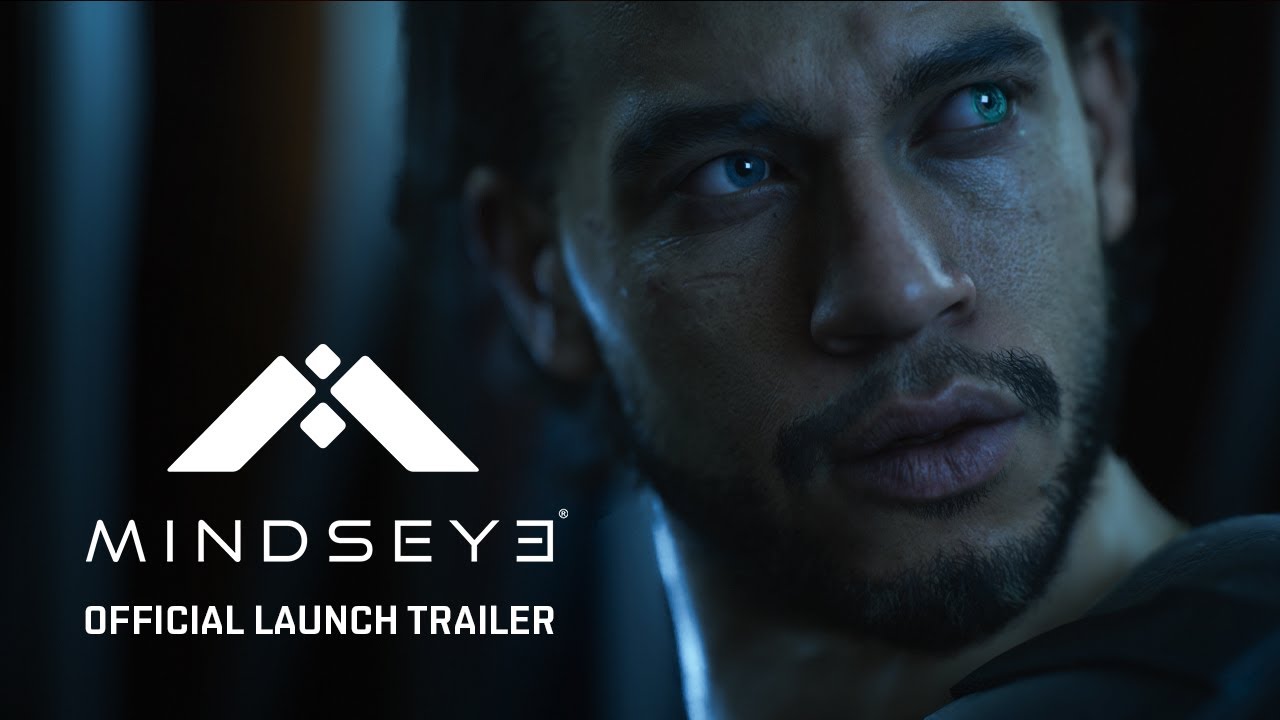 5.0
5.0 Kaizensclan verdict
Our MindsEye review covers five hours of Jacob Diaz’s campaign, driving, third-person combat, mission scripting and technical performance. Read our verified.
Review basis: 5 hours on PC. The stated time covers several sessions with the release build and is not a claim of full completion.
MindsEye has the materials of a focused science-fiction thriller: surveillance technology, corporate power, military hardware and a protagonist whose implant obscures his past. In practice, those ideas compete with stiff mission design and technical distractions that interrupt the intended momentum.
MindsEye review: first impressions
The campaign introduces Jacob Diaz through controlled story scenes and short driving or shooting assignments. Redrock’s scale suggests an open-world game, but missions are largely directed sequences. That focus could support tight pacing; instead, frequent transitions and limited freedom make the opening feel more restrictive than deliberate.
Most play alternates between travelling to a marked location, following a character, clearing enemies and watching the next narrative beat. Vehicles and drones add variation, yet mission conditions often dictate one acceptable approach. Failure boundaries can punish experimentation even when the city appears to offer room.
Systems and meaningful decisions
Weapons cover familiar assault, precision and close-range roles without developing a distinctive tactical economy. Drone interactions and vehicle sections broaden the toolset, but upgrades do not transform the repeated encounters during the tested window. The strongest decisions involve cover and target order rather than character building.
Progression was judged by whether it changed the next decision instead of merely increasing a number. A useful unlock opens a route, answers a recurring problem or creates a new risk. Busy menus received no extra credit when the underlying choice remained obvious.
Controls, combat and feedback
Basic aiming and movement are understandable, but animation transitions and cover behavior can feel reluctant. Enemies sometimes expose themselves predictably, then punish a small positioning error with concentrated fire. Driving has weight but lacks the fine confidence needed when a mission demands precision under a timer.
Failure is productive when the game supplies enough information for a better attempt. We separated setbacks caused by a readable rule or poor plan from repetition that only consumed time. Challenge can create tension without hiding responsibility for the outcome.
World and visual direction
Redrock combines desert light, dense commercial architecture and autonomous technology into a coherent near-future place. Large streets and interiors often look convincing from a distance. Closer interaction is limited, however, so the city works better as a cinematic backdrop than as a system the player can meaningfully explore.
Presentation was assessed during ordinary play, not only in composed screenshots. Strong direction guides attention through colour, movement and contrast while preserving mood. A beautiful effect becomes a liability when it hides an objective, hazard or rival.
Music and sound design
Weapons have adequate impact and dialogue is performed with commitment. Music supports pursuit and conspiracy beats without establishing a strong identity in the first five hours. Mixing occasionally prioritizes scripted conversation over environmental cues, which suits the filmic aim but weakens situational awareness.
Audio was treated as atmosphere and information. Distinct warnings, impacts and movement cues matter more over several hours than one loud set piece, although a memorable score can give repeated actions identity.
Performance and interface
The PC test encountered uneven frame pacing, visual pop-in and several awkward animation or scripting moments. Results vary by hardware and patches may improve them, but the instability mattered because tightly scripted missions depend on reliable triggers. Menus communicate objectives clearly, though graphics options require patient tuning.
One platform cannot represent every configuration, and later patches may change performance. We report the observed experience without promising results on untested hardware. Players with a strict accessibility or frame-rate requirement should check current platform documentation.
Learning curve
Tutorial prompts explain individual controls, yet they cannot resolve the difference between apparent freedom and strict mission logic. The safest strategy is often to follow the marker exactly. Combat becomes readable quickly, but learning where the script permits improvisation takes unnecessary trial and error.
The opening session was separated from later play. A system that initially feels obscure may become expressive after its vocabulary settles, while a polished tutorial can hide a loop that never develops. Essential status and resource information should remain available during play.
Pacing and replay value
Five hours provided varied locations and set pieces, but the stop-start pattern diluted urgency. A dramatic scene frequently hands control back for a short drive or simple corridor before another interruption. There is limited incentive to replay missions when alternative tactics can collide with fail conditions.
Replay value can come from alternate routes, builds, conversations or mastery of a fixed sequence. Those forms are not interchangeable. We credit only the structure visible in the stated hours and do not award points for an assumed endgame or promised roadmap.
Monetization and value
The assessment concerns the premium campaign available at release. Promised or delivered creator content should be judged separately from the authored story. A large marketing premise does not add value unless the ordinary missions support it, so the score reflects the tested campaign rather than future potential.
Value was judged from the quality and repeatability of the available experience, not from a temporary discount. A compact game can justify its scope when every hour develops the idea; a larger game can still waste time through repetition.
Accessibility and practical fit
Objective markers and conventional controls make the basic path approachable, but technical instability may create barriers beyond intended difficulty. Subtitles and current accessibility options should be checked on the target platform. The game suits players comfortable with long cinematics and tightly directed progress.
The buying question extends beyond technical compatibility. Consider whether a normal twenty-minute stretch contains the decisions, reading, repetition and downtime you enjoy. Unedited footage of ordinary play is often a better final check than a trailer assembled from peak moments.
We compared the advertised fantasy with the action repeated between major set pieces. A score rises when ordinary minutes express the same strengths as the trailer, and falls when progress regularly depends on friction the game does not acknowledge or explain.
Limits of the 5-hour review
Five hours covered the opening campaign arc, multiple combat spaces, driving and drone sequences, but not the full story or all post-launch updates. The review therefore avoids claims about the ending and treats technical observations as a tested snapshot rather than a permanent state.
The window was long enough to test the repeated loop across separate sessions, but not every ending, late encounter or future update. Price, discounts and online population are not treated as permanent facts.
Who should play it?
Consider it if you enjoy linear cinematic action and are willing to tolerate rough edges for a near-future conspiracy story. Players seeking a responsive open-world sandbox, deep combat build or polished technical showcase should wait for current performance reports and substantial discounts.
MindsEye review verdict
MindsEye’s problem is not a lack of ambition. It is the gap between a world that promises possibility and missions that frequently narrow it to markers, triggers and uneven encounters. Strong visual ideas survive, but they rarely overcome the friction surrounding them.
Pros: Coherent near-future visual setting; Committed cinematic presentation; Several varied vehicle and drone sequences.
Cons: Uneven technical performance; Rigid mission scripting; Basic combat systems; Open spaces offer little meaningful freedom.
Final score: 5/10. A sincere cinematic action game repeatedly weakened by rigid missions and uneven technical execution.
Sources: official information or tournament records. Factual claims were checked against the linked record; interpretation is our own.
Continue with the Kaizensclan archive and our practical gaming guides.
Editorial note
Hands-on review window recorded in the article metadata, supported by official documentation and public technical coverage.
- https://mindseye.game/
- Build A Rocket Boy
This article was reviewed on August 10, 2026.

Related stories
Lost in Random The Eternal Die review: a sharper roll
Our Lost in Random The Eternal Die review tests seven hours of roguelite combat, dice powers, relic combinations and Queen Aleksandra’s escape. Read our.

Date Everything review: romance around the house
Our Date Everything review explores six hours of object romance, branching dialogue, voice performances and relationship outcomes inside one house. Read our.

Tony Hawk’s Pro Skater 3 + 4 review: the timer returns
Our Tony Hawk’s Pro Skater 3 + 4 review tests seven hours of classic parks, two-minute goals, new stages, trick chaining and multiplayer. Read our verified.
Community channel
Join the discussion
Start a thoughtful, specific conversation about this story.
Verified readers only
Continue with Google to comment.
Your Google account creates a reader-only Kaizensclan profile. Your first comment is reviewed before publication.