Tony Hawk’s Pro Skater 3 + 4 review: the timer returns
Our Tony Hawk’s Pro Skater 3 + 4 review tests seven hours of classic parks, two-minute goals, new stages, trick chaining and multiplayer. Read our verified.

 8.0
8.0 Kaizensclan verdict
Our Tony Hawk’s Pro Skater 3 + 4 review tests seven hours of classic parks, two-minute goals, new stages, trick chaining and multiplayer. Read our verified.
Review basis: 7 hours on PlayStation 5. The stated time covers several sessions with the release build and is not a claim of full completion.
Tony Hawk’s Pro Skater 3 + 4 preserves the essential pleasure of turning a park into one uninterrupted line. Manuals, reverts, grinds and wall plants join with little friction, making each restart an immediate invitation to improve a score or finish one more goal.
Tony Hawk’s Pro Skater 3 + 4 review: first impressions
The remake follows the handling foundation of THPS 1 + 2 and introduces its vocabulary quickly. Veteran settings allow immediate speed, while tutorials explain balance meters and transfers. The first parks demonstrate that classic routes still work even when lighting, crowds and geometry have been rebuilt.
Runs last two minutes in the main tour. Players chase score thresholds, collect letters, find stat points and complete environmental goals before restarting with better knowledge. That structure suits THPS3 naturally. Applying it to THPS4 replaces the original game’s freer NPC-led career format, creating the remake’s largest compromise.
Systems and meaningful decisions
Stat points make individual skaters easier to specialize, while challenges unlock cosmetics and provide goals beyond the tour. Create-A-Skater and Create-A-Park extend ownership, and cross-platform multiplayer adds competitive and casual uses for learned lines. Progress is broad, although menus sometimes make rewards feel more fragmented than the skating.
Progression was judged by whether it changed the next decision instead of merely increasing a number. A useful unlock opens a route, answers a recurring problem or creates a new risk. Busy menus received no extra credit when the underlying choice remained obvious.
Controls, combat and feedback
Few arcade sports games communicate intent this clearly. A manual catches a landing, a revert preserves a vert combination and a wall plant turns a dead end into another chance. Balance assistance is predictable rather than arbitrary. Small input mistakes remain costly because that precision is the basis of mastery.
Failure is productive when the game supplies enough information for a better attempt. We separated setbacks caused by a readable rule or poor plan from repetition that only consumed time. Challenge can create tension without hiding responsibility for the outcome.
World and visual direction
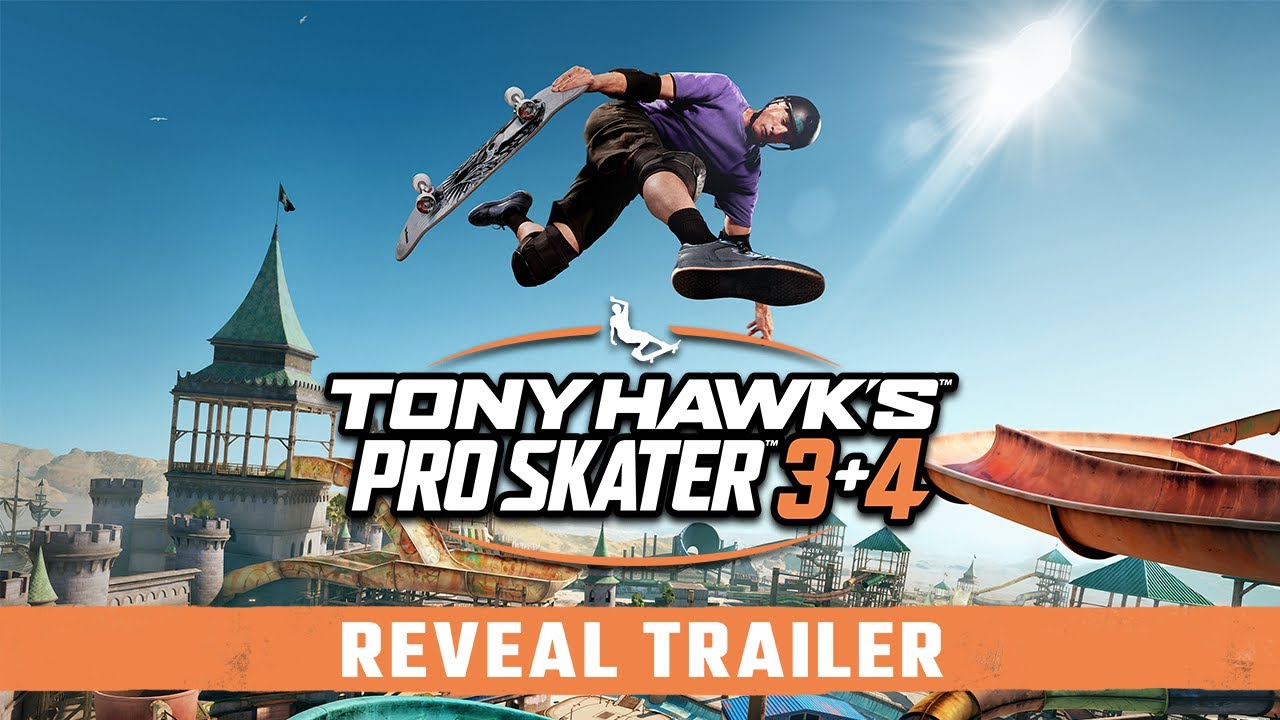
Returning parks are recognizable without looking like preserved museum pieces. Rails, gaps and ramps guide movement through colour and shape, while new Waterpark, Pinball and Movie Studio stages understand the series’ need for playful landmarks. Occasional decorative clutter can make a small objective harder to notice at speed.
Presentation was assessed during ordinary play, not only in composed screenshots. Strong direction guides attention through colour, movement and contrast while preserving mood. A beautiful effect becomes a liability when it hides an objective, hazard or rival.
Music and sound design
Board contact, grinds and landing impacts supply essential confirmation beneath the soundtrack. The music selection mixes returning tracks and newer additions without making every park feel identical. Audio transitions stay clean during restarts, an important detail when a failed run can reset within seconds.
Audio was treated as atmosphere and information. Distinct warnings, impacts and movement cues matter more over several hours than one loud set piece, although a memorable score can give repeated actions identity.
Performance and interface
Performance was stable during the tested solo sessions and load times kept restarts quick. Menu navigation is serviceable but layered, especially when moving between challenges, cosmetics and online modes. Network quality varies beyond a single review setup and was not used as the sole basis for the score.
One platform cannot represent every configuration, and later patches may change performance. We report the observed experience without promising results on untested hardware. Players with a strict accessibility or frame-rate requirement should check current platform documentation.
Learning curve
New players can learn one link at a time, while experts immediately pursue special-to-manual extensions and gap knowledge. Goal difficulty rises unevenly because a hidden object may take longer than a technical score. That variation keeps the tour lively but sometimes confuses discovery with execution.
The opening session was separated from later play. A system that initially feels obscure may become expressive after its vocabulary settles, while a polished tutorial can hide a loop that never develops. Essential status and resource information should remain available during play.
Pacing and replay value
Short runs eliminate dead time and make seven hours pass through constant self-assigned targets. Completing every park is only one layer; higher scores, gaps, challenges and online competition provide durable replay value. Players attached to THPS4’s original career pacing will feel the loss even while enjoying the mechanics.
Replay value can come from alternate routes, builds, conversations or mastery of a fixed sequence. Those forms are not interchangeable. We credit only the structure visible in the stated hours and do not award points for an assumed endgame or promised roadmap.
Monetization and value
The standard edition contains both rebuilt tours and creation features. Deluxe cosmetics and character additions do not change the underlying trick system. Platform-specific pricing and subscriptions can change, so the judgment rests on the included parks and replay structure rather than launch promotions.
Value was judged from the quality and repeatability of the available experience, not from a temporary discount. A compact game can justify its scope when every hour develops the idea; a larger game can still waste time through repetition.
Accessibility and practical fit
Difficulty options, control assists and quick retries help a broad range of players, although the game remains visually fast and demands repeated button combinations at higher levels. Two-minute sessions suit limited time, but chasing one perfect line can easily become a much longer commitment.
The buying question extends beyond technical compatibility. Consider whether a normal twenty-minute stretch contains the decisions, reading, repetition and downtime you enjoy. Unedited footage of ordinary play is often a better final check than a trailer assembled from peak moments.
We compared the advertised fantasy with the action repeated between major set pieces. A score rises when ordinary minutes express the same strengths as the trailer, and falls when progress regularly depends on friction the game does not acknowledge or explain.
Limits of the 7-hour review
Seven hours covered both game tours, new parks, challenge progression and several multiplayer sessions, but not every gap, cosmetic unlock or high-level leaderboard route. Long-term custom-park quality depends on the community and cannot be guaranteed by launch testing.
The window was long enough to test the repeated loop across separate sessions, but not every ending, late encounter or future update. Price, discounts and online population are not treated as permanent facts.
Who should play it?
It is an easy recommendation for players who value score attack, expressive movement and immediate retries. Anyone buying primarily for an exact restoration of THPS4’s open career structure should understand that its goals have been reshaped around the older timer.
Tony Hawk’s Pro Skater 3 + 4 review verdict
Iron Galaxy delivers the control quality the package needed. The decision to standardize THPS4 prevents this from being definitive preservation, yet the ordinary act of skating is so responsive and replayable that the combined tour remains one of the strongest modern arcade sports games.
Pros: Excellent trick chaining and response; Strong remakes of classic parks; Useful creation and multiplayer tools; Fast restarts support mastery.
Cons: THPS4 career structure is substantially changed; Reward menus feel fragmented; Some objectives hide in visual clutter.
Final score: 8/10. Superb arcade skating carries a remake whose treatment of THPS4 is efficient but less faithful.
Sources: official information or tournament records. Factual claims were checked against the linked record; interpretation is our own.
Continue with the Kaizensclan archive and our practical gaming guides.
Editorial note
Hands-on review window recorded in the article metadata, supported by official documentation and public technical coverage.
- https://www.tonyhawkthegame.com/
- Activision / Iron Galaxy
This article was reviewed on August 10, 2026.

Related stories
Lost in Random The Eternal Die review: a sharper roll
Our Lost in Random The Eternal Die review tests seven hours of roguelite combat, dice powers, relic combinations and Queen Aleksandra’s escape. Read our.

Date Everything review: romance around the house
Our Date Everything review explores six hours of object romance, branching dialogue, voice performances and relationship outcomes inside one house. Read our.
MindsEye review: ambition under technical pressure
Our MindsEye review covers five hours of Jacob Diaz’s campaign, driving, third-person combat, mission scripting and technical performance. Read our verified.
Community channel
Join the discussion
Start a thoughtful, specific conversation about this story.
Verified readers only
Continue with Google to comment.
Your Google account creates a reader-only Kaizensclan profile. Your first comment is reviewed before publication.