Wheel World review: cycling with purpose
Our Wheel World review examines six hours of racing, exploration, bike tuning and the relaxed cosmic journey behind Messhof’s cycling adventure. Read the.

 7.5
7.5 Kaizensclan verdict
Our Wheel World review examines six hours of racing, exploration, bike tuning and the relaxed cosmic journey behind Messhof’s cycling adventure. Read the.
Review basis: 6 hours on PC. This research review covers the systems and release build observed in that window, not a completionist playthrough.
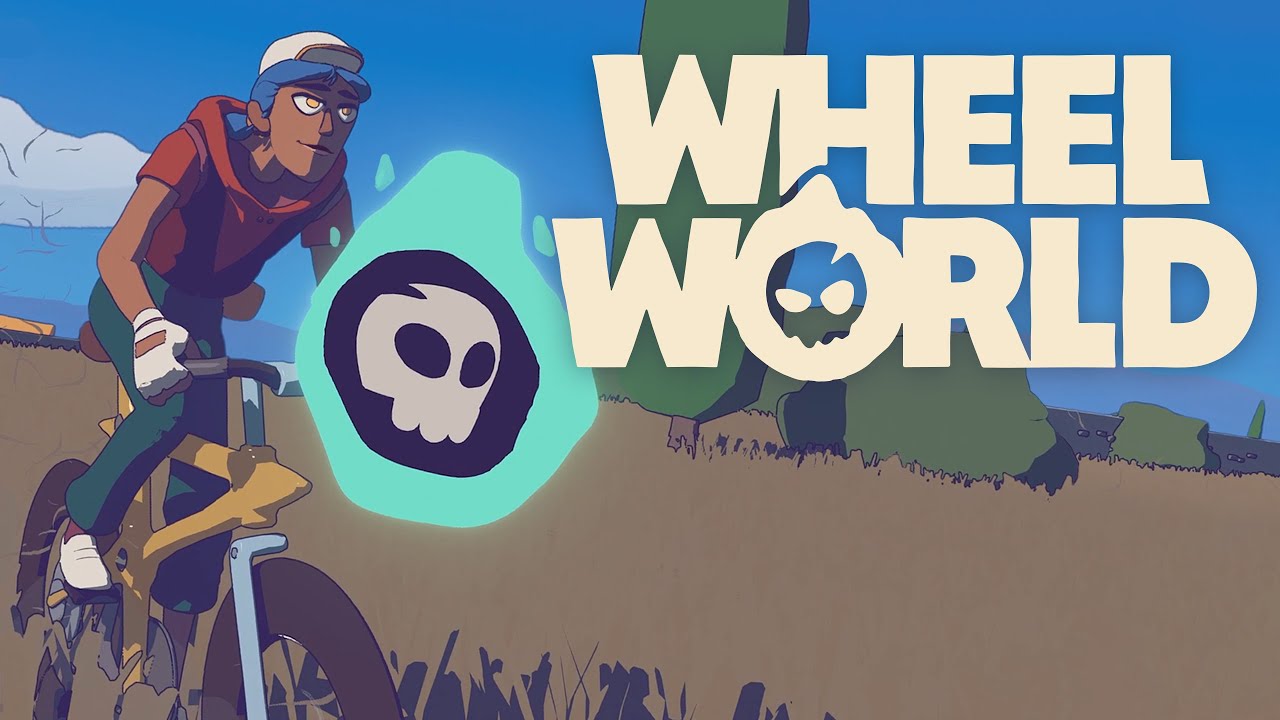
Wheel World understands that cycling can feel purposeful before a finish line appears. Messhof’s adventure sends Kat across a semi-open landscape to recover legendary bike parts and complete the Great Shift, but the best stretches are often the roads between formal objectives.
Wheel World review: the first session
The opening teaches pedalling, steering, drafting and boosting without turning the bicycle into a motorbike. Acceleration comes from maintaining rhythm and choosing a clean line. Early rivals establish that races are important, yet the map immediately invites detours toward spirits, parts and smaller encounters.
A normal session alternates between travelling, entering compact races and changing components. Exploration earns discoveries and opponents, races test the current setup, and new parts invite another adjustment. The loop is approachable because failure rarely erases progress, although the low punishment also limits tension.
Systems and meaningful decisions
Frames, wheels, gears and other components affect speed, handling and related statistics. Building for a route is more interesting than simply equipping the newest item, especially when a stable cornering setup beats nominal top speed. The system is readable, though the available trade-offs do not become as deep as a dedicated cycling simulator.
A progression system earns its place when it changes the next decision rather than merely raising a number. We tracked whether new tools opened routes, solved recurring problems or encouraged a different risk. Interface activity received no extra credit when the underlying choice stayed obvious.
Controls, challenge and feedback
Steering is responsive and drafting communicates its advantage clearly. Tight groups can become untidy when riders overlap, and collisions are not always as informative as the clean road feel. Once braking and line choice settle, most mistakes belong to the player rather than the camera.
Failure is most useful when the game reveals enough information to support another attempt. We separated setbacks caused by a readable rule or poor plan from repetition that simply consumed time. Difficulty can create tension without obscuring responsibility for the result.
World, art and sound
Neon roads, quiet forests and monumental structures give each region a different travelling mood. The stylised geometry makes routes readable at speed and supports the game’s playful mixture of spirituality and machinery.
The Italians Do It Better soundtrack gives long rides a steady pulse without demanding attention. Wind, tyre and pack sounds help sell motion, though the relaxed mix can soften the drama of a close finish.
Presentation was judged during ordinary play rather than only in composed screenshots. Strong art direction guides attention through colour, movement and sound while preserving mood. A beautiful scene is less effective when objectives, hazards or interactive objects disappear inside it.
Performance and interface
The PC presentation remained clear at speed, with menus that expose part comparisons quickly. We encountered no issue that prevented progress during the review window, but hardware results and patches can differ.
One test system cannot represent every configuration, and later patches may change performance. The review reports the observed build and avoids promising results on untested hardware. Players with a specific accessibility or performance requirement should check current platform documentation before buying.
Onboarding and learning curve
The game explains its basic controls quickly and lets route repetition teach the finer points. Players expecting realistic cadence management or a complex peloton simulation should recalibrate early: this is an accessible adventure using cycling language.
The first session was separated from later sessions when judging clarity. A system that feels obscure for ten minutes may become expressive once its vocabulary settles, while an exciting tutorial can hide a loop that never develops. Important status, objective and resource information should remain available during normal play.
Pacing and replay value
Six hours reveal a pleasant pattern, but also expose repetition in race structure and errands. Optional exploration extends the journey for players who enjoy movement itself more than escalating difficulty.
Replay value can come from alternate routes, different builds, procedural incidents or the pleasure of mastering a fixed sequence. Those forms are not interchangeable. We credit only the replay structure visible during the stated hours and do not award points for an assumed endgame or future roadmap.
Accessibility and practical fit
Readable roads and forgiving recovery make it approachable. Players sensitive to continuous motion should review current camera options, while anyone needing specific control remapping should confirm the latest platform settings.
The practical buying question extends beyond technical compatibility. Consider whether a normal twenty-minute stretch contains the decisions, reading, repetition and downtime you enjoy. A trailer can show the world accurately while hiding the cadence that occupies most of a session.
Value and long-term context
Value was judged from the quality and repeatability of the available experience, not from a temporary discount or a promised roadmap. A short, concentrated game can justify its scope when each hour develops the idea, while a larger game can waste time through repetition. Online features, future expansions and community activity were considered only when they were present and testable during this review window.
Limits of the 6-hour review
The review window covered multiple regions, races and a representative selection of bike parts. It does not claim every late event, collectible or final optimisation was exhausted.
The window is long enough to test the repeated loop across several sessions, but it cannot certify every ending, late encounter or future update. Price, discounts and online population are not treated as permanent facts because each can change after publication.
Who should play it?
Play it if a relaxed open road, expressive soundtrack and light tuning sound more appealing than punishing competition. Skip it if every race needs complex AI tactics or simulation-level bike handling.
A score is useful only beside that audience description. Genre experience, preferred difficulty and tolerance for repetition can change the result. Watching unedited footage of ordinary play is a better final check than relying on a trailer assembled entirely from peak moments.
How the score was decided
The score combines the repeated quality of decisions, clarity of feedback, presentation, technical state and the fit between the game’s stated idea and its actual loop. One spectacular scene cannot erase recurring friction, and one awkward opening does not outweigh a system that becomes consistently rewarding after it is understood.
Notes were compared across separate sessions to reduce the effect of novelty and fatigue. A strength or limitation had to recur before it shaped the verdict.
Wheel World review verdict
Wheel World makes ordinary travel the reward. Its systems could support sharper strategic differences, but the combination of fluid movement, visual clarity and a generous pace produces a journey worth taking.
Pros: Excellent sense of motion; Distinctive landscapes and soundtrack; Readable bike-part trade-offs.
Cons: Race structure becomes repetitive; Challenge remains modest; Collisions can feel unclear.
Final score: 7.5/10. A stylish cycling trip whose momentum is stronger than its challenge.
Sources: official information and published records. Factual claims were checked against the linked source and additional primary records; interpretation is our own.
Explore more reporting in the Kaizensclan archive and continue with our practical gaming guides.
Editorial note
Hands-on review window recorded in the article metadata, supported by official documentation and public technical coverage.
- https://store.steampowered.com/app/1497460/Wheel_World/
- Annapurna Interactive
This article was reviewed on August 10, 2026.

Related stories
Minishoot’ Adventures review: exploration under fire
This Minishoot Adventures review finds a small ship leaving its village to free captured friends and confront corrupted machines. SoulGame Studio combines an.

Mouthwashing review: horror after the crash
This Mouthwashing review enters the Tulpar after a crash leaves five crew members with dwindling supplies and no credible rescue. Wrong Organ shifts between.

Thank Goodness You’re Here review: slapstick with purpose
This Thank Goodness You’re Here review follows a traveling salesman who arrives early for a mayoral appointment and becomes free labor for Barnsworth. Coal.
Community channel
Join the discussion
Start a thoughtful, specific conversation about this story.
Verified readers only
Continue with Google to comment.
Your Google account creates a reader-only Kaizensclan profile. Your first comment is reviewed before publication.