Fretless review: a musical RPG with a clean beat
Fretless The Wrath of Riffson review after five hours with its turn-based riff combat, musical world, deck construction and gentle humour. Read the verified.

 7.5
7.5 Kaizensclan verdict
Fretless The Wrath of Riffson review after five hours with its turn-based riff combat, musical world, deck construction and gentle humour. Read the verified.
Review basis: 5 hours on PC (Steam). This research review covers the systems and release build observed in that window, not a completionist playthrough.
Fretless – The Wrath of Riffson treats music as material rather than decoration. Flowers chime, enemies combine instruments with monsters and attacks are riffs assembled into short bars. The result is a cheerful turn-based RPG with clear ideas about timing, sequencing and the predatory side of the music business.
Fretless The Wrath of Riffson review: the first session
Rob begins with a limited selection of riff cards and an immediate reason to oppose Super Metal Records. Exploration introduces visual jokes and musicians without a heavy lore preamble. Combat explains how riffs fill a bar, how crescendo attacks are prepared and why the order of effects matters.
Players cross compact areas, solve light environmental obstacles, collect riffs and fight groups of themed enemies. A hand contains the available actions, but this is not a random deckbuilder run: the larger collection and equipment choices shape a persistent RPG build. Battles reward arranging setup, damage and recovery into a coherent phrase.
Systems and meaningful decisions
Riffs consume positions in a musical bar and can create effects that another action exploits. Instruments and physical add-ons modify the strategy, encouraging specialisation without burying the player in statistics. Crescendo attacks provide a satisfying payoff, although ordinary encounters do not always demand the full range of possible combinations.
A progression system earns its place when it changes the next decision rather than merely raising a number. We tracked whether new tools opened routes, solved recurring problems or encouraged a different risk. Interface activity received no extra credit when the underlying choice stayed obvious.
Controls, challenge and feedback
Menus respond quickly, target information is clear and turn order is easy to inspect. Timing elements add musical participation without converting every action into a reflex test. When an enemy telegraphs a special pattern, the interface provides enough information to choose defence or finish the fight first.
Failure is most useful when the game reveals enough information to support another attempt. We separated setbacks caused by a readable rule or poor plan from repetition that simply consumed time. Difficulty can create tension without obscuring responsibility for the result.
World, art and sound
Pixel art is bright, animated and committed to the central pun. Instrument creatures remain readable as combat units, and biomes establish their own rhythm through moving details. Exploration routes are more conventional than the visual invention surrounding them.
Music naturally carries unusual responsibility. Themes reinforce location and battle state, while attack effects sound like parts of the arrangement instead of generic magic. Repetition is inevitable in regular fights, but the mix stays clean enough that important cues are not buried.
Presentation was judged during ordinary play rather than only in composed screenshots. Strong art direction guides attention through colour, movement and sound while preserving mood. A beautiful scene is less effective when objectives, hazards or interactive objects disappear inside it.
Performance and interface
The PC build performed consistently during the five-hour window. Text, icons and tooltips were readable, and transitions rarely interrupted play. Players should verify language and accessibility support on their chosen platform because the review did not test every localisation or input device.
One test system cannot represent every configuration, and later patches may change performance. The review reports the observed build and avoids promising results on untested hardware. Players with a specific accessibility or performance requirement should check current platform documentation before buying.
Onboarding and learning curve
The game introduces one concept at a time and supplies low-risk encounters for testing it. Tooltips explain numerical effects, but the best understanding comes from arranging a bar and hearing the sequence resolve. Experienced RPG players may find the opening unusually gentle.
The first session was separated from later sessions when judging clarity. A system that feels obscure for ten minutes may become expressive once its vocabulary settles, while an exciting tutorial can hide a loop that never develops. Important status, objective and resource information should remain available during normal play.
Pacing and replay value
Areas are compact and battles move quickly once a plan is selected. New riffs and equipment keep the first hours developing, though light exploration and simple side interactions can feel like connective tissue. Alternative builds create replay interest, but the authored story remains the same.
Replay value can come from alternate routes, different builds, procedural incidents or the pleasure of mastering a fixed sequence. Those forms are not interchangeable. We credit only the replay structure visible during the stated hours and do not award points for an assumed endgame or future roadmap.
Accessibility and practical fit
Turn-based combat allows deliberation, and rhythm inputs do not dominate every decision. Dense musical terminology is translated into familiar RPG functions. Players who need particular colour, text or audio accommodations should consult the current settings list.
The practical buying question extends beyond technical compatibility. Consider whether a normal twenty-minute stretch contains the decisions, reading, repetition and downtime you enjoy. A trailer can show the world accurately while hiding the cadence that occupies most of a session.
Limits of the 5-hour review
Five hours covered the recurring combat and several build changes but not the complete story, every instrument or late-game encounter. The score does not assume that later difficulty will solve every simple early fight.
The window is long enough to test the repeated loop across several sessions, but it cannot certify every ending, late encounter or future update. Price, discounts and online population are not treated as permanent facts because each can change after publication.
Who should play it?
Fretless suits players seeking a friendly, compact RPG with deck-like planning and affectionate music culture. It offers less for anyone wanting punishing tactical battles, deep exploration or a fully reactive narrative.
A score is useful only beside that audience description. Genre experience, preferred difficulty and tolerance for repetition can change the result. Watching unedited footage of ordinary play is a better final check than relying on a trailer assembled entirely from peak moments.
How the score was decided
The score combines the repeated quality of decisions, clarity of feedback, presentation, technical state and the fit between the game’s stated idea and its actual loop. One spectacular scene cannot erase recurring friction, and one awkward opening does not outweigh a system that becomes consistently rewarding after it is understood.
Notes were compared across separate sessions to reduce the effect of novelty and fatigue. A strength or limitation had to recur before it shaped the verdict.
Fretless The Wrath of Riffson review verdict
Fretless finds a smart combat grammar in musical bars and riffs, then presents it with warmth and excellent pixel animation. Its world traversal is less adventurous than its theme, but the repeated act of composing a turn remains clear and satisfying.
Pros: Readable riff sequencing and build choices; Excellent pixel animation and musical identity; Turn-based pace welcomes experimentation.
Cons: Exploration is mechanically light; Early encounters rarely demand the deepest combinations.
Final score: 7.5/10. A warm, stylish musical RPG whose compact combat is stronger than its light exploration.
Sources: official information and published records. Factual claims were checked against the linked source and additional primary records; interpretation is our own.
Explore more reporting in the Kaizensclan archive and continue with our practical gaming guides.
Editorial note
Hands-on review window recorded in the article metadata, supported by official documentation and public technical coverage.
This article was reviewed on August 7, 2026.

Related stories
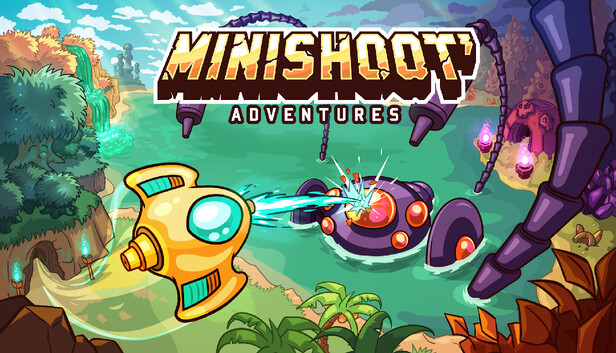
Minishoot’ Adventures review: exploration under fire
This Minishoot Adventures review finds a small ship leaving its village to free captured friends and confront corrupted machines. SoulGame Studio combines an.

Mouthwashing review: horror after the crash
This Mouthwashing review enters the Tulpar after a crash leaves five crew members with dwindling supplies and no credible rescue. Wrong Organ shifts between.

Thank Goodness You’re Here review: slapstick with purpose
This Thank Goodness You’re Here review follows a traveling salesman who arrives early for a mayoral appointment and becomes free labor for Barnsworth. Coal.
Community channel
Join the discussion
Start a thoughtful, specific conversation about this story.
Verified readers only
Continue with Google to comment.
Your Google account creates a reader-only Kaizensclan profile. Your first comment is reviewed before publication.