League Classic laning guide for the 60-champion launch
This League Classic laning guide explains runes, mana discipline, wave control, ward timing, old item spikes and role preference for the launch build.

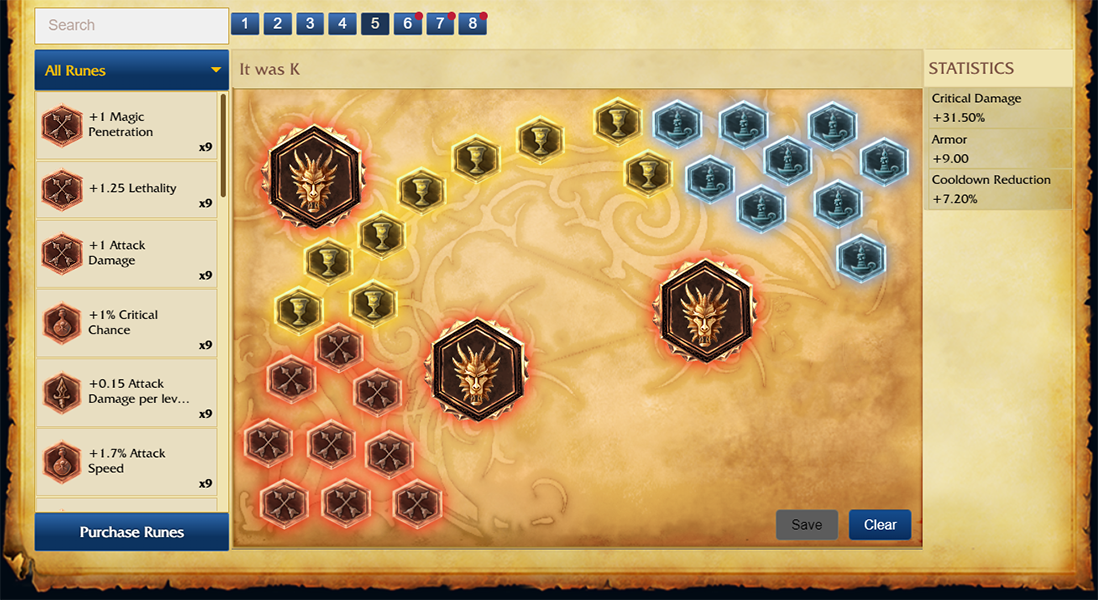
Updated for League Classic launch build in Patch 26.15.
This League Classic laning guide is for modern LoL players entering the 60-champion launch roster. The result is a stable first ten minutes built around higher mana costs, slower movement tools, old rune pages and item spikes that do not follow the current game’s assumptions.
Step 1: prepare runes before queueing
Classic uses old-style runes and masteries, and forgetting them leaves the default page rather than a modern adaptive setup. Build one page for the damage pattern and one safer page for an unfamiliar lane.
Do not copy a historical screenshot without checking the live Classic values. Riot combined several eras and adjusted underused options.
Step 2: respect expensive spells
Early abilities can cost more mana and carry more of a champion’s total damage. Use a spell to secure a meaningful trade, protect a cannon or create a recall rather than pressing it because the cooldown returned.
Track the opponent’s mana as carefully as health. An empty mage may still threaten with basic attacks, but loses the same wave-control options.
Step 3: let the first waves identify the lane
Do not decide the complete lane from champion names. Watch attack ranges, rune damage and whether the opponent uses a spell on the first wave.
A slow push creates a larger crash but also exposes the player to an older jungle with different camp timing. Freeze only when the wave and matchup actually permit it.
Step 4: ward for the available jungle routes
The Classic map restores older camps and faster respawns. Place vision where it answers the jungler’s likely route, not where a modern ward habit says the pixel brush should always be covered.
Communicate missing enemies because mobility is lower and crowd control can be longer. Earlier information gives more value than a late mechanical escape.
Step 5: buy for the next trade
Old items include gold-generation tools and combinations absent from current League. The best recall buys the component that changes the next two waves, not the item with the strongest nostalgic reputation.
Keep enough sustain when the lane contains repeated poke. Classic punishes a greedy stay because walking back and recovering resources take time.
Step 6: use sharper strengths, avoid sharper weaknesses
Riot describes Classic champions as having clearer strengths and weaknesses. Create fights inside the range or timing your kit owns, and stop when that window closes.
A champion with reliable point-and-click control still needs follow-up. Ping the target before the spell so teammates can spend the short advantage together.
Step 7: convert lane control into a simple objective
After a crash, choose one action: ward, recall, help the jungler or damage the tower. Trying all four usually returns the player late with poor resources.
The mode rewards strategic commitment. A small lead preserved across several waves is more useful than forcing a highlight based on memories of an old montage.
Communication protocol
Reduce the complete plan to three calls the team can use during a real League of Legends Classic match: the immediate objective, the first timing and the abort condition. Long explanations belong before the queue or during review. In play, every sentence should change positioning, resource use or target priority.
When information changes, name the fact before the response. “Two players seen,” “key cooldown used,” or “route blocked” gives teammates evidence; “this feels bad” does not. The caller can then keep the plan, delay it or switch without forcing five private guesses.
Common failure patterns
The most frequent error is correct individual execution at different times. One player begins while support is moving, another spends the final resource after contact and a third follows the original call after the abort. Review synchronization before replacing mechanics.
The second error is treating one success as proof that every condition was correct. Opponents may miss a punish or choose another side of the map. Save the replay and ask which information made the plan safe enough, not only whether the scoreboard awarded the result.
Quick checklist
- State the objective and first timing.
- Confirm required players and resources.
- Name the opponent’s most likely interruption.
- Keep one clear abort condition.
- Assign the next action after success.
Practice and review
Run the plan in a custom lobby or low-stakes match before using it in competition. Record one successful attempt and one failure, then change only the step supported by evidence. A repeatable guide is useful because the team can identify where execution broke instead of inventing a new system after every loss.
Confirm the live client against the official update source before relying on exact mechanics. Patches can change timings, costs and map geometry without changing the decision process described here.
Build a reliable baseline
Keep the review specific: note the clock, the unavailable resource and the teammate who could not participate. Repeat the same setup three times before judging it. Consistency exposes whether the problem comes from the plan itself or from execution, and gives the team a stable baseline for the next practical team adjustment.
Read our League Classic launch report and compare modern objective play with our support roam guide.
Editorial note
Facts and mechanics were checked against the linked primary sources before publication.
This article was reviewed on August 7, 2026.

Related stories
Path of Exile 2 Sorceress leveling guide for 0.5.4e
Path of Exile 2 Sorceress leveling is smoother when the character solves one damage loop before collecting every elemental skill. Patch 0.5.4e is the referenc.

Minecraft mace combat guide for Java 1.21.9
Minecraft mace combat turns vertical movement into damage. Java Edition 1.21.9 is the reference version. A smash attack requires striking while falling far.
Dota 2 Watcher control guide for patch 7.41e
Dota 2 Watcher control is useful when it protects the next movement, not when a support activates every structure on cooldown. Patch 7.41e is the reference.
Community channel
Join the discussion
Start a thoughtful, specific conversation about this story.
Verified readers only
Continue with Google to comment.
Your Google account creates a reader-only Kaizensclan profile. Your first comment is reviewed before publication.