Promise Mascot Agency review: weird work, warm heart
Our Promise Mascot Agency review explores its open-world driving, mascot management, rescue cards and heartfelt town stories after six hours on the PC version.

 8.5
8.5 Kaizensclan verdict
Our Promise Mascot Agency review explores its open-world driving, mascot management, rescue cards and heartfelt town stories after six hours on the PC version.
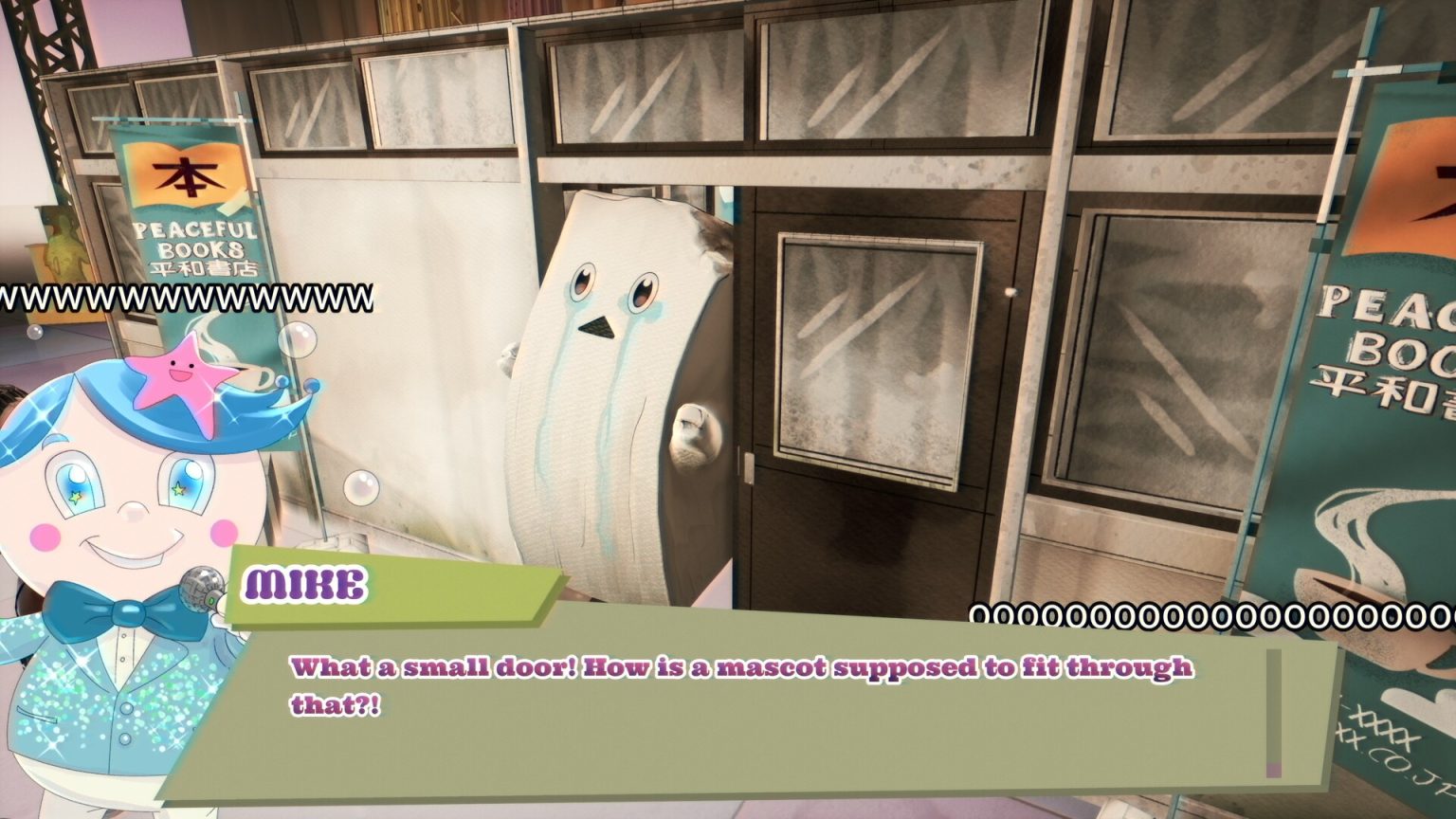
Promise Mascot Agency turns business recovery into an open-world character study. After six hours on PC, recruiting impossible mascots, driving a battered kei truck and rebuilding Kaso-Machi feels funny without treating the struggling town as a joke. Repeated rescue events create friction, but the writing gives every strange job a human reason to matter.
A mascot agency becomes a community map
Michi begins in exile, carrying a damaged reputation and an agency that barely exists. Progress comes from meeting local people, recruiting living mascots and finding clients who can afford to hire them. Each introduction adds a business opportunity and another piece of the town’s history.
The structure avoids a conventional quest-board feeling because work changes relationships. A mascot is not a stat block with a costume; it has preferences, fears and a personality that can make an apparently simple promotion collapse into a crisis.
Driving keeps management physical
The kei truck connects the office work to the landscape. Roads curl through abandoned commercial spaces, coastal routes and hidden corners, while upgrades add speed, gliding and other improbable tools. Travel produces discoveries rather than existing only between menus.
Vehicle handling is loose enough to invite experimentation and forgiving enough that a missed corner rarely becomes punishment. The best routes combine a practical destination with one suspicious side road that obviously deserves investigation.
Jobs turn preparation into comedy
Sending a mascot to work requires matching its abilities to the assignment, then supporting the result with Hero Cards. When disaster strikes, the player chooses helpers whose powers answer specific problems. The interaction is simple, but the presentation makes every failure feel like a tiny television episode.
The limitation appears when familiar rescue types repeat. Once the correct card logic is understood, execution offers less tension than the first encounter. New characters and jokes carry the loop farther than its tactical depth.
Kaso-Machi is funny without becoming disposable
The game’s surrealism works because ordinary concerns remain visible underneath it. Residents need income, public spaces have deteriorated and old power structures still shape who gets an opportunity. A walking finger can be furious and ridiculous while the conversation around her still reveals something sincere.
Dialogue gives minor characters enough specificity that recruiting them feels like building a network, not clearing icons. Six hours reveal several emotional turns without exhausting the wider conspiracy behind Michi’s exile.
Visual design protects the cast
Bold silhouettes let mascots remain readable even when the screen fills with effects, cards and environmental clutter. Menus use saturated colors and strong typography, extending the agency’s improvised branding into every system.
Animation embraces awkward movement. The comedy comes from seeing a bizarre body attempt ordinary work, while close-up portraits preserve enough detail for quieter conversations.
Sound makes the town feel in motion
The soundtrack shifts between relaxed driving, business energy and stranger supernatural tones. Voice performances sell the contrast between absurd premises and grounded emotion. Repeated job cues can become familiar, but the broader soundscape keeps travel lively.
Audio also helps exploration by separating traffic, collectibles and event signals from the music. The result supports wandering without making every discovery announce itself like a checklist reward.
Technical state and monetization
The PC build remained stable during the six-hour window, with readable controller prompts and quick transitions between driving and dialogue. This is not a hardware benchmark, and players should check current requirements and update notes for their configuration.
Promise Mascot Agency is sold as a premium game. Optional soundtrack and art-book products do not alter progression, and the core management economy does not route the player toward real-money purchases.
What six hours can establish
Six hours are enough to judge the central loop: discover a resident, recruit a mascot, find work, respond to disaster and reinvest in the agency or truck. They are not enough to resolve the conspiracy, see every mascot or measure whether rescue repetition grows more severe late in the story.
The score therefore reflects the strength of the opening systems and writing. A completed campaign could change the verdict if the mystery fails to reward its buildup, but Kaso-Machi already succeeds as a place worth helping.
Session rhythm and decision load
Promise Mascot Agency works best when a session ends after a meaningful return, objective or discovery rather than at an arbitrary timer. The reviewed 6-hour window included short experiments and longer connected sessions, making it possible to judge immediate controls and the way several decisions accumulate.
The strongest rhythm alternates planning with execution. Menus and preparation matter because they change the next action, but they become friction when organization takes longer than the problem it should solve. That tension is already visible in the opening.
Onboarding and accessibility
The early hours introduce the central verbs before expecting efficient play. Tooltips and objective language explain immediate actions, while animation, color and sound carry part of the teaching. Players should still review the available text, input, subtitle and difficulty options against their own needs because this article cannot certify every accessibility requirement.
A useful tutorial permits a mistake and then shows why the result changed. Promise Mascot Agency generally creates that feedback through nearby retries or recoverable decisions, although the complexity of open-world narrative adventure means some systems become clear only after they interact.
Difficulty, failure and recovery
Difficulty is most persuasive when failure identifies a decision: poor positioning, an incomplete loadout, wasted time or a misunderstood system. The reviewed opening usually provides that evidence instead of relying only on larger enemy numbers. Repetition is more productive when the player changes one assumption rather than rushing the identical attempt.
The listed weakness — rescue outcomes can become repetitive — can make recovery feel slower than the best sections deserve. It does not erase the central loop, but it should shape expectations for players with limited session time or low tolerance for repeated administration.
Who should play it
Promise Mascot Agency is easiest to recommend to players who value kaso-machi is dense with memorable characters and mascot jobs turn management into comedy. Those qualities appear early enough that the recommendation does not depend on a late unlock or a promise that the game becomes interesting after many hours.
Players seeking a completely different genre rhythm should treat the score as audience-specific. A numerical verdict summarizes execution within the game’s goals; it does not mean every reader will enjoy those goals equally.
Replay value and longer-term questions
The opening supports another approach through alternative routes, priorities, builds or team decisions. Replay value will ultimately depend on whether later content changes the questions or simply expands the amount of the same answer. The short review window cannot settle that balance.
A completed campaign or substantially longer save could reveal pacing issues invisible during discovery. The score rewards proven mechanics and presentation while reserving judgment on exhaustive content, endgame optimization and every narrative outcome.
What updates can change
Patches may improve performance, adjust balance or reorganize interface friction after this review. They cannot be assumed to fix a problem until official notes and the live build confirm the change. Readers should compare the publication date with the current version before treating a technical observation as permanent.
The verdict remains anchored to design choices less likely to disappear: how the game communicates goals, how its systems connect and whether the first 6 hours create reasons to continue. Those are the qualities the score measures.
Verdict
Promise Mascot Agency is an eccentric management adventure with unusually generous character writing. Its rescue mechanics are lighter than its presentation first suggests, yet driving, recruitment and conversation reinforce one another well enough to make rebuilding the town feel personal.
For another systems-focused verdict, read our Civilization VII review. Our Atomfall review offers a different approach to exploration and incomplete information.
Source: Promise Mascot Agency official Steam page; Kaizen Game Works.
Editorial note
Hands-on review window recorded in the article metadata, supported by official documentation and public technical coverage.
This article was reviewed on August 7, 2026.

Related stories
Lost in Random The Eternal Die review: a sharper roll
Our Lost in Random The Eternal Die review tests seven hours of roguelite combat, dice powers, relic combinations and Queen Aleksandra’s escape. Read our.

Date Everything review: romance around the house
Our Date Everything review explores six hours of object romance, branching dialogue, voice performances and relationship outcomes inside one house. Read our.
MindsEye review: ambition under technical pressure
Our MindsEye review covers five hours of Jacob Diaz’s campaign, driving, third-person combat, mission scripting and technical performance. Read our verified.
Community channel
Join the discussion
Start a thoughtful, specific conversation about this story.
Verified readers only
Continue with Google to comment.
Your Google account creates a reader-only Kaizensclan profile. Your first comment is reviewed before publication.