Atomfall review: a tense mystery with rough edges
Our Atomfall review explores its British quarantine zone, investigation-led quests, survival combat and rough edges after five hours with the PC version.

 7.5
7.5 Kaizensclan verdict
Our Atomfall review explores its British quarantine zone, investigation-led quests, survival combat and rough edges after five hours with the PC version.
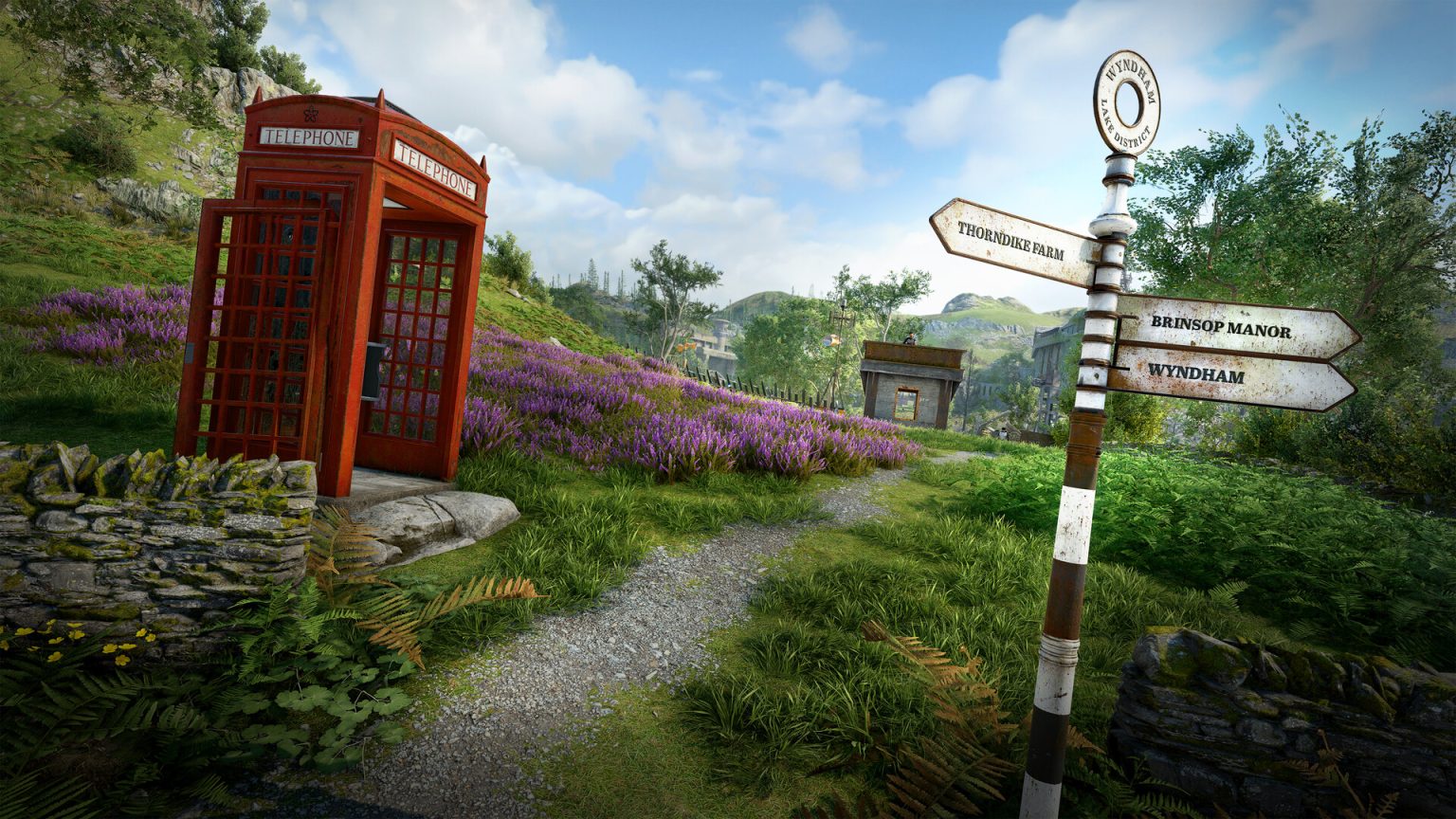
Atomfall is strongest when it lets a rumor become a route through its quarantined corner of northern England. After five hours on PC, Rebellion’s survival mystery feels compact, strange and unusually willing to let the player follow incomplete information.
Score: 7.5/10. This research review reflects five hours of hands-on play, supported by official release information.
Leads replace a conventional quest list
Characters, documents and environmental clues produce leads rather than a rigid chain of objective markers. One conversation may point toward a bunker, while a scrap of paper changes how another encounter should be read. The player decides which thread deserves attention.
This structure makes exploration feel investigative. A building is valuable because it may contain evidence, not merely loot. The best moments occur when two apparently separate stories connect and a new interpretation opens a route that was always present.
The zones are small enough to learn
Atomfall is divided into interconnected areas rather than one enormous continuous world. The scale helps each village, wood and facility develop a recognizable identity. Landmarks matter, and returning to a location with new knowledge rarely feels like crossing empty space.
The quarantine’s alternative-history atmosphere combines pastoral calm, military control and folk unease. It avoids explaining every anomaly immediately, allowing suspicion to carry the first hours.
Combat creates danger, not elegance
Firearms are powerful but ammunition is valuable. Melee attacks, stealth and improvised tools therefore remain relevant. Encounters reward scouting and escape plans, especially when several enemies can turn a simple room into an expensive fight.
Feedback is not always as precise as the resource economy demands. Hits can feel soft, close combat grows messy and enemy behavior occasionally shifts from threatening to awkward. The tension survives, but the mechanics do not always match the strength of the setting.
Survival systems stay deliberately light
Crafting and inventory limits force choices without turning the game into a hunger-meter simulator. A bandage or throwable can solve an immediate problem, while hoarding materials creates pressure elsewhere. The system supports exploration rather than replacing it.
Five hours do not resolve the central mystery, so the score focuses on the quality of the opening investigation, combat loop and world structure. It does not claim that every late narrative branch lands equally well.
Choice works best when information is incomplete
Atomfall allows violence, persuasion, stealth and avoidance, but it rarely labels one option as correct. A friendly character may be unreliable; a hostile faction may possess useful information. Saving before every conversation would undercut the intended uncertainty.
That design distinguishes it from a checklist-driven open world. Progress comes from understanding people and places, not only raising damage numbers.
Verdict
Atomfall is an absorbing investigation wrapped in imperfect survival combat. Its compact zones, British science-fiction tone and lead system give curiosity real mechanical value. Players demanding polished shooting may be frustrated, but those willing to follow rumors will find a memorable five-hour opening.
Our VALORANT default guide explores information control in a competitive setting, and the CS2 map update report tracks another evolving shooter.
Source: official Steam page; Rebellion.
Conversation is part of exploration
Dialogue does not merely pause the action to deliver exposition. Names, places and suspicions become navigational tools. A character may withhold a location until the player presents evidence, while another can be confronted with information found somewhere else. Paying attention reduces aimless searching.
The writing benefits from restraint. People inside the quarantine have motives, but few explain themselves fully on first contact. Regional accents and ordinary concerns keep the science-fiction premise grounded. The mystery works because the area feels inhabited rather than staged as a sequence of lore terminals.
Stealth is useful but not absolute
Crouching, cover and suppressed approaches can reduce the cost of an encounter. Stealth is not a perfect invisibility system, and groups can become unpredictable once alerted. It works best as a way to choose the first engagement, remove one obstacle or cross a dangerous space without spending ammunition.
When detection happens, the player can run, break sightlines and reconsider. Atomfall does not require every hostile area to be cleared. That freedom supports the investigation: surviving with the clue matters more than turning each location into an empty combat arena.
Resources create local stories
A weapon with only a few rounds changes how a building is read. A side entrance becomes valuable, a bottle becomes a distraction and a locked container becomes a possible solution rather than generic loot. These small calculations give the world a survival character without constant numerical punishment.
Crafting recipes are straightforward enough to remember, though inventory limits can become administrative. The tension is strongest when deciding whether to carry a tool for an anticipated problem. It is weaker when reorganizing similar objects simply to make room.
Worldbuilding rewards cross-checking
Documents should not always be accepted as neutral truth. Official notices, personal notes and faction claims describe the same event from different positions. The player builds an interpretation by comparing them, which fits the lead-based quest structure.
This also supports replay value. Following a different source first can change which character appears credible and which location becomes important. The five-hour test revealed meaningful routes, though it was not long enough to assess every ending or the full consequence structure.
Difficulty and accessibility
Atomfall includes options that can adjust parts of combat and exploration. This is especially helpful because some players will want the mystery without severe resource pressure, while others will want every bullet to matter. Difficulty should be tuned to preserve curiosity rather than turn investigation into repeated reloads.
On PC, environmental art and sound do much of the atmospheric work. Distant signals, wind and abrupt mechanical noise help the player read danger. The pastoral landscape looks calm until a guarded checkpoint or strange facility interrupts it, creating a contrast the game uses repeatedly and effectively.
Who should play it
Players who enjoy piecing together a place, accepting imperfect information and leaving fights unfinished are the best audience. Those expecting a pure shooter or a giant loot-driven open world may find the scale and combat deliberately restrained. Atomfall is closer to a compact mystery box with survival tools than a conventional power fantasy.
What the five-hour window can establish
This test reaches enough leads to judge how investigation, resource pressure and zone traversal interact, but it does not resolve the main conspiracy. The verdict avoids claims about every ending, late weapon or expansion. Those elements require a complete campaign assessment and may change the relative value of early choices.
What is already reliable is the opening identity. Atomfall gives the player a place to interpret rather than a list to clear. Its rough combat feedback is visible immediately, as are the strengths of the lead system and the density of the connected zones. The best recommendation is consequently audience-specific: curiosity and tolerance for uncertainty matter more than enthusiasm for conventional gunplay.
Players should also decide whether they enjoy consequences without a preview. The game is more effective when a conversation is allowed to stand, even if another answer might have offered a cleaner reward.
Review scope: Five hours establish the opening systems and presentation, while a completed campaign could change conclusions about late-game variety and narrative payoff.
Editorial note
Five-hour review window, supported by official documentation and public technical coverage.
This article was reviewed on August 7, 2026.

Related stories
Minishoot’ Adventures review: exploration under fire
This Minishoot Adventures review finds a small ship leaving its village to free captured friends and confront corrupted machines. SoulGame Studio combines an.

Mouthwashing review: horror after the crash
This Mouthwashing review enters the Tulpar after a crash leaves five crew members with dwindling supplies and no credible rescue. Wrong Organ shifts between.

Thank Goodness You’re Here review: slapstick with purpose
This Thank Goodness You’re Here review follows a traveling salesman who arrives early for a mayoral appointment and becomes free labor for Barnsworth. Coal.
Community channel
Join the discussion
Start a thoughtful, specific conversation about this story.
Verified readers only
Continue with Google to comment.
Your Google account creates a reader-only Kaizensclan profile. Your first comment is reviewed before publication.