Assassin’s Creed Shadows review: two paths through Japan
Our Assassin’s Creed Shadows review covers Naoe and Yasuke, stealth, combat, seasonal exploration, performance and the structure of Ubisoft’s Japan. Analysis.

 8.0
8.0 Kaizensclan verdict
Our Assassin’s Creed Shadows review covers Naoe and Yasuke, stealth, combat, seasonal exploration, performance and the structure of Ubisoft’s Japan. Analysis.
Review basis: five hours of play supported by official documentation and public technical coverage. Hours played: 5. The score reflects the systems, presentation and release state observed within that review window rather than a completionist playthrough.
This Assassin’s Creed Shadows review finds Ubisoft’s feudal-Japan entry at its best when its two protagonists create genuinely different answers to the same fortress. Naoe is a mobile shinobi built around concealment; Yasuke is a powerful samurai who turns blocked doors and armoured guards into direct combat problems.
The game released on March 20, 2025 for PC, PlayStation 5 and Xbox Series X|S. Its setting begins in 1579 during Japan’s late Sengoku period, using historical figures and conflicts as the frame for a fictional Assassin’s Creed story.
Two protagonists change the verbs available
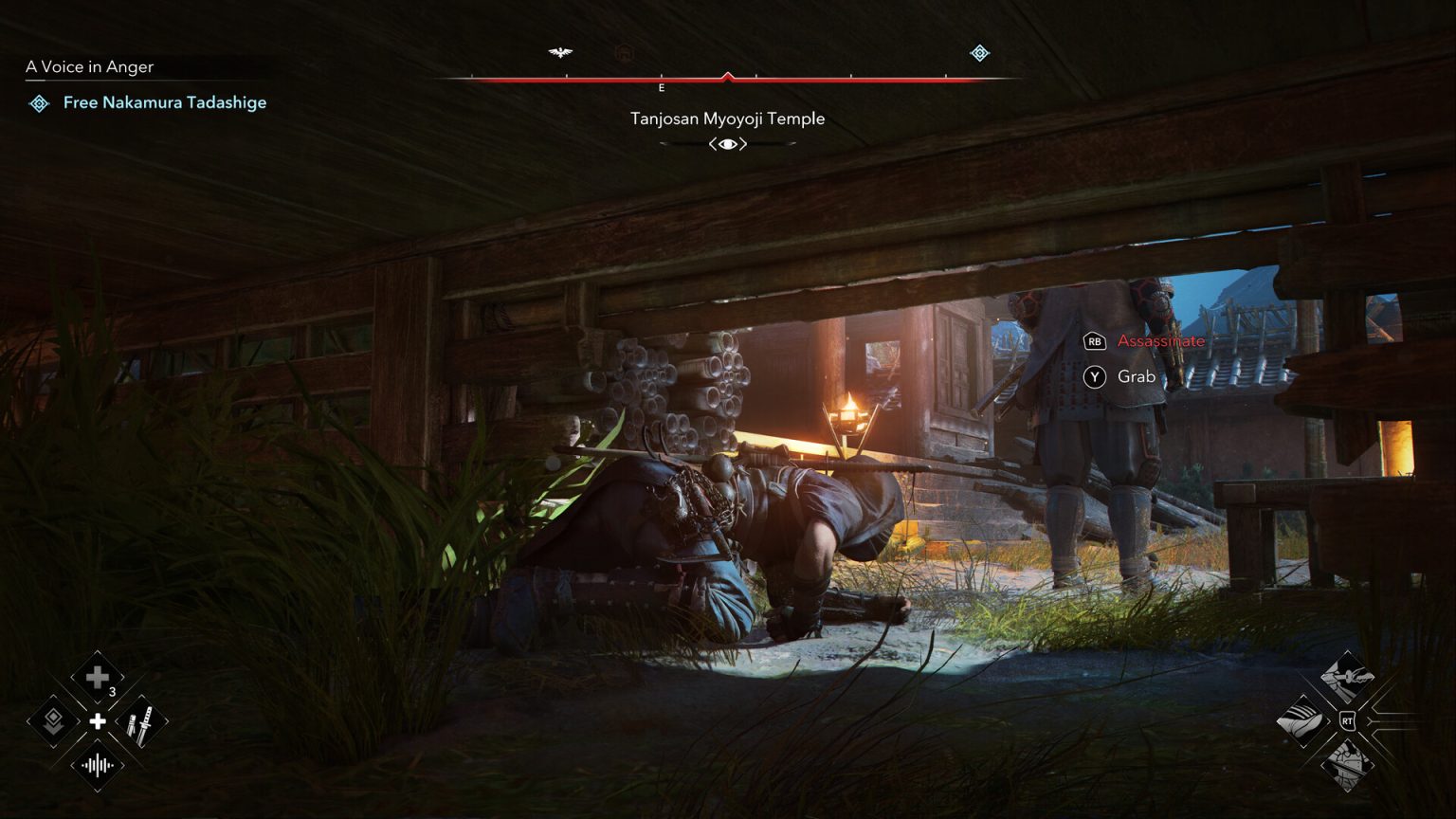
Naoe can crawl, use a grappling hook, extinguish light sources and exploit shadows. Her smaller profile and faster traversal make rooftops, floor spaces and narrow openings part of the stealth route. Detection does not remove every option, but sustained open combat exposes her lower durability.
Yasuke approaches the same space with reach, armour and force. He can break some barriers, confront groups and use heavier weapons. His movement is less suited to acrobatic infiltration, so selecting him changes how the player reads a compound before the first attack.
The distinction is more useful than a cosmetic character swap. It encourages the player to ask whether an objective rewards information and precision or whether the safest route is controlled aggression. Character-specific progression and gear reinforce those identities.
Switching also creates pacing friction. A mission sequence that strongly favours one hero can leave the other feeling detached from the current plot. The system works best when the world offers a choice and less well when narrative structure makes the preferred answer obvious.
Stealth uses darkness as a real resource
Shadows improves the series’ stealth vocabulary with dynamic light and visibility. Naoe can darken rooms, hide in prone positions and use environmental noise to mask movement. A simple visibility indicator makes the state readable without turning every encounter into an interface exercise.
Weather and seasons change more than the postcard. Foliage, frozen water and environmental conditions can alter routes or concealment. The effects are authored within a familiar Ubisoft world structure, but they give repeated travel a stronger sense of place.
Enemy awareness still depends on predictable states, and players who optimize aggressively may find reliable routines. Yet the combination of light, posture and vertical access gives stealth planning more texture than merely waiting for a cone to turn away.
Combat is weightier, especially for Yasuke
Weapons have distinct ranges and rhythms, while posture and armour make timing more important than endlessly cycling light attacks. Yasuke’s hits communicate mass through animation and sound. Naoe relies more on evasion, tools and short windows.
Direct battles can become visually busy when several enemies crowd the camera. Lock-on behaviour and terrain determine whether a difficult encounter feels deliberate or awkward. The strongest fights leave room to read an attack and select the right defence.
Progression adds active abilities and passive advantages, but gear numbers remain part of the equation. That can weaken the fantasy of a perfectly executed assassination when level structure overrides a clean approach. Players who disliked the RPG layer in recent entries will still recognize it.
The world is beautiful but structurally familiar
Castles, villages, shrines and rural landscapes provide impressive visual variety. Seasonal transitions help the same province feel changed over time, and weather gives distant views an atmosphere that static maps cannot.
Exploration reduces some icon saturation by using scouts and clues to locate objectives. The player can gather information instead of receiving every coordinate immediately. Even so, the broader loop of targets, resources, gear and regional activities remains recognizably Assassin’s Creed.
Repetition is therefore a matter of appetite. Clearing a castle as Naoe and returning as Yasuke can create a different story, but no character system can make every outpost unique across a long campaign.
Audio, presentation and story
The environmental soundscape supports stealth with footsteps, weather and guard cues. Combat audio differentiates blades and heavier impacts, while the music uses period-inspired texture inside a modern cinematic score.
Naoe’s personal search and Yasuke’s position as an outsider connected to Oda Nobunaga give the story two perspectives on power. The historical setting is dramatized, not presented as documentary reconstruction, and players should distinguish fictional characterization from established history.
The dual structure produces strong individual scenes but can dilute momentum when the campaign switches focus. Supporting targets are most memorable when their political role is clear rather than when they exist only as another name on a board.
Technical state and monetization
The PC version uses a demanding open-world renderer with scalable settings and modern upscaling support. Hardware, drivers and patches materially affect results. A five-hour review cannot certify performance across every configuration; check the current Steam requirements and recent reports for the exact build.
Shadows is a premium game with multiple editions and additional content offerings. Buyers should judge the currently listed contents and price in their region. Cosmetic or expansion availability does not change the base campaign’s central two-character design.
Assassin’s Creed Shadows review verdict
Shadows is a strong iteration rather than a total reinvention. Naoe’s darkness-driven stealth and Yasuke’s physical combat create meaningful contrast, while seasonal Japan gives the series one of its most atmospheric worlds. Repetition, progression gates and uneven dual-protagonist pacing remain familiar liabilities.
Score: 8.0/10. Recommended for open-world players who want freedom to alternate between infiltration and combat. Readers interested in how visual clarity supports competitive play can also see our finish readability analysis.
How the two-hero structure affects replay value
Shadows allows many activities to be approached with either protagonist, but replay value comes from method rather than a completely separate campaign. Re-entering a castle with Naoe can turn a previous frontline battle into a route-planning exercise; using Yasuke can reveal which barriers and enemy groups were avoided before.
The distinction is meaningful only if the player resists optimizing every objective into one preferred answer. Rotating heroes, weapons and seasons creates more variation, while clearing regions mechanically can expose the familiar activity template.
Practical buying checklist
Check the current patch and PC requirements, then watch unedited footage of stealth, open combat and traversal. Verify whether the edition under consideration includes story content or only cosmetic extras. Players sensitive to long open-world campaigns should treat the focused main targets as the priority and regard regional completion as optional.
For players evaluating the stealth presentation, compare enemy silhouettes against changing backgrounds rather than judging only scenic beauty. Our competitive silhouette analysis addresses another genre, but its contrast test is useful when watching unedited Shadows footage.
Historical setting is another purchase consideration. Ubisoft’s world uses real names, places and conflicts as material for fiction; it should inspire further reading rather than replace it. Players who separate historical atmosphere from documentary accuracy are more likely to appreciate the setting without asking the campaign to perform two incompatible jobs.
With that expectation, the two protagonists offer a useful lens on violence and authority, even when the broader mission structure returns to familiar open-world habits.
Editorial note: The Assassin’s Creed Shadows review score uses a half-point scale and accounts for the five-hour review window. A complete campaign test could change the late-game assessment, but it would not erase the design strengths and limitations observed above.
Editorial note
Five-hour review window, supported by official documentation and public technical coverage.
This article was reviewed on August 6, 2026.
Related stories
Minishoot’ Adventures review: exploration under fire
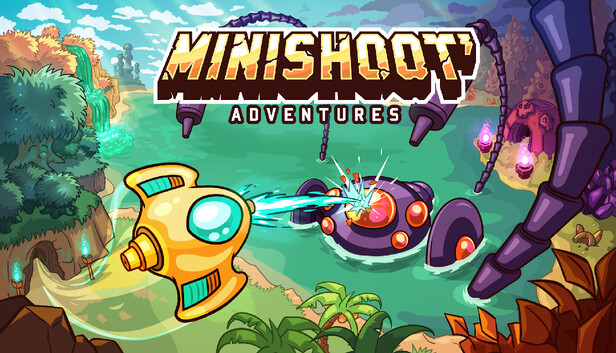
This Minishoot Adventures review finds a small ship leaving its village to free captured friends and confront corrupted machines. SoulGame Studio combines an.
Mouthwashing review: horror after the crash
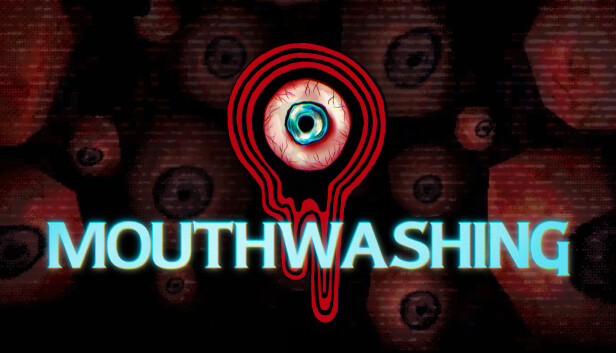
This Mouthwashing review enters the Tulpar after a crash leaves five crew members with dwindling supplies and no credible rescue. Wrong Organ shifts between.
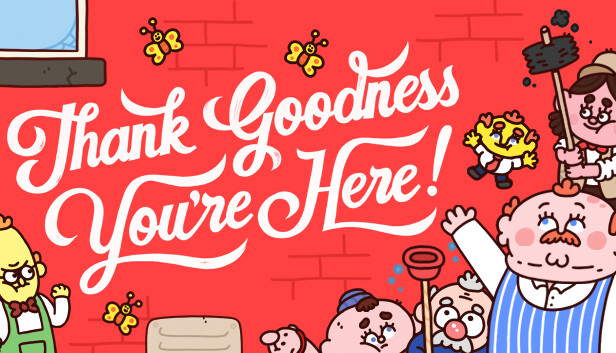
Thank Goodness You’re Here review: slapstick with purpose
This Thank Goodness You’re Here review follows a traveling salesman who arrives early for a mayoral appointment and becomes free labor for Barnsworth. Coal.
Community channel
Join the discussion
Start a thoughtful, specific conversation about this story.
Verified readers only
Continue with Google to comment.
Your Google account creates a reader-only Kaizensclan profile. Your first comment is reviewed before publication.