Valorant smoke timing: three windows every controller should name
Place fewer automatic smokes and create more shared timings.

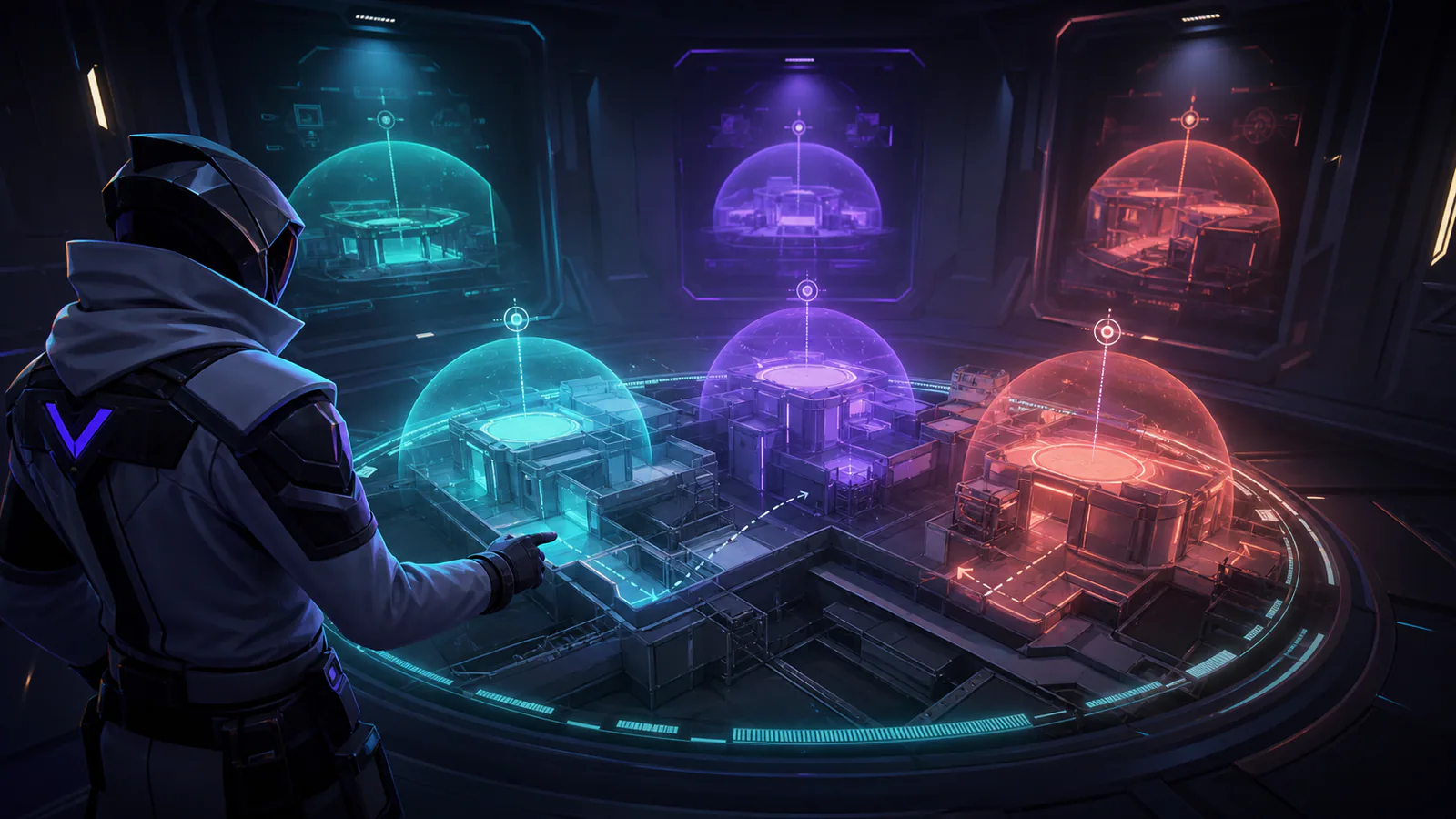
Controller players are often evaluated by placement while teammates experience timing. A correct smoke that fades during entry or blocks a needed sightline during a retake can still lose the round. This Valorant smoke timing drill gives the team three shared windows.
Window one: entry
Run the site approach and place smokes only after the entry caller names the final commit. Test fast and delayed versions. The controller reports the expected fade so the team knows whether to stop or accelerate.
Window two: isolation
Add one defender who may reposition. The smoke must remove a second angle while preserving the duel the entry pair intends to take. Review the spacing through our duo drill.
Window three: refresh
Play the post-plant and save one charge or cooldown for the first retake route. The controller names the trigger before the round: tap, recon contact or a teammate’s swing.
Connect each repetition to the post-plant role map. A controller succeeds when teammates can predict what the smoke enables and when it will stop enabling it.
Editorial note
Practice guide grounded in current Valorant controller principles.
This article was reviewed on August 3, 2026.

Related stories
VALORANT Bind A execute guide for patch 13.02
A reliable Bind A execute creates two simultaneous problems instead of sending five players through A Short. Control either Showers or the Short cubbies, cut.
VALORANT Split B execute guide for patch 13.02
A Split B execute works when B Main and mid pressure arrive together. Patch 13.02 is the reference version. Clear close angles, deny Heaven vision and reserve.

VALORANT Lotus A execute guide for patch 13.02
A consistent Lotus A execute begins before the barrier drops. The attacking team needs a Rubble plan, utility for A Main and Tree, a plant location that.
Community channel
Join the discussion
Start a thoughtful, specific conversation about this story.
Verified readers only
Continue with Google to comment.
Your Google account creates a reader-only Kaizensclan profile. Your first comment is reviewed before publication.