Hollow Knight: Silksong review — movement becomes mastery
Our Hollow Knight Silksong review explores Hornet's agile combat, layered exploration, tool builds and demanding difficulty across the kingdom of Pharloom.
 By Dmitri Aslanov
··6 min read
·PC, macOS, Linux, PlayStation 4, PlayStation 5, Xbox One, Xbox Series X|S, Nintendo Switch, Nintendo Switch 2
By Dmitri Aslanov
··6 min read
·PC, macOS, Linux, PlayStation 4, PlayStation 5, Xbox One, Xbox Series X|S, Nintendo Switch, Nintendo Switch 2 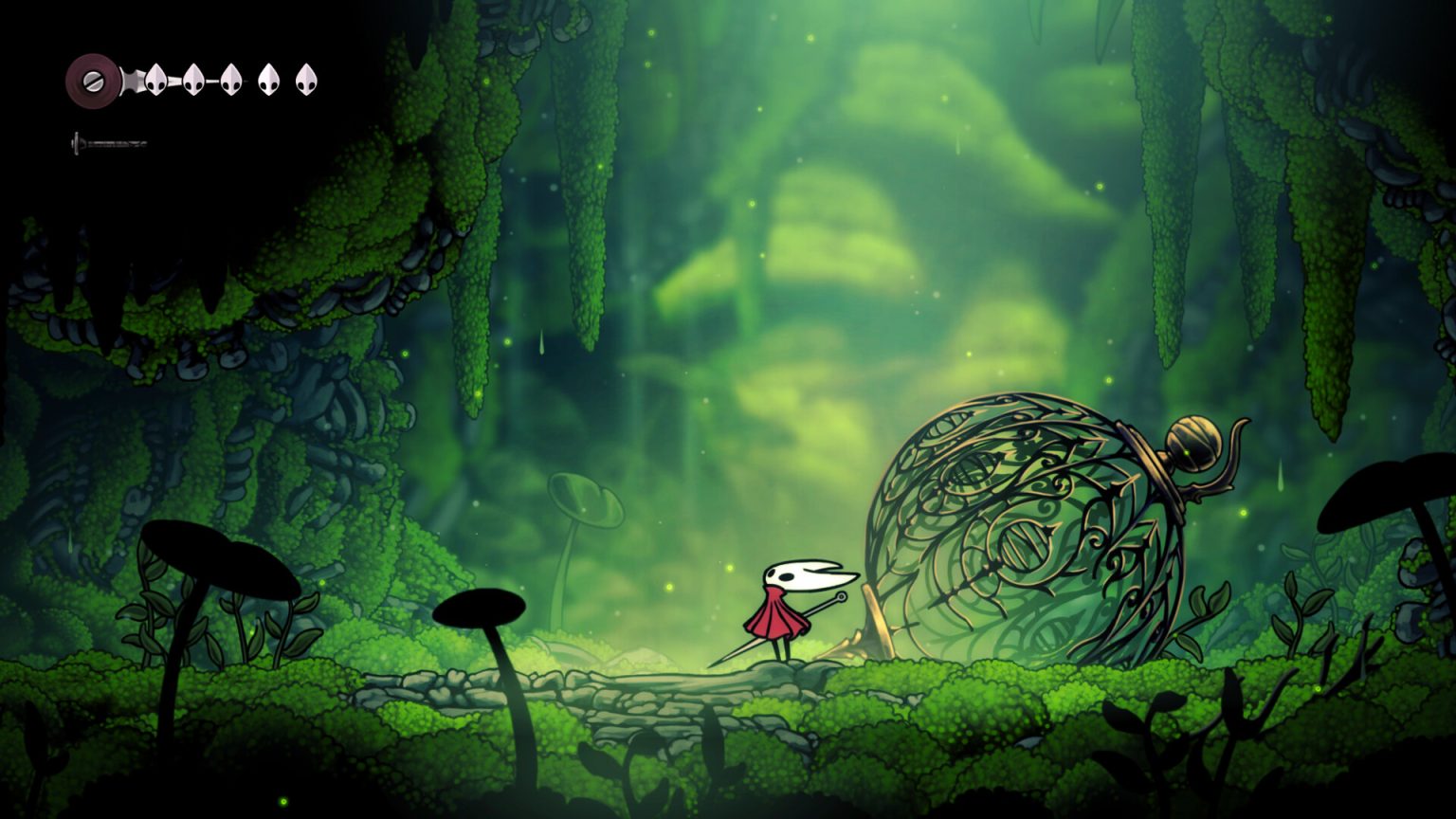 9.0
9.0 Kaizensclan verdict
Our Hollow Knight Silksong review explores Hornet's agile combat, layered exploration, tool builds and demanding difficulty across the kingdom of Pharloom.
This Hollow Knight: Silksong review finds Team Cherry building an action adventure around a protagonist who refuses to feel small. Hornet moves farther, attacks with more forward commitment and uses silk as both survival and offence. Pharloom answers with vertical spaces and demanding enemies. The result is a superb Metroidvania whose early severity and return routes sometimes tax patience more than skill.
Review methodology: Kaizensclan did not independently complete Hornet’s pilgrimage. The zero-hour disclosure identifies this as a research-based assessment using official materials and public gameplay, not a first-hand playthrough. Release and platform information were checked against the official Steam listing and Team Cherry materials.
Hollow Knight: Silksong builds combat around Hornet
Hornet is taller, faster and more directional than the Knight. Her basic attack carries forward momentum, aerial strikes change how she approaches enemies and a diagonal downward move makes positioning more committed. Familiar Hollow Knight instincts help, but they do not solve every encounter.
Silk connects offence and recovery. Hornet can bind to heal several masks quickly, but the action consumes a substantial resource and requires space. The same resource supports powerful skills, creating a readable trade: spend silk to control the current danger or preserve it as insurance.
Tools expand the moveset through offensive, defensive and utility options. Crests organise how tools and basic actions fit together, encouraging builds that favour aggression, reach, resource control or safety. The system provides more explicit loadout identity than the original game’s charm grid.
Enemies are designed for Hornet’s mobility. They track vertical movement, occupy awkward angles and punish automatic jumping. The best fights feel like short spatial arguments rather than damage races. The player succeeds by deciding where the next exchange should happen.
Pharloom turns ascent into exploration
The kingdom is organised around an upward pilgrimage, but the route constantly branches sideways and downward. New movement abilities reopen old spaces, while hidden connections shorten travel and change how regions relate. Progress is not only reaching a higher room; it is understanding the map as a network.
Hornet’s speed makes ordinary traversal expressive. Ledges, enemies and environmental tools can become parts of one movement line. When level design supports that flow, returning through an area feels like demonstrating mastery rather than repeating transit.
Long routes back to difficult encounters can still become punitive. A boss may require precise learning, and repeated travel adds time without teaching the moveset. Benches and shortcuts reduce the burden unevenly. Challenge is strongest when the next attempt begins quickly enough to preserve the lesson.
Quest structures give Pharloom’s inhabitants reasons to direct Hornet into optional spaces. They add social context and practical goals, though a large task list can make priorities less clear. Players who enjoyed unguided discovery in our Elden Ring review will recognise the pleasure of finding meaning beyond the marked route.
Hand-drawn clarity survives faster movement
Pharloom uses layered architecture, textiles, bells and performance motifs to distinguish itself from Hallownest. Regions have strong silhouettes and colour relationships, allowing the player to identify danger and navigation surfaces without flattening the art into functional blocks.
Animation sells Hornet’s personality. Attacks extend through space, landings carry intention and tool use feels improvised rather than magical abstraction. Enemy motion is equally important because readable anticipation allows high difficulty to feel learnable.
Christopher Larkin’s music supports the kingdom’s vertical and ceremonial identity. Strings, voices and percussion can make an area feel inhabited before a character explains it. Combat themes intensify without obscuring the sound cues attached to attacks and silk actions.
The interface remains restrained, but additional tools, Crests and quest information create more management than the first game. Strong iconography helps. Readers interested in the relationship between style and information can continue with our readability coverage.
Technical state and premium value
Silksong supports an unusually broad platform range: Windows, macOS and Linux on Steam, alongside current and previous console generations and both Nintendo Switch systems. Its hand-drawn presentation is not dependent on photorealistic hardware, although platform-specific frame pacing and input latency still affect precision. This research review contains no original benchmarks.
Difficulty is the larger access barrier. Fast enemies, committed movement and costly mistakes can create severe early walls. Control remapping and presentation options help with physical access, but they do not change the expectation that players learn patterns through failure.
The game is a premium standalone release. Its soundtrack is available separately, with no battle pass, premium currency or paid power. Tools, Crests, upgrades and quest rewards come from exploring Pharloom.
Value is excellent for players who enjoy mapping, repeated boss attempts and optional discovery. The campaign’s length is only part of that value; movement mastery changes how quickly and confidently the same spaces can be traversed. Players who dislike backtracking should understand that reinterpretation of old routes is fundamental to the genre.
Who should make the pilgrimage
Silksong is aimed at players who enjoy learning through motion. A difficult room teaches spacing, enemy timing and how Hornet’s tools alter a route. Progress often appears first as cleaner execution and only later as a new ability or completed quest.
Experience with Hollow Knight helps establish the world and genre, but it can also create habits that Hornet punishes. Her movement reaches farther and commits differently. New players face a demanding opening; veterans face the need to stop treating her like the Knight.
Completionists should expect optional paths, quest chains and difficult encounters that require careful map reading. Trying to clear every objective immediately can create unnecessary frustration because later tools may transform the route. Curiosity is productive; rigid ordering is not.
Short sessions can still produce useful progress when they focus on one route, one boss pattern or one unresolved quest rather than total completion.
Players with limited tolerance for failure should examine boss return routes and difficulty footage before buying. The game’s beauty does not signal a relaxed platformer. Conversely, anyone who values precise control, hand-drawn environments and the satisfaction of revisiting a once-hostile space with mastery has a strong reason to begin the ascent.
Verdict
Hollow Knight: Silksong succeeds by designing outward from Hornet. Combat, traversal and map scale all respond to her speed and forward commitment. Pharloom is not merely a larger place to repeat the Knight’s abilities.
The difficulty curve and some return routes create friction that does not always produce learning, while added quest and loadout systems make the experience denser. Those costs rarely undermine the pleasure of understanding a room and then moving through it with precision.
Score: 9.0/10. This is a research-based editorial score with zero independent hands-on hours. Players looking for demanding exploration and expressive movement have a clear recommendation; anyone sensitive to repeated boss attempts should examine the checkpoint structure first.
Sources: Team Cherry official Steam and release materials, checked August 6, 2026.
Editorial note
This research-based editorial assessment uses official release information and public gameplay. Kaizensclan logged zero first-hand playtest hours.
This article was reviewed on August 6, 2026.

Related stories

Minishoot’ Adventures review: exploration under fire
This Minishoot Adventures review finds a small ship leaving its village to free captured friends and confront corrupted machines. SoulGame Studio combines an.

Mouthwashing review: horror after the crash
This Mouthwashing review enters the Tulpar after a crash leaves five crew members with dwindling supplies and no credible rescue. Wrong Organ shifts between.

Thank Goodness You’re Here review: slapstick with purpose
This Thank Goodness You’re Here review follows a traveling salesman who arrives early for a mayoral appointment and becomes free labor for Barnsworth. Coal.
Community channel
Join the discussion
Start a thoughtful, specific conversation about this story.
Verified readers only
Continue with Google to comment.
Your Google account creates a reader-only Kaizensclan profile. Your first comment is reviewed before publication.