Split Fiction review — co-op built on constant reinvention
Our Split Fiction review explains how Hazelight's co-op adventure sustains variety, readable teamwork and generous Friend's Pass access without busywork.

 9.0
9.0 Kaizensclan verdict
Our Split Fiction review explains how Hazelight's co-op adventure sustains variety, readable teamwork and generous Friend's Pass access without busywork.
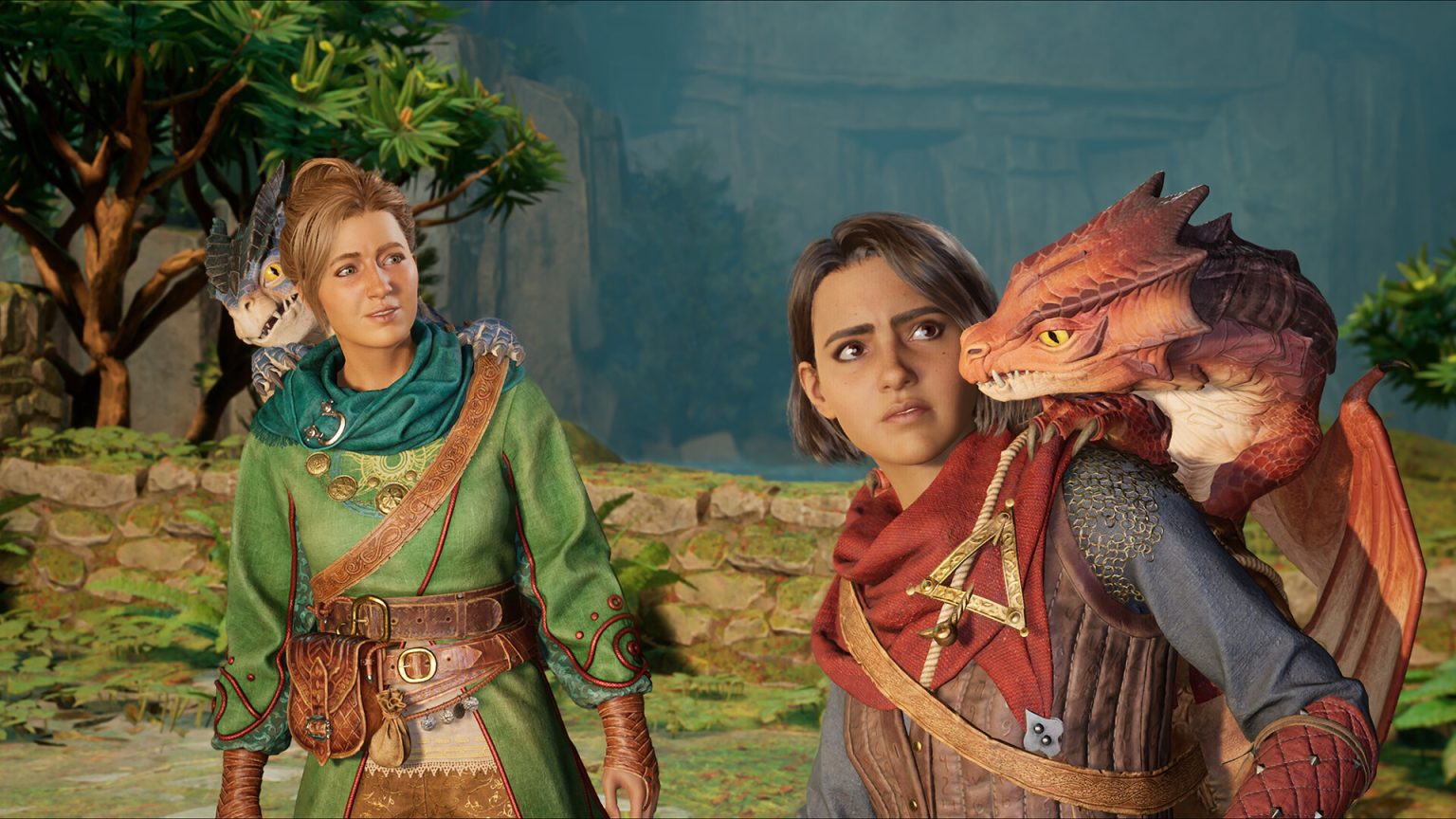
This Split Fiction review finds Hazelight Studios refining a simple principle: cooperation becomes interesting when two players have different information, tools or risks. Mio and Zoe move between science-fiction and fantasy stories, and almost every chapter introduces a new mechanical idea. The surprise is not that the game has variety, but that its constant changes rarely weaken the clarity of the partnership.
Review methodology: Kaizensclan did not independently complete a co-op playthrough. This zero-hour assessment draws on official release documentation and public gameplay rather than presenting observed footage as personal experience. Feature and platform details were checked against the official Steam listing and Electronic Arts materials.
Split Fiction turns asymmetry into conversation
Split Fiction is designed for exactly two players. One purchase can support an invited partner through Friend’s Pass, and the game offers local split-screen or online co-op with cross-platform support. That access model matters because cooperation is not an optional mode attached to a solo campaign. It is the structure of every obstacle.
Mio and Zoe frequently receive different abilities. One player may control movement while the other manipulates the environment, or each may see a separate part of the solution. The strongest sequences create a sentence between those roles: one action establishes a condition, the partner reads it and responds, then the first player adapts to the consequence.
Hazelight avoids turning that sentence into a rigid quick-time event. Timing matters, but players usually retain enough control to understand why an attempt failed. Checkpoints are generous, which keeps experimentation social rather than punitive. A mistake becomes a short conversation—too early, wrong route, watch this platform—not a long replay of solved material.
Mechanical variety is the headline. Platforming, shooting, puzzles, traversal creatures, stealth and compact genre parodies can appear within the same campaign. That breadth resembles a collection of prototypes, yet consistent movement and readable objectives hold it together. Players who enjoy the coordinated pressure described in our Helldivers 2 review will find a more authored, less systemic form of teamwork.
Constant novelty has a cost
Most mechanics leave before they become routine. This produces excellent pacing and makes each new location feel valuable, but it also limits mastery. A system with enough depth to support several hours may disappear after a focused sequence. Players who prefer to optimise one ruleset can feel as if the game closes the toy box just as they understand it.
The optional side stories give some ideas more room. These diversions use the same fictional framing while pushing into stranger scales and tones. Because both players must enter them, they remain shared discoveries rather than collectibles one partner gathers while the other waits.
Difficulty prioritises communication over mechanical punishment. Platforming asks for precision, and action sequences can become busy, but repeated attempts rarely demand a long reset. Experienced pairs may move through some puzzles quickly. The reward is often the act of coordinating, not the complexity of the solution.
That approach makes Split Fiction accessible to partners with different skill levels. It does not remove responsibility from the less experienced player; instead, it breaks challenges into readable jobs and lets the pair explain them. A stronger player cannot simply carry every scene, which preserves the dignity of both roles.
Two genres create one visual rhythm
Mio’s science-fiction worlds favour machinery, neon, industrial scale and artificial spaces. Zoe’s fantasy stories use forests, creatures, magic and more organic movement. The contrast gives the campaign an immediate visual grammar: players can recognise whose imagination shapes a level before dialogue confirms it.
Readability survives the spectacle. Important platforms and hazards usually separate themselves through motion, colour and framing, even when the background is busy. Split-screen necessarily reduces the available image area, so oversized silhouettes and clear animation are practical design choices as much as artistic ones.
Sound also serves two audiences at once. Effects communicate partner actions across the screen, and music shifts genre without abandoning recurring emotional themes. Voice performances carry Mio and Zoe from defensive strangers toward collaborators, although the script sometimes explains a feeling that the animation and cooperative action have already made clear.
The presentation demonstrates the same visual prioritisation discussed in our The Finals review: destruction and scale only help when players can still identify the next useful action. Split Fiction is less chaotic, but it is similarly careful about turning spectacle into information.
Technical design respects the co-op contract
Local split-screen, online play, cross-platform multiplayer and Friend’s Pass form an unusually complete co-op package. Network quality will still affect timing, and two-player scheduling remains the largest practical barrier. The game cannot solve that social requirement because removing it would remove the design.
On PC, the official requirements call for a modern 64-bit system and substantial storage, while console versions target current hardware and Nintendo Switch 2. This research review does not provide benchmark data. Players should check the current support page for platform-specific limitations before arranging a cross-platform session.
Monetisation is straightforward. Split Fiction is a premium game, and Friend’s Pass lets one owner invite another player without requiring a second full purchase. There is no battle pass, power shop or progression currency designed to separate partners. That model removes the awkward negotiation that can happen when co-op content is divided across accounts.
The value calculation depends on having a reliable partner. A pair receives a substantial authored campaign and optional stories with almost no recycled filler. A solo buyer receives no substitute mode, so the correct question is not only whether the game is good but whether another person can commit to it.
Choosing the right co-op partner
Split Fiction does not require two players with identical mechanical skill. It does require patience, clear communication and a willingness to let the other person solve part of the problem. A pair that treats every mistake as evidence will progress more comfortably than one that turns timing failures into blame.
The game works particularly well for partners who enjoy different genres. A platforming specialist and a puzzle player will each encounter moments of confidence and uncertainty as the campaign changes form. Because responsibilities alternate, expertise does not remain permanently on one side of the screen.
Parents and younger players should check the age rating and individual story themes rather than assuming the colourful presentation is universally light. The campaign includes intense action and occasional darker material inside its playful worlds.
Platform choice should begin with where both people can play reliably. Friend’s Pass reduces the purchase barrier, while cross-platform support gives pairs more flexibility. Local split-screen remains valuable for shared timing and conversation, but online play preserves the same authored roles when players cannot use one room.
Verdict
Split Fiction is generous with ideas and disciplined about how those ideas reach two people. It keeps both players involved, treats failure as information and understands that cooperation should produce conversation rather than parallel solo play.
The campaign’s rapid changes prevent deeper mechanical mastery, and its emotional writing occasionally says too much. Those are minor costs beside the consistency of the co-op design. Few games make another person feel this essential without making either participant feel subordinate.
Score: 9.0/10. This is a research-based editorial score with zero hands-on hours. Anyone with a regular co-op partner should place Split Fiction near the top of the list; solo players should not buy it expecting matchmaking or an AI companion to reproduce the intended experience.
Sources: Hazelight Studios and Electronic Arts official Steam and release materials, checked August 6, 2026.
Editorial note
This research-based editorial assessment uses official release information and public gameplay. Kaizensclan logged zero first-hand playtest hours.
This article was reviewed on August 6, 2026.

Related stories
Minishoot’ Adventures review: exploration under fire
This Minishoot Adventures review finds a small ship leaving its village to free captured friends and confront corrupted machines. SoulGame Studio combines an.
Mouthwashing review: horror after the crash
This Mouthwashing review enters the Tulpar after a crash leaves five crew members with dwindling supplies and no credible rescue. Wrong Organ shifts between.
Thank Goodness You’re Here review: slapstick with purpose
This Thank Goodness You’re Here review follows a traveling salesman who arrives early for a mayoral appointment and becomes free labor for Barnsworth. Coal.
Community channel
Join the discussion
Start a thoughtful, specific conversation about this story.
Verified readers only
Continue with Google to comment.
Your Google account creates a reader-only Kaizensclan profile. Your first comment is reviewed before publication.